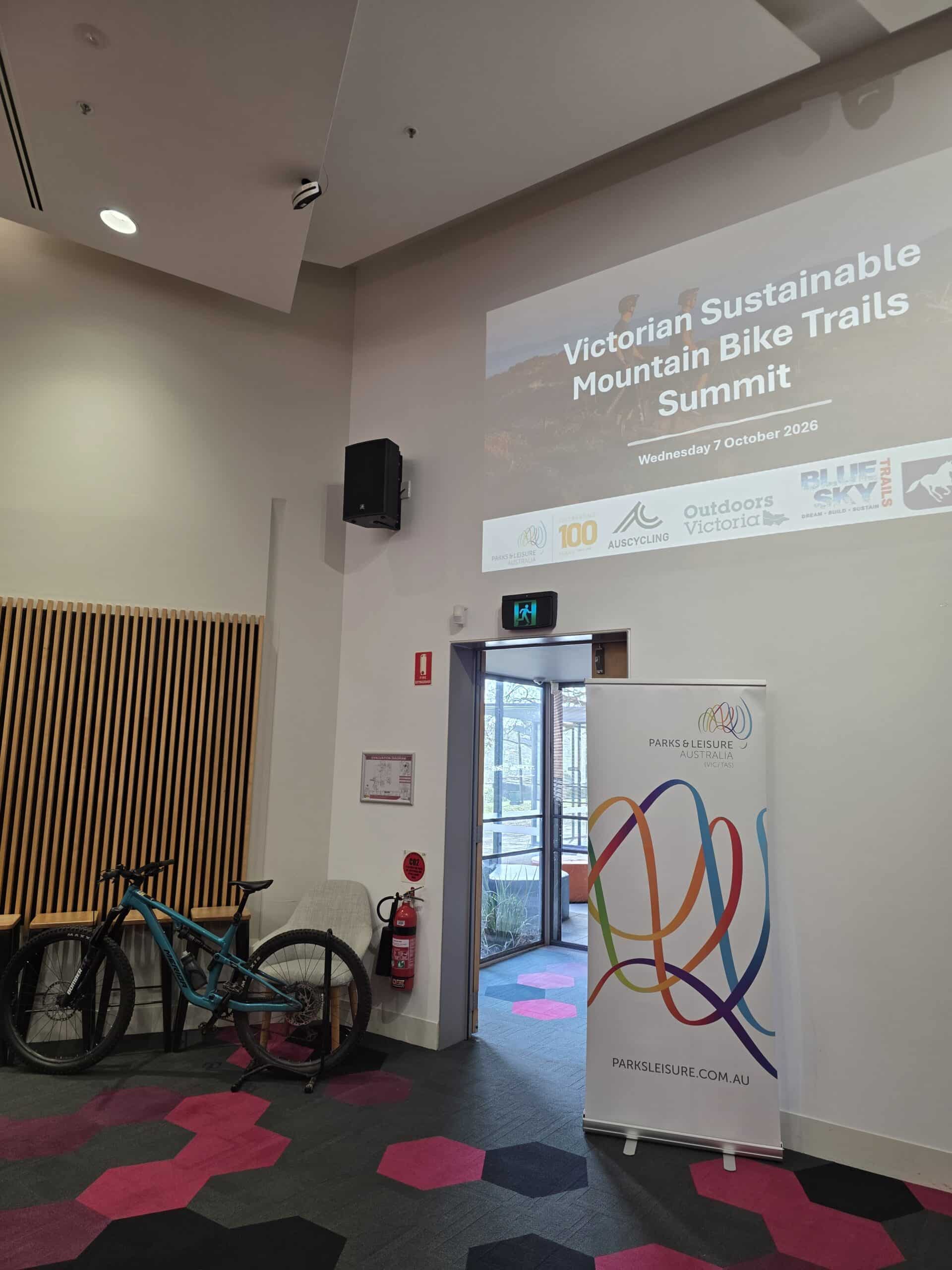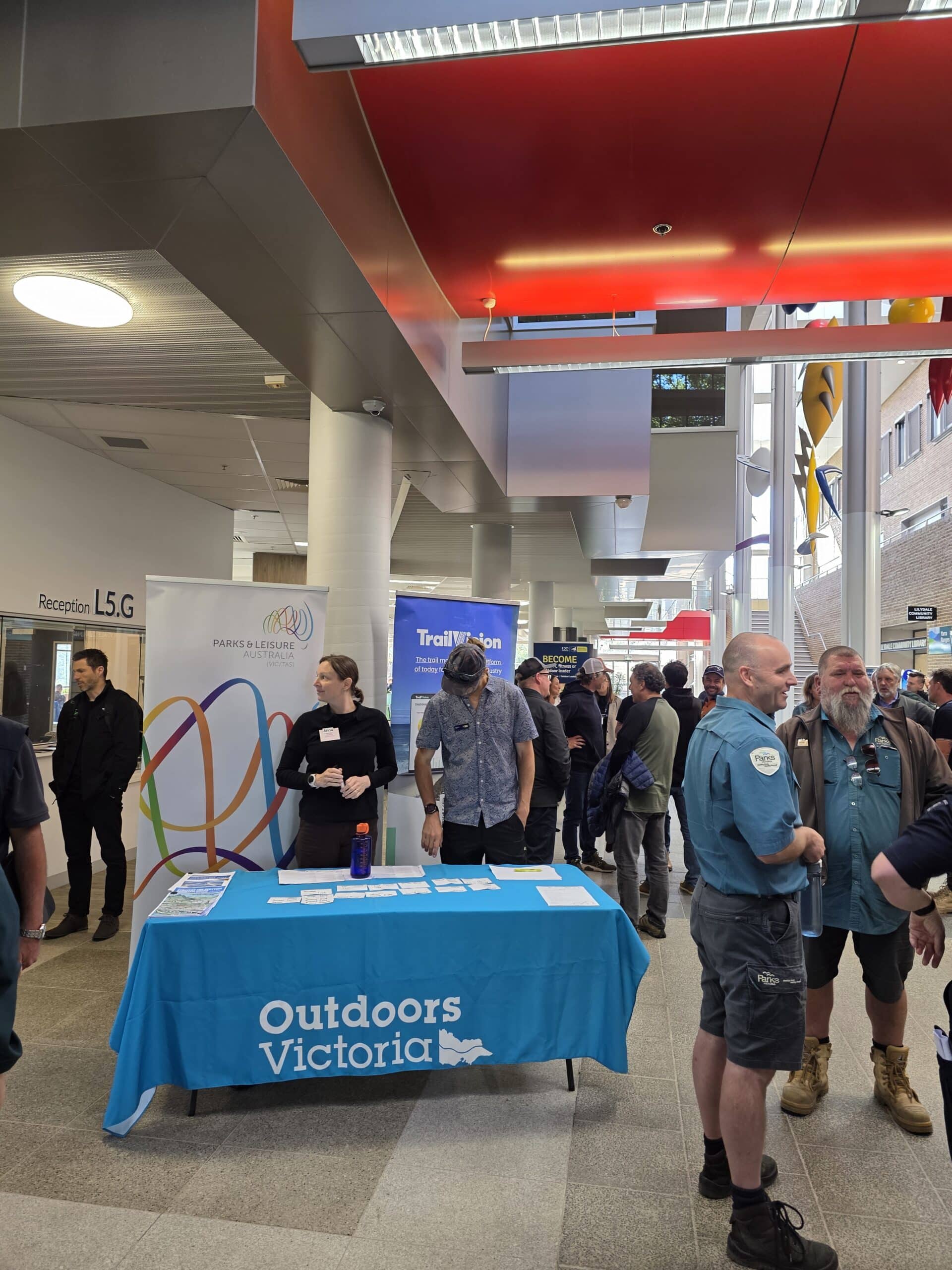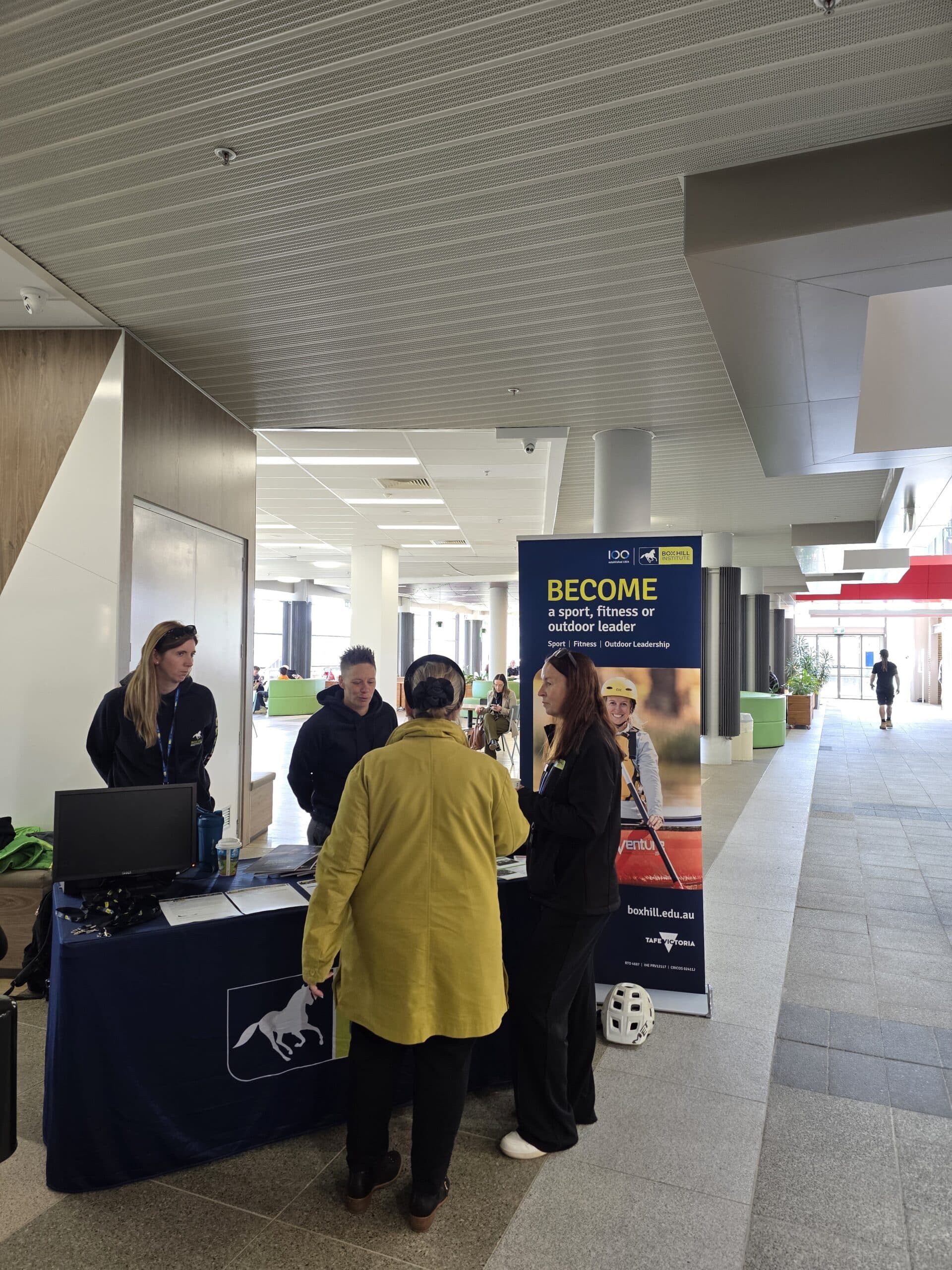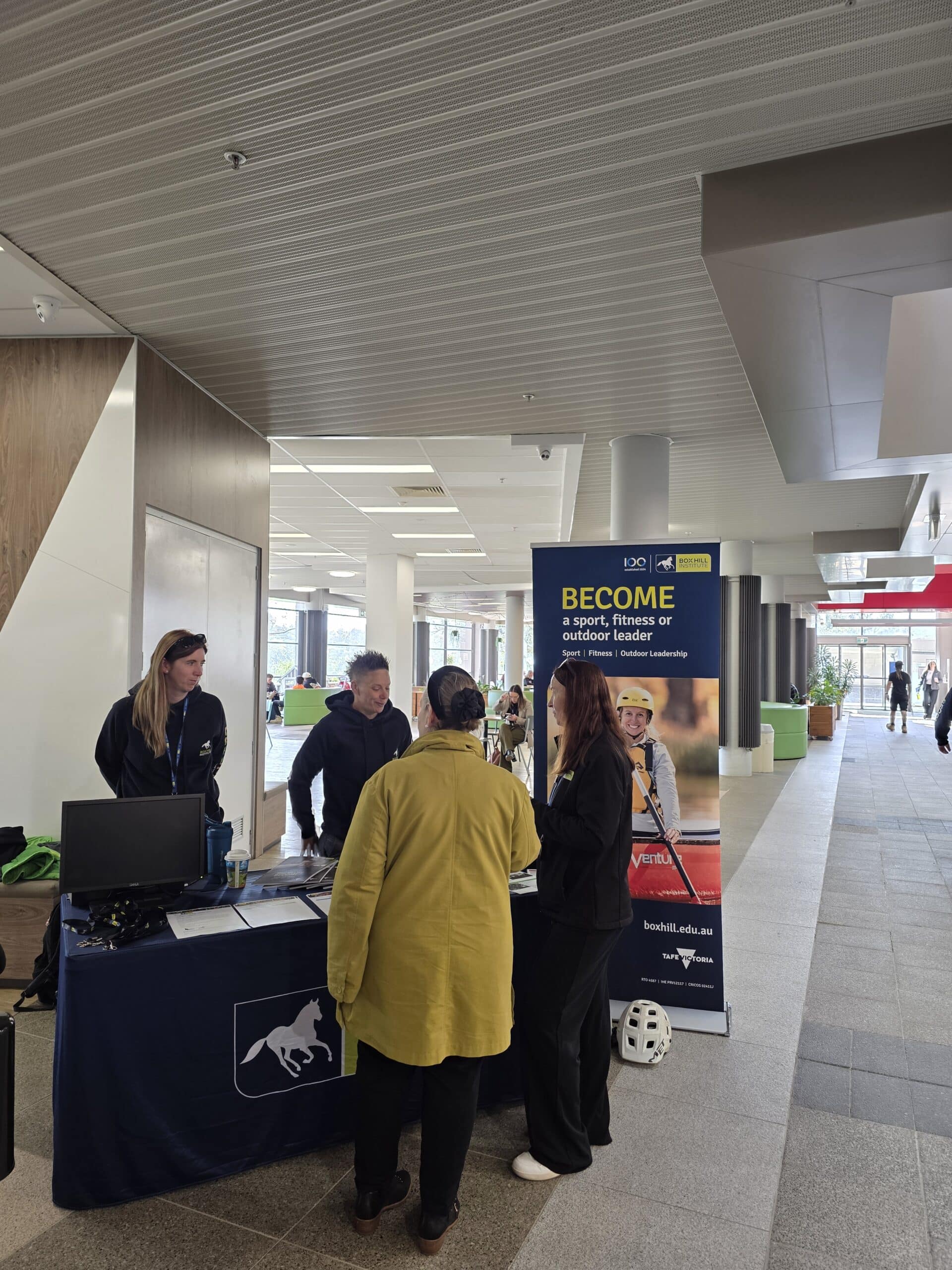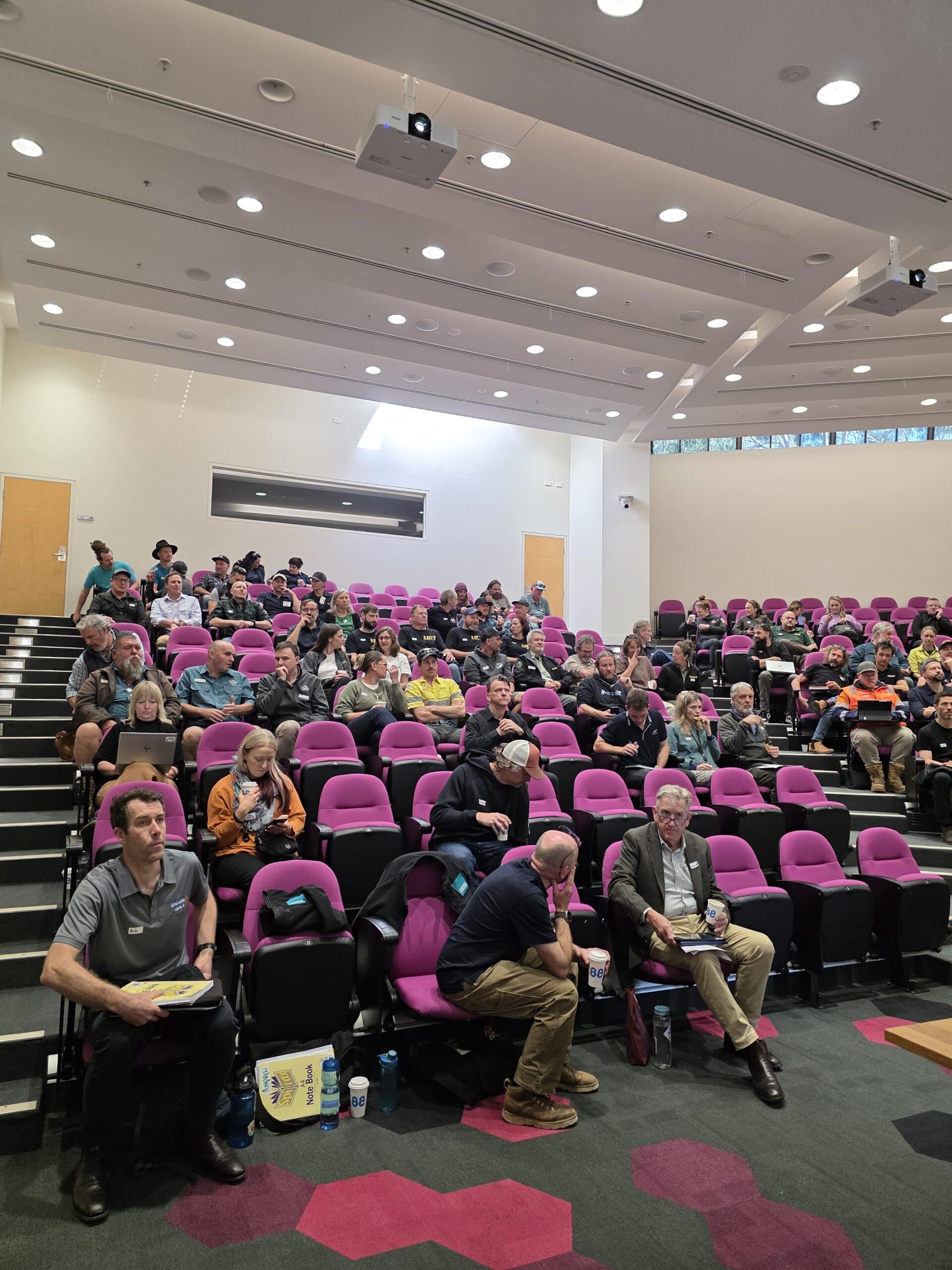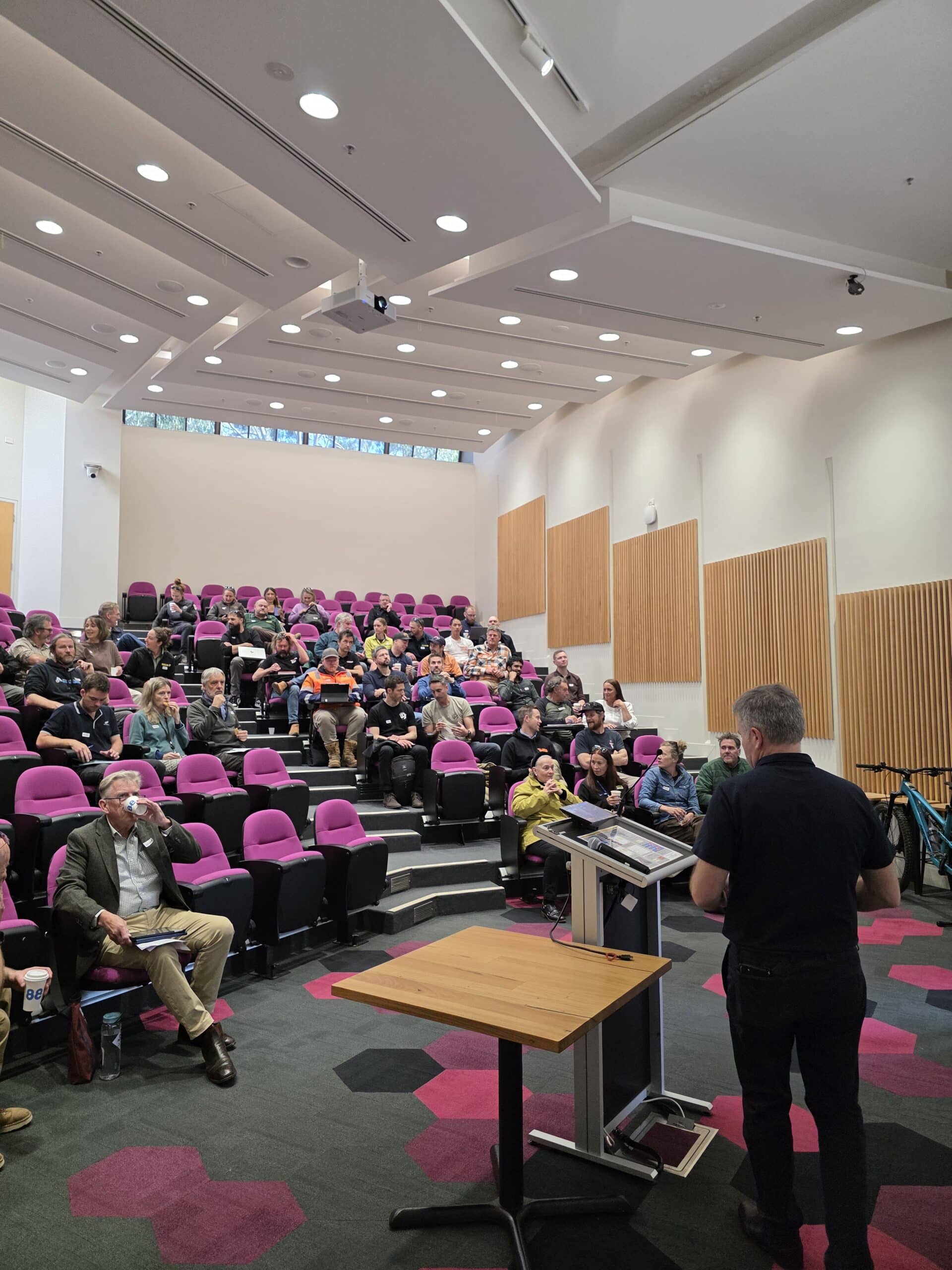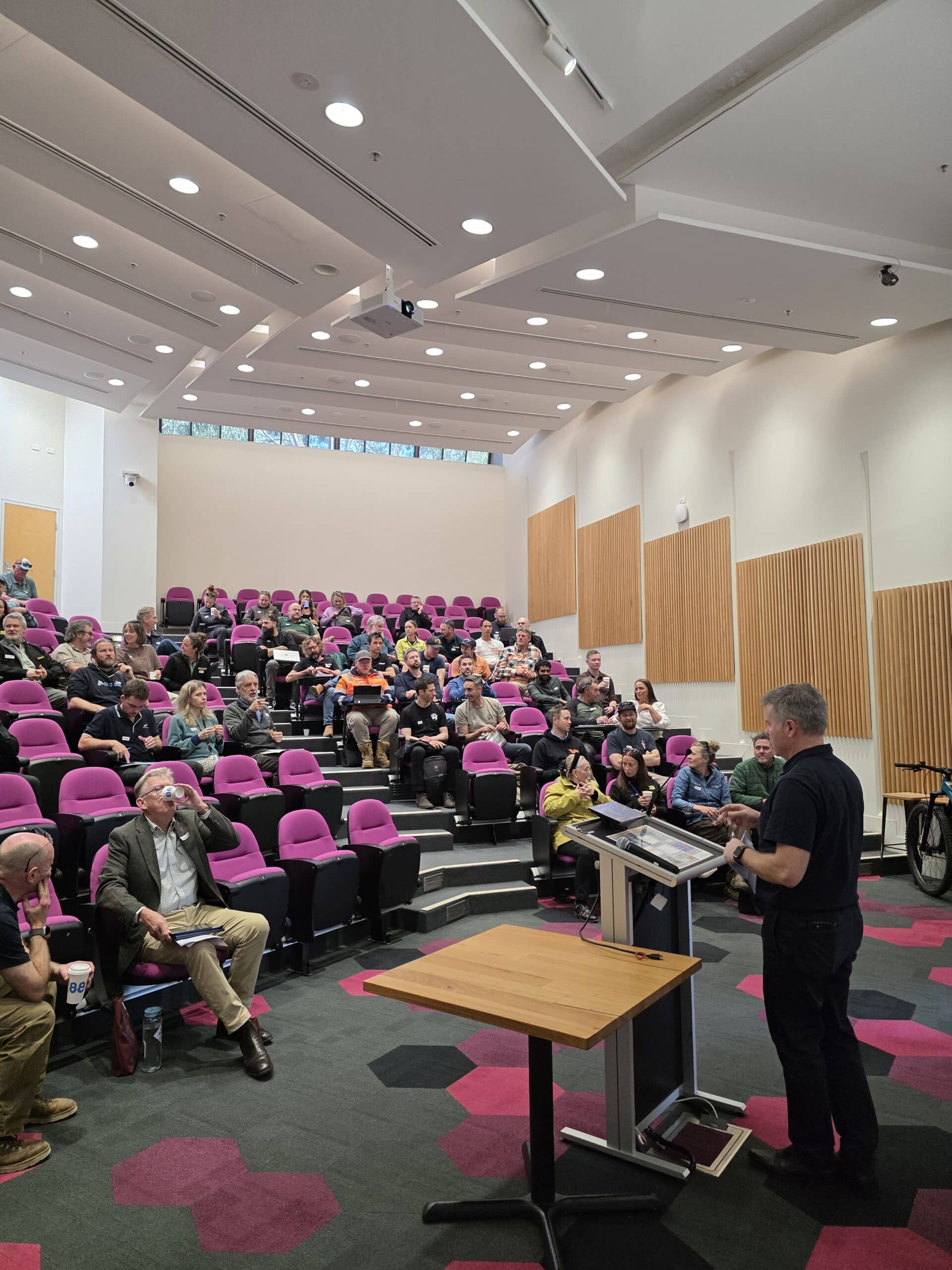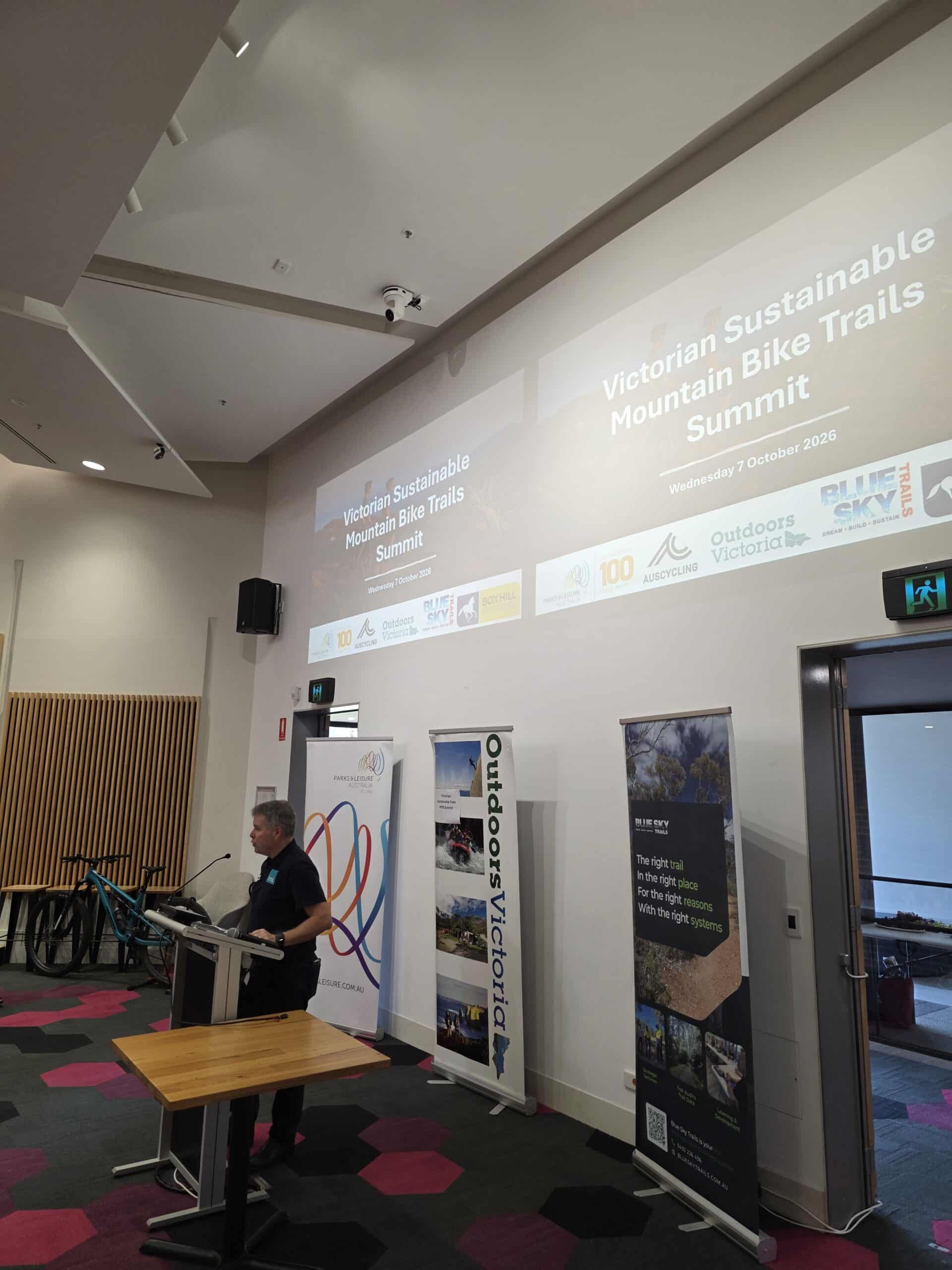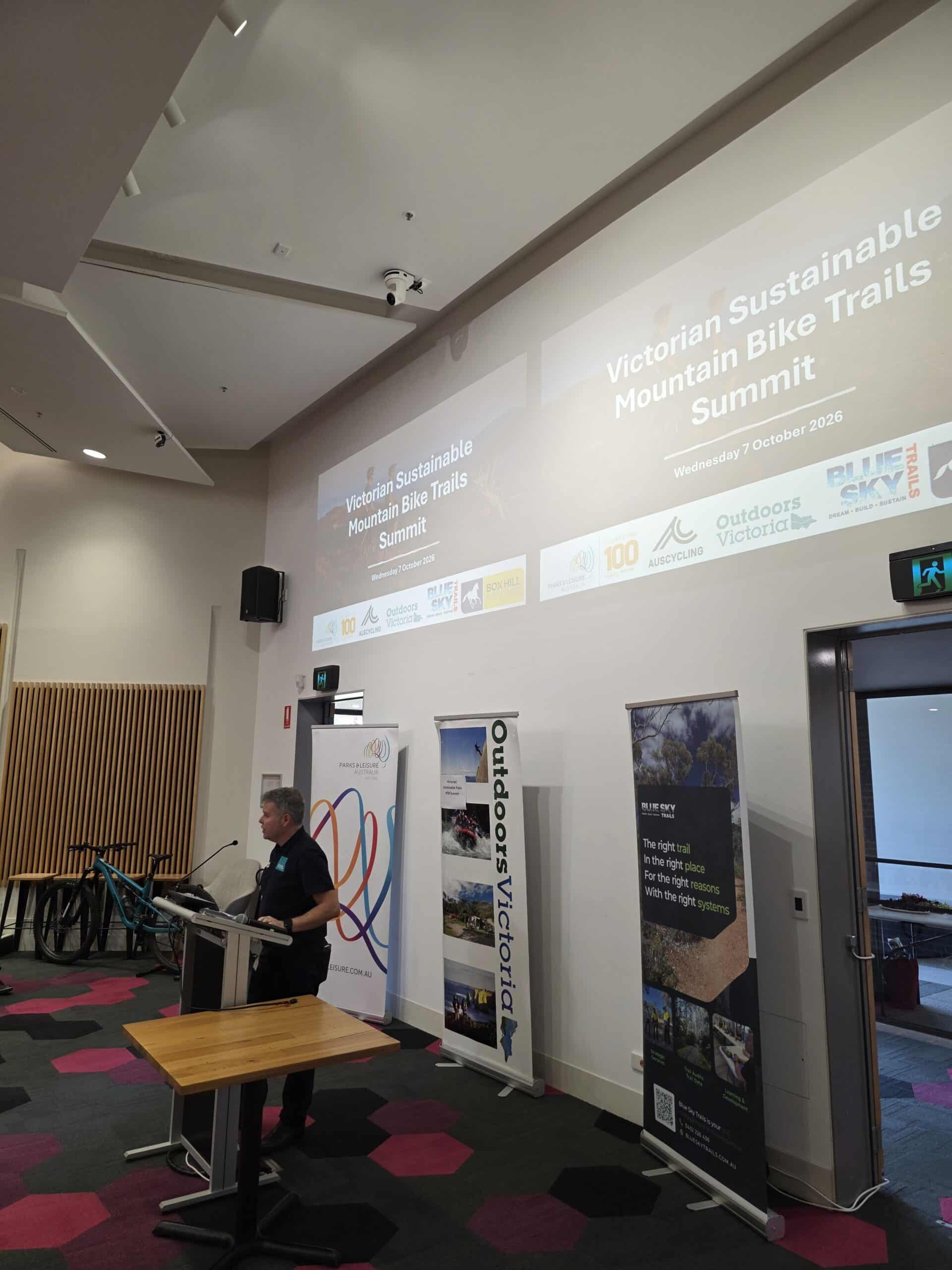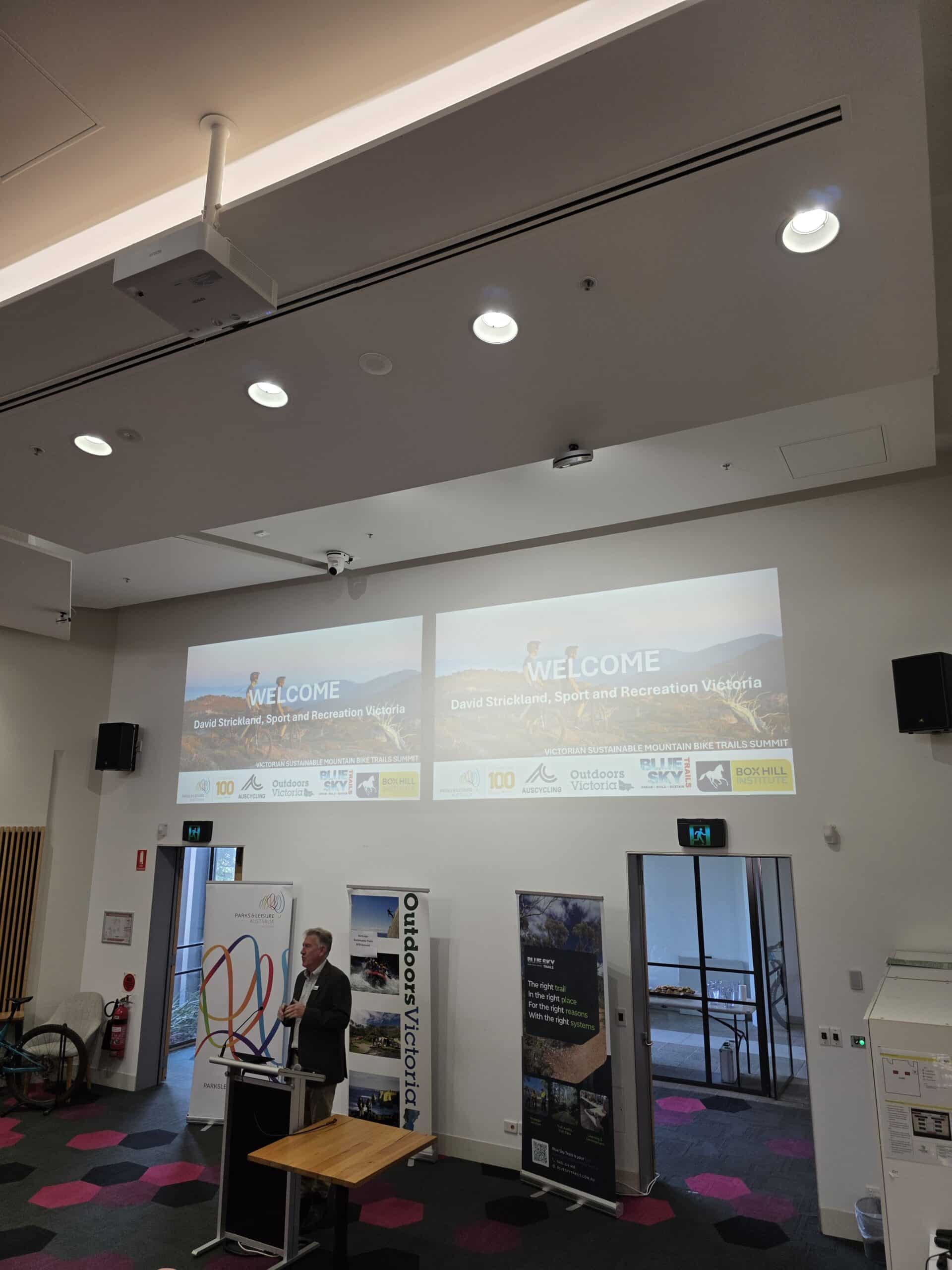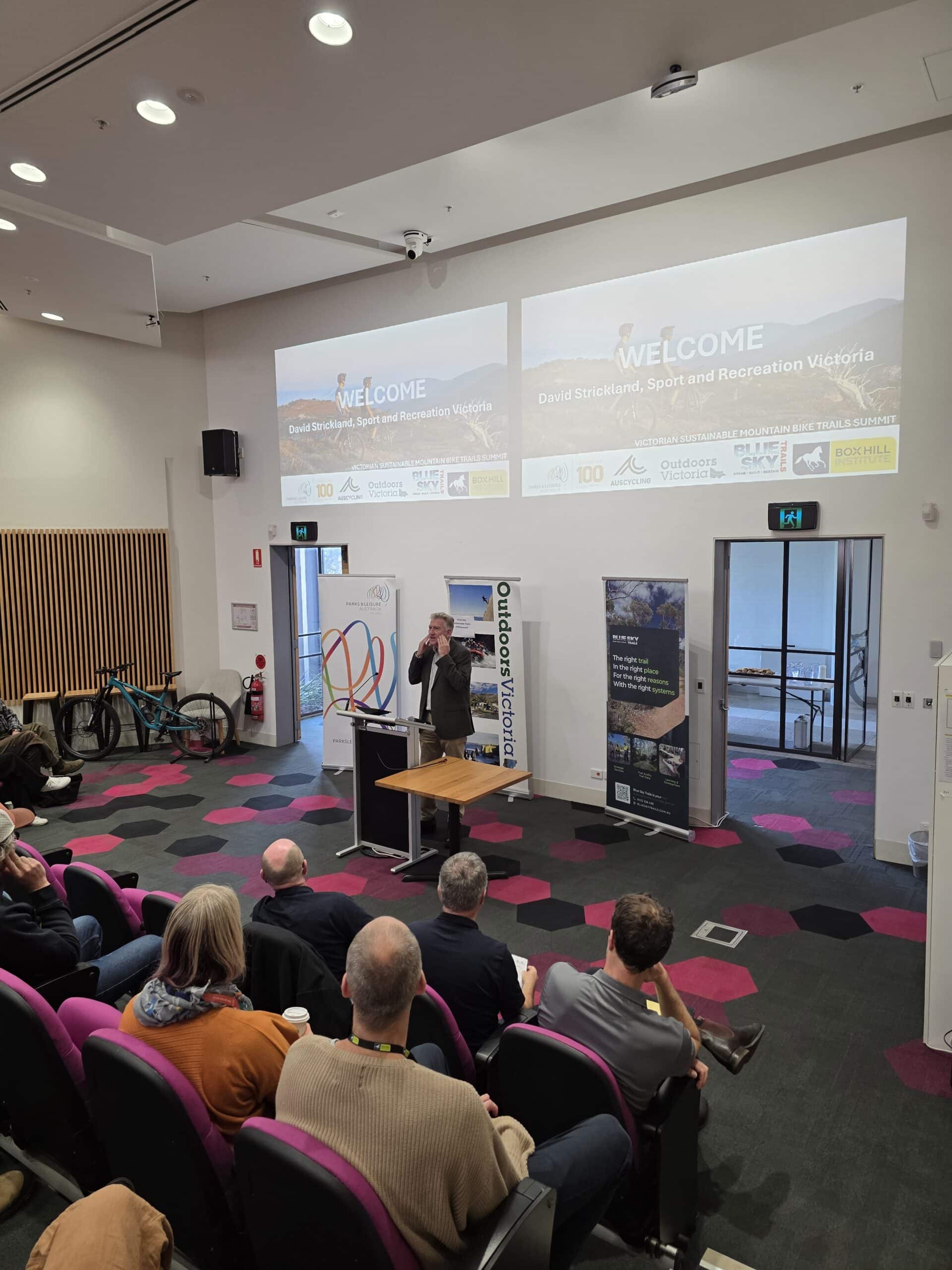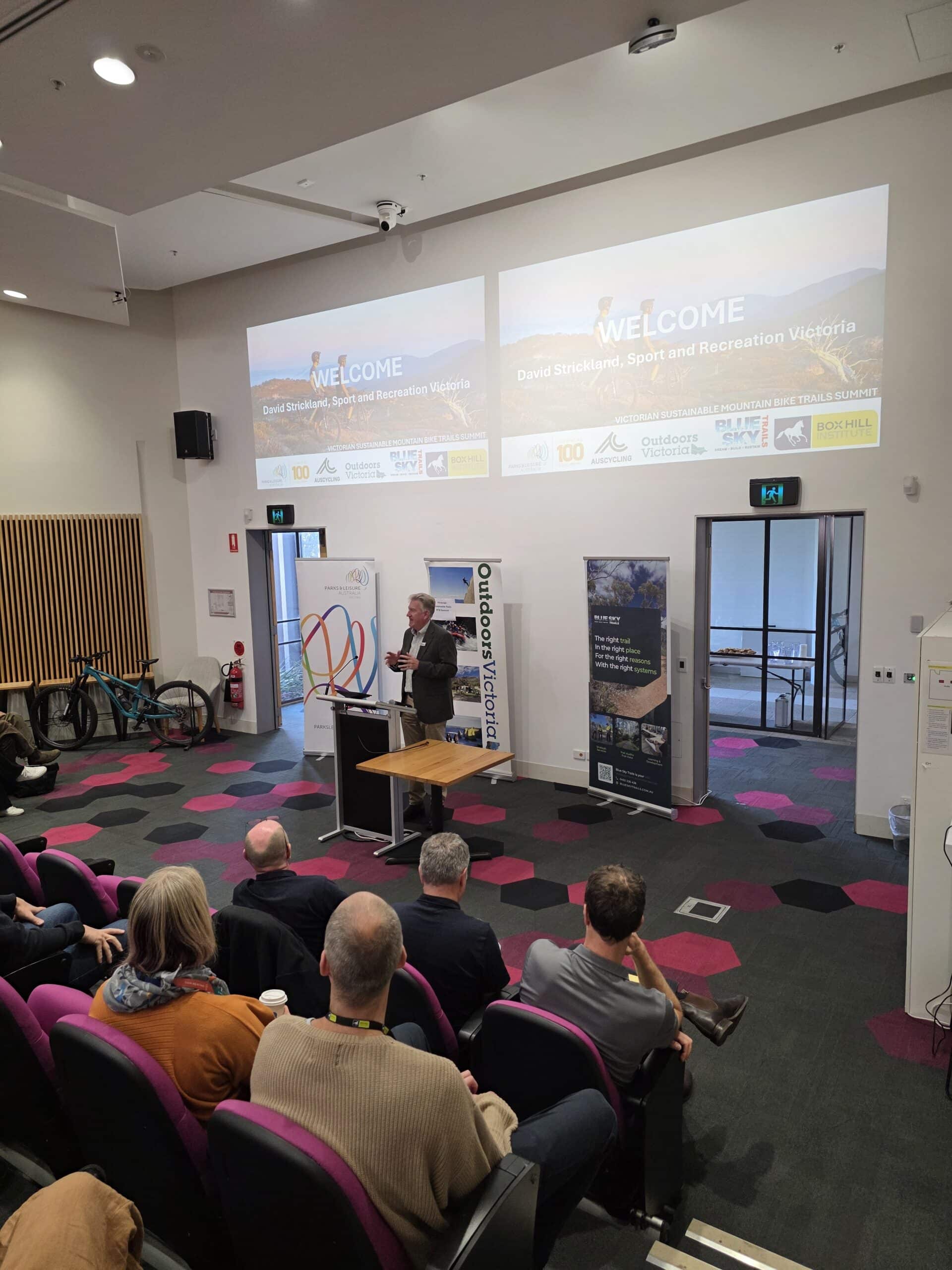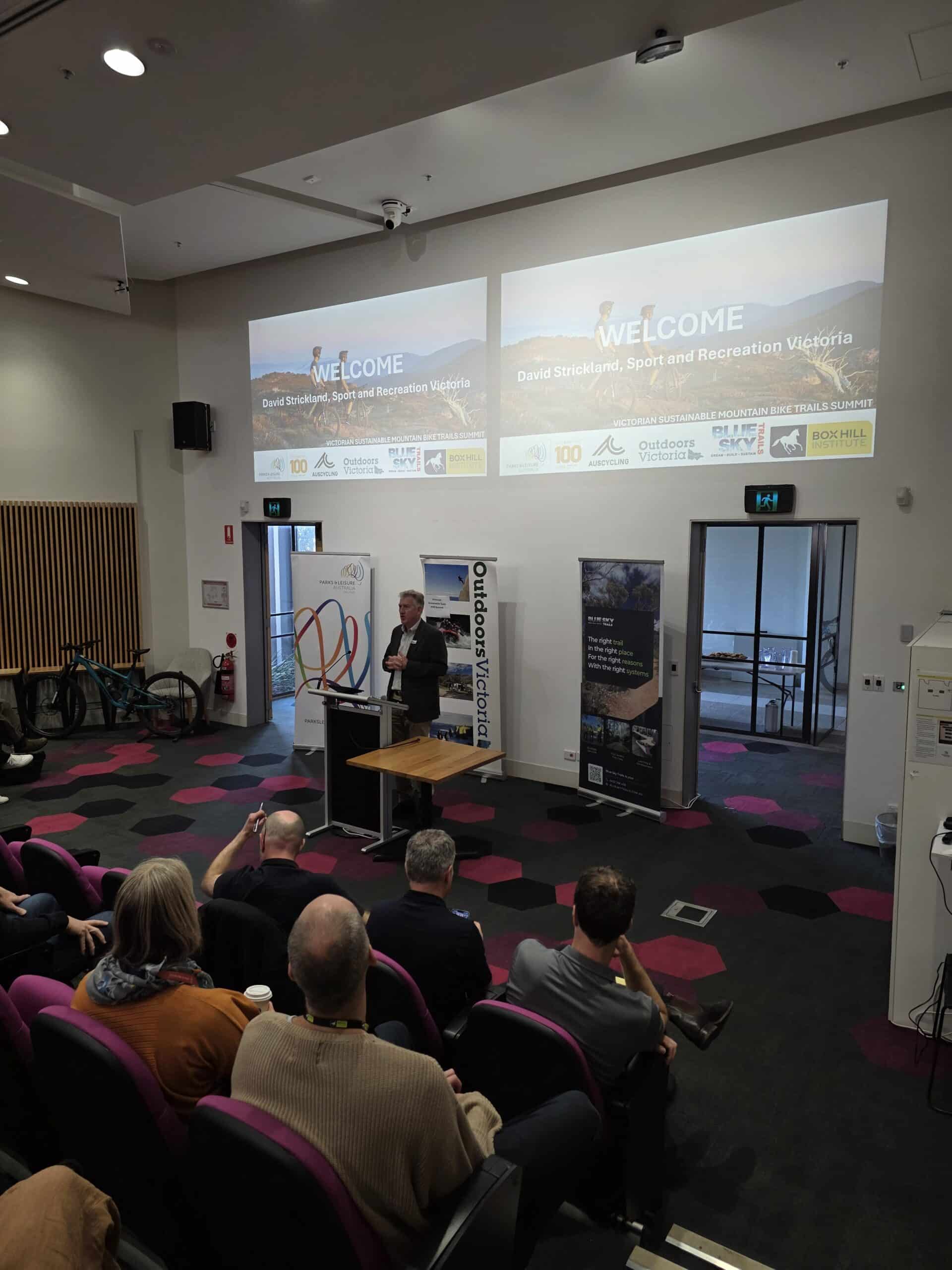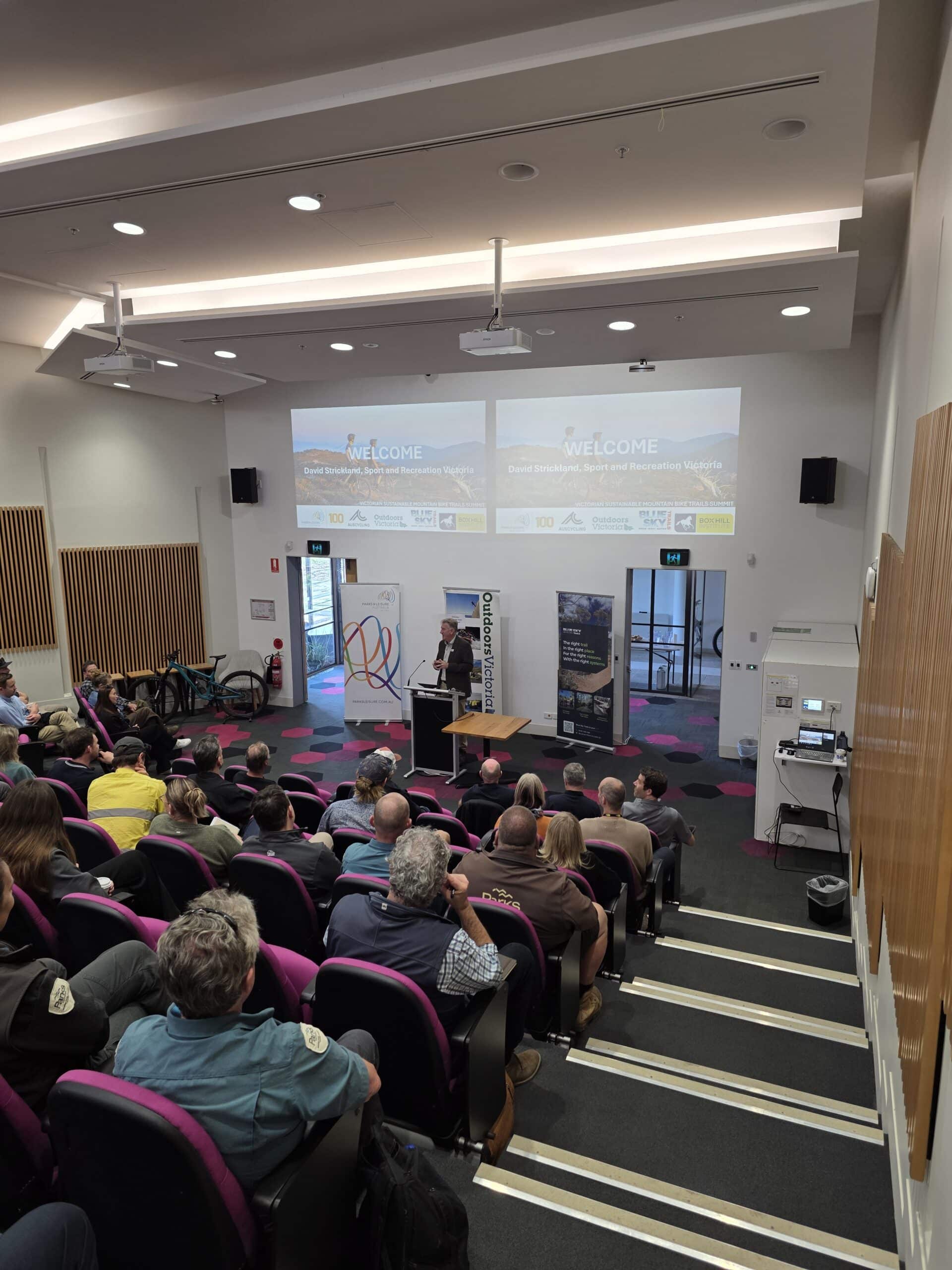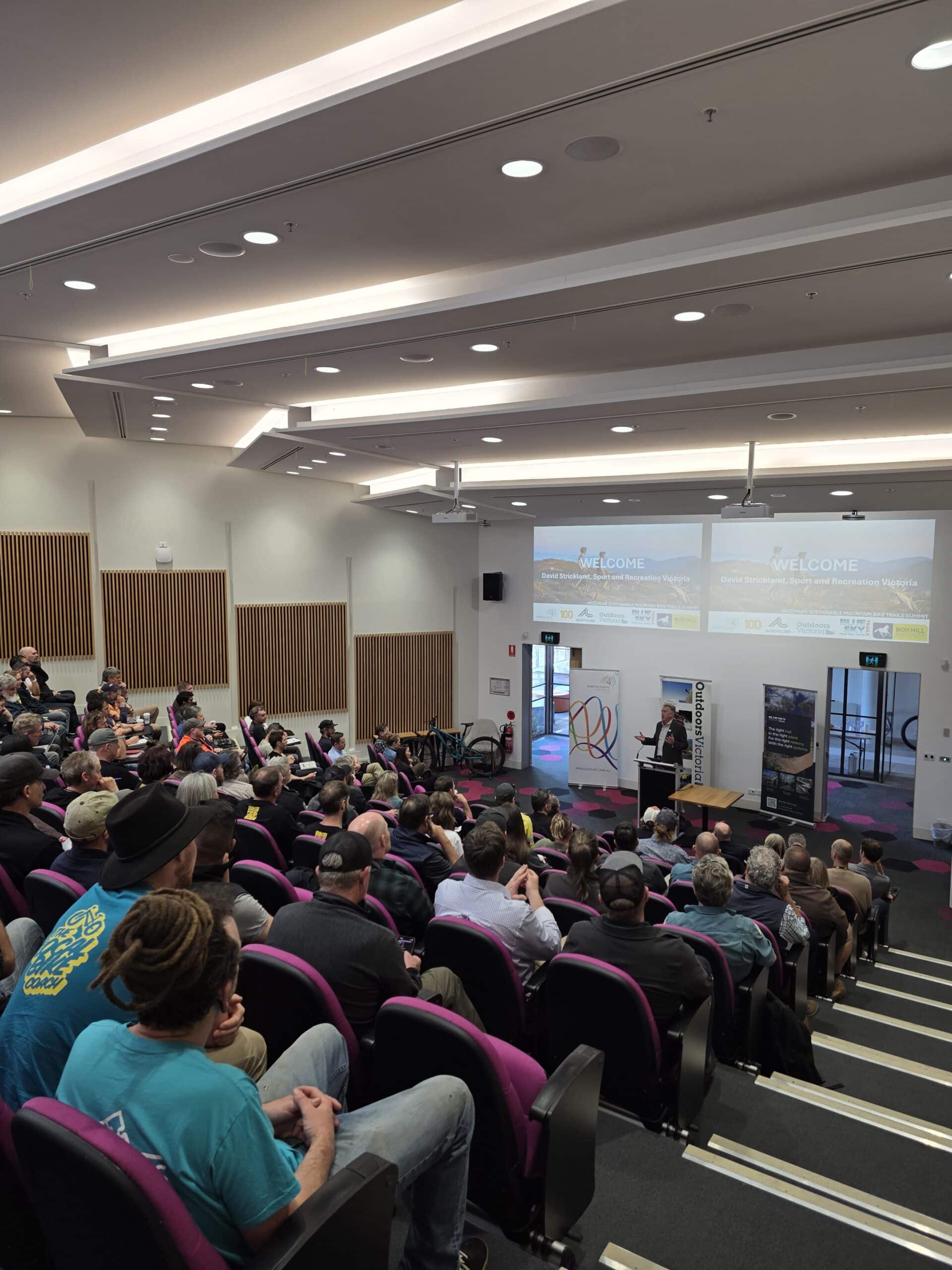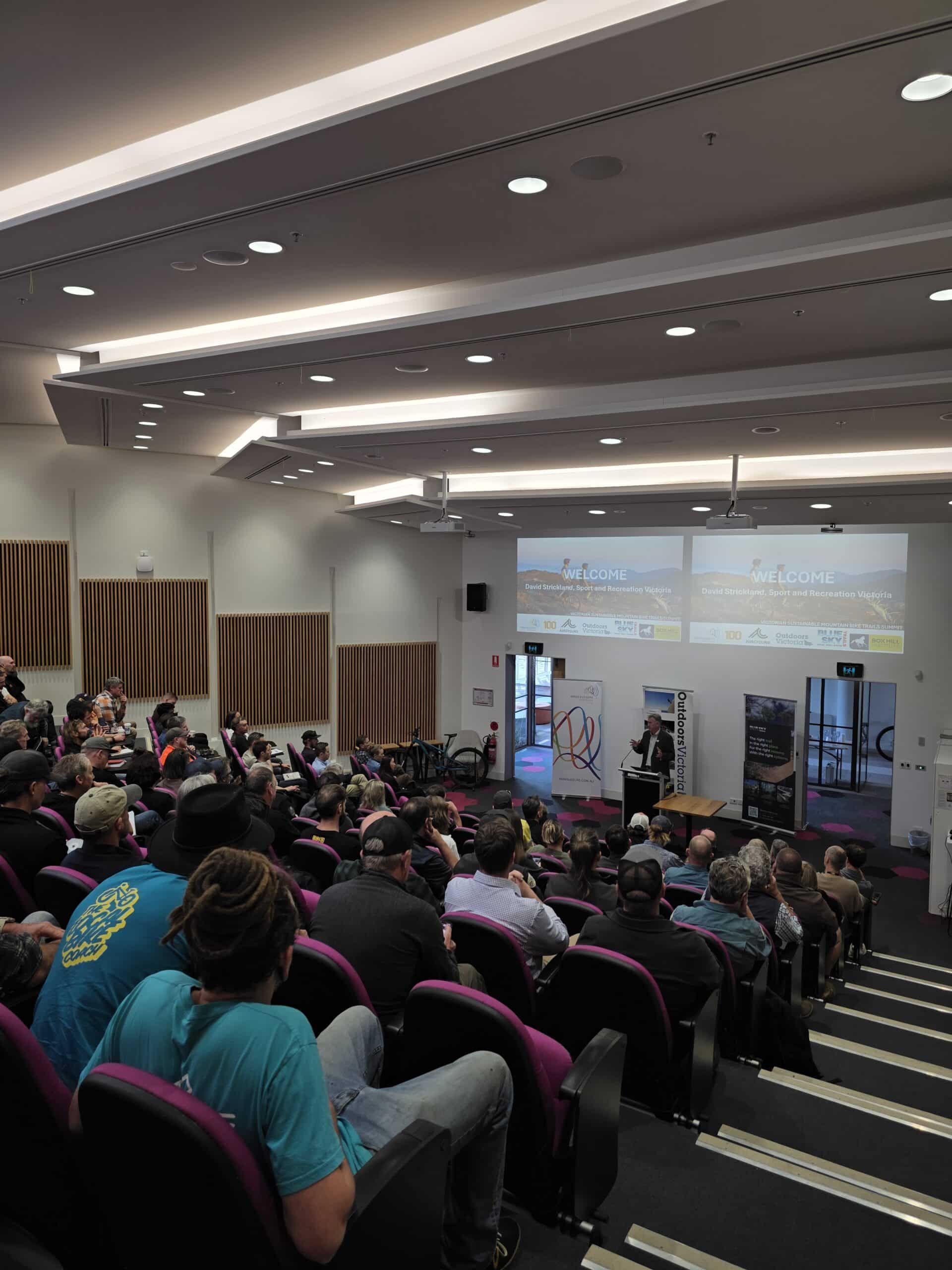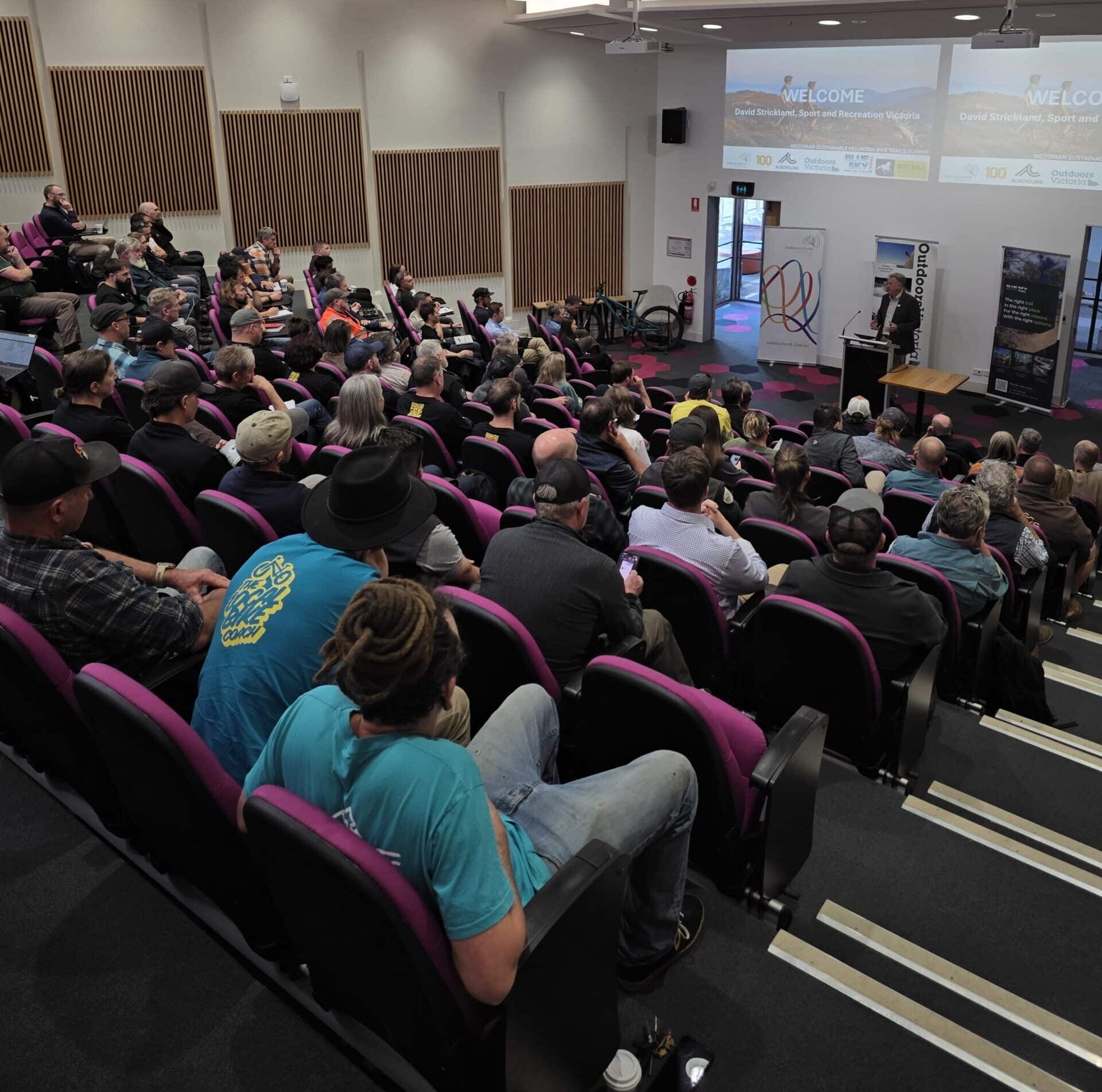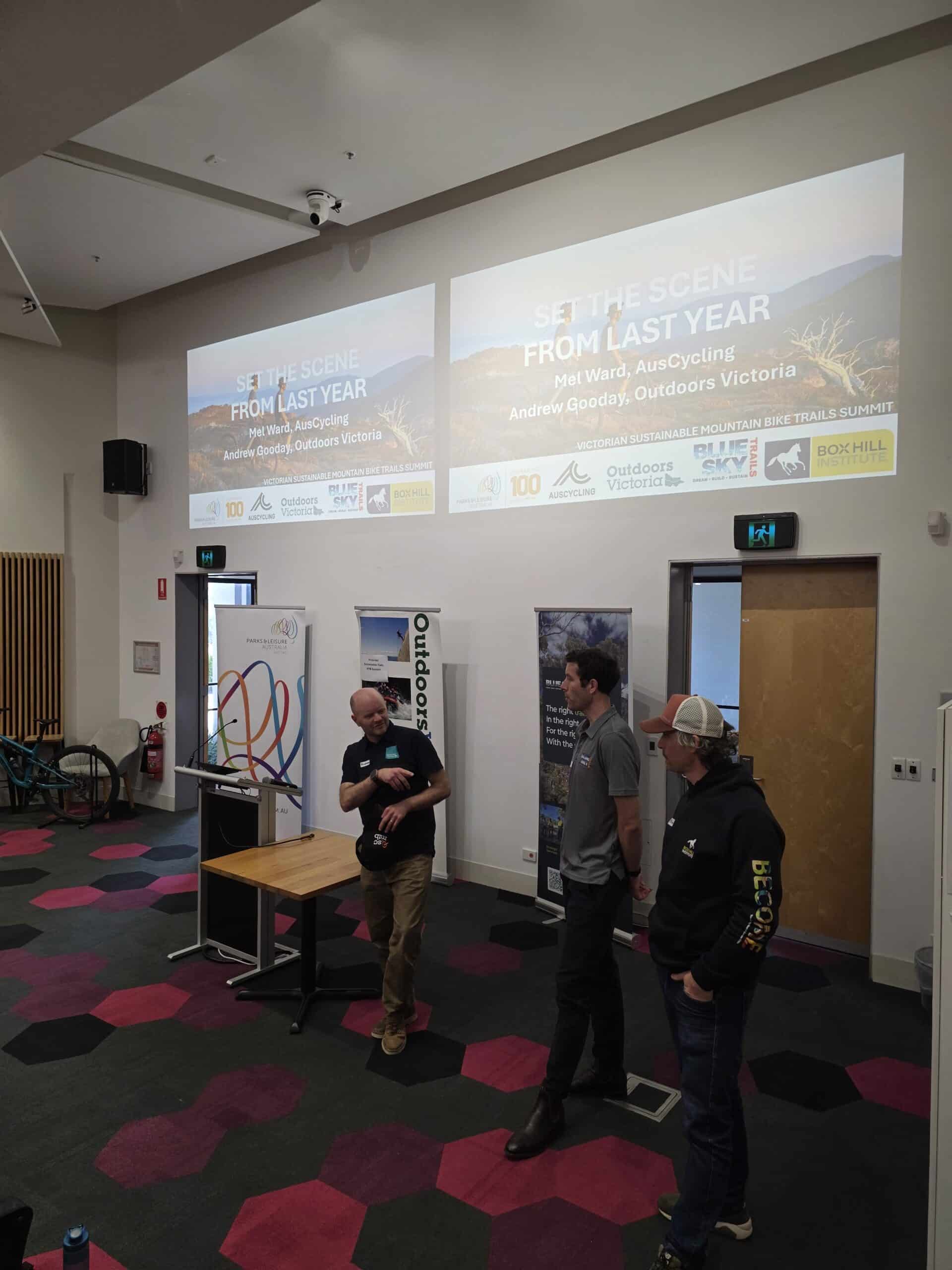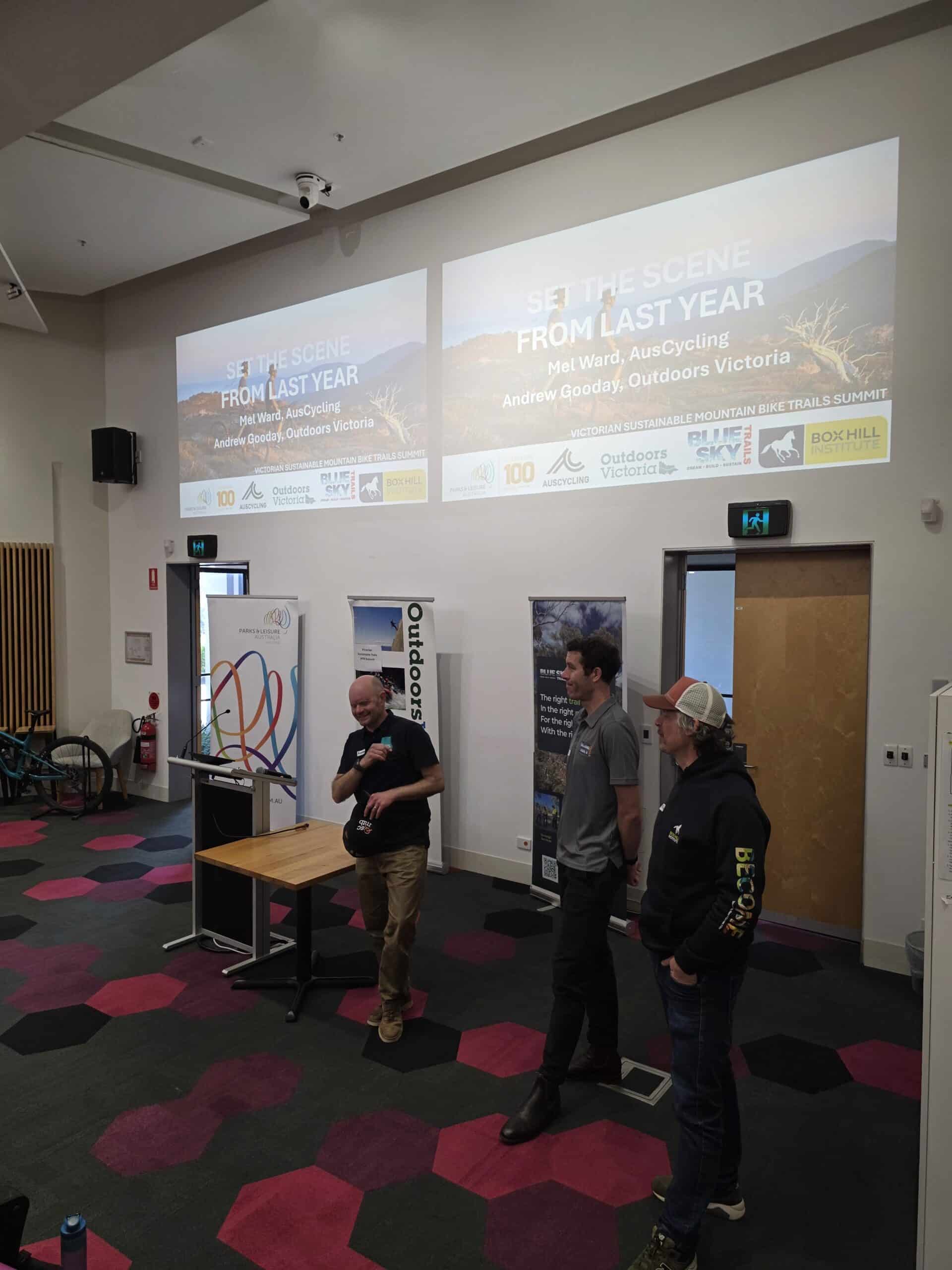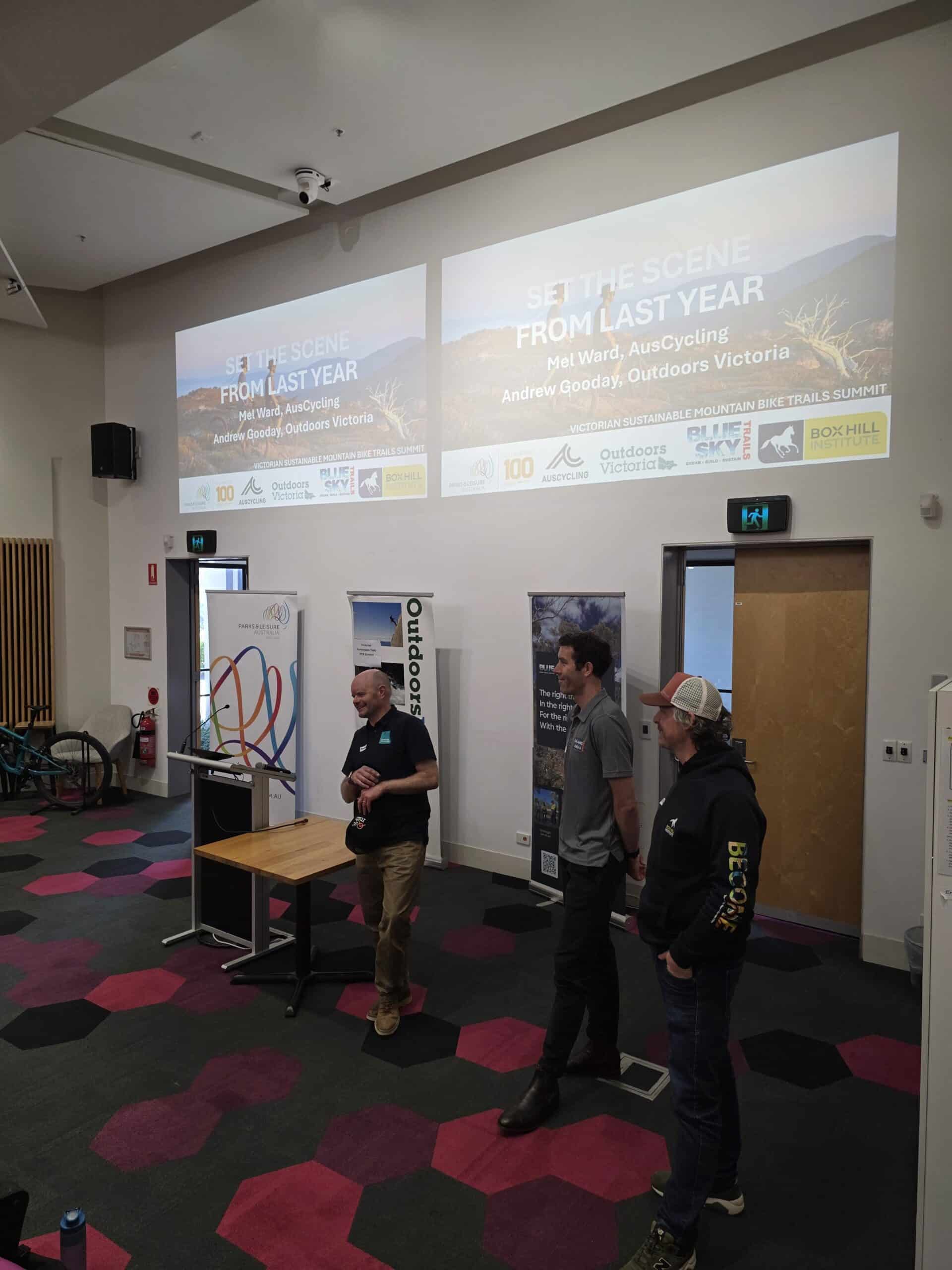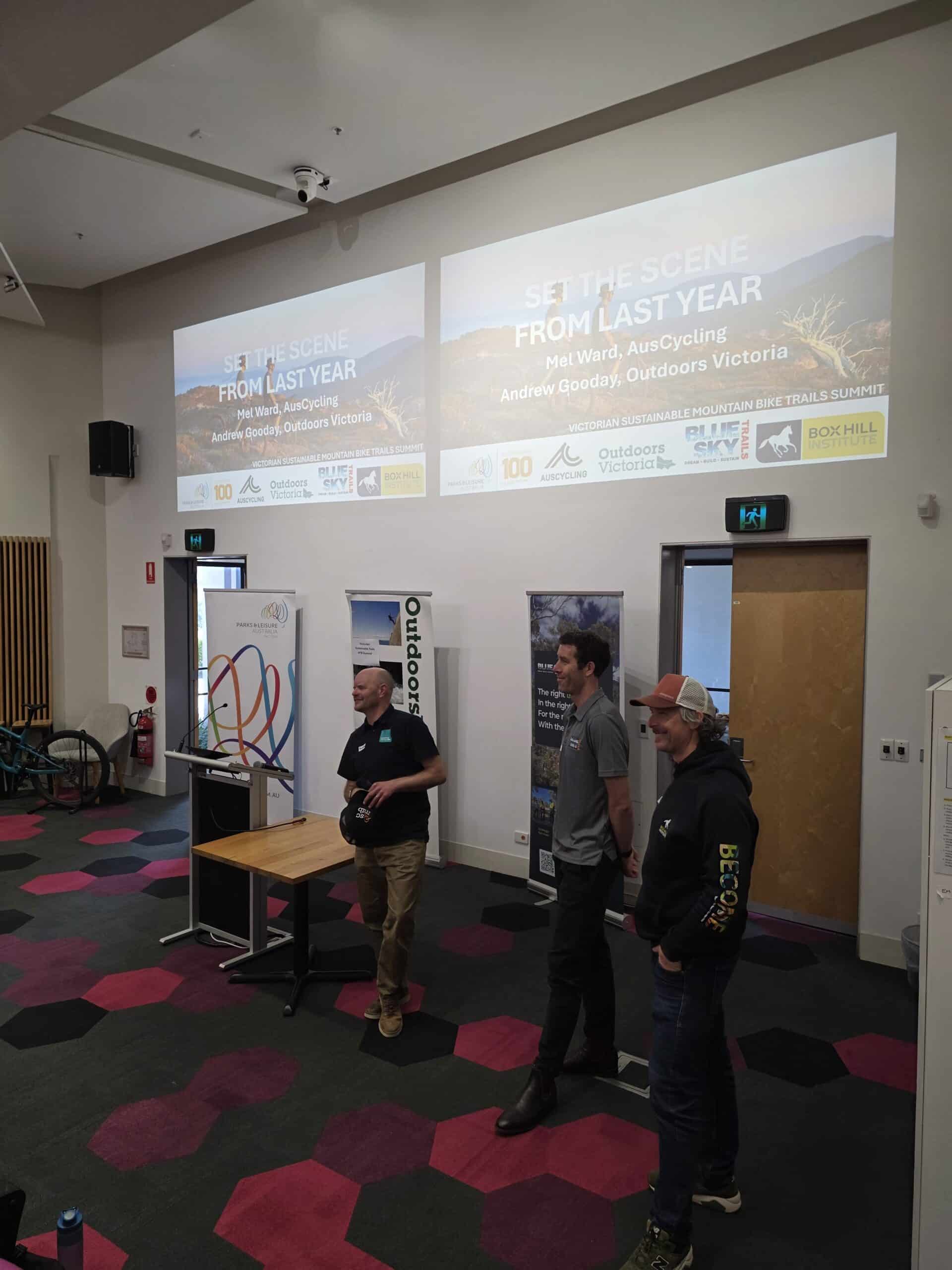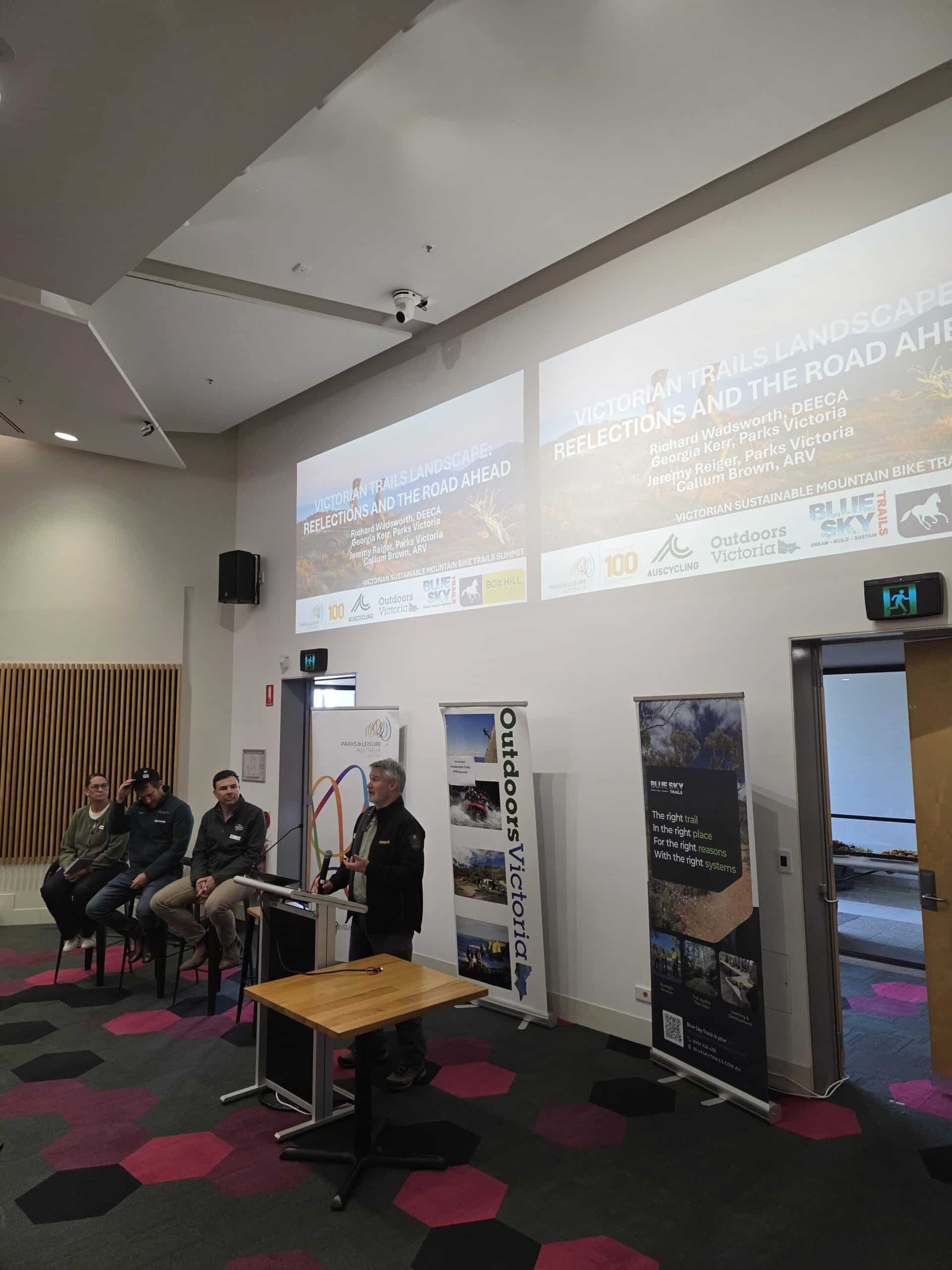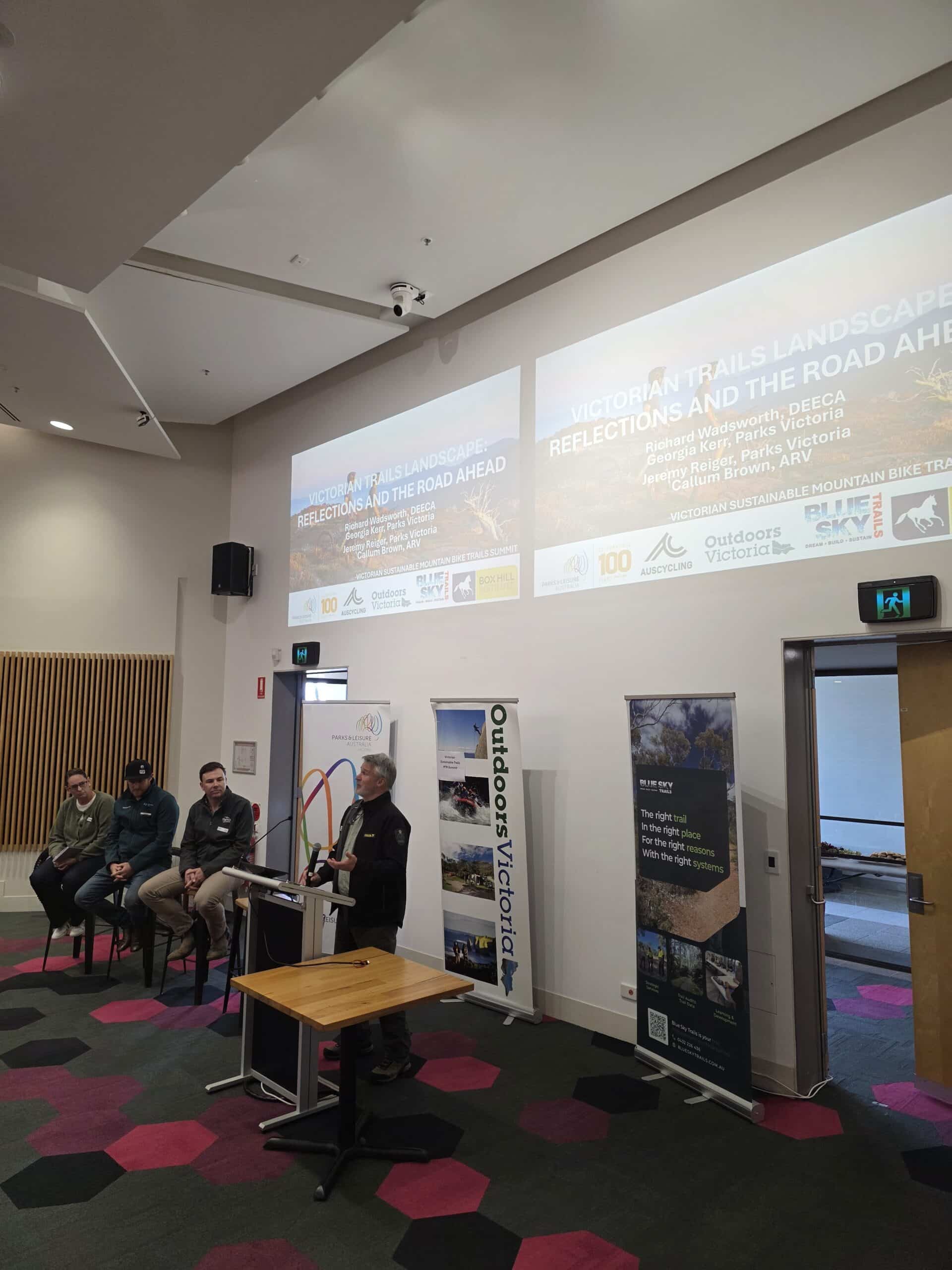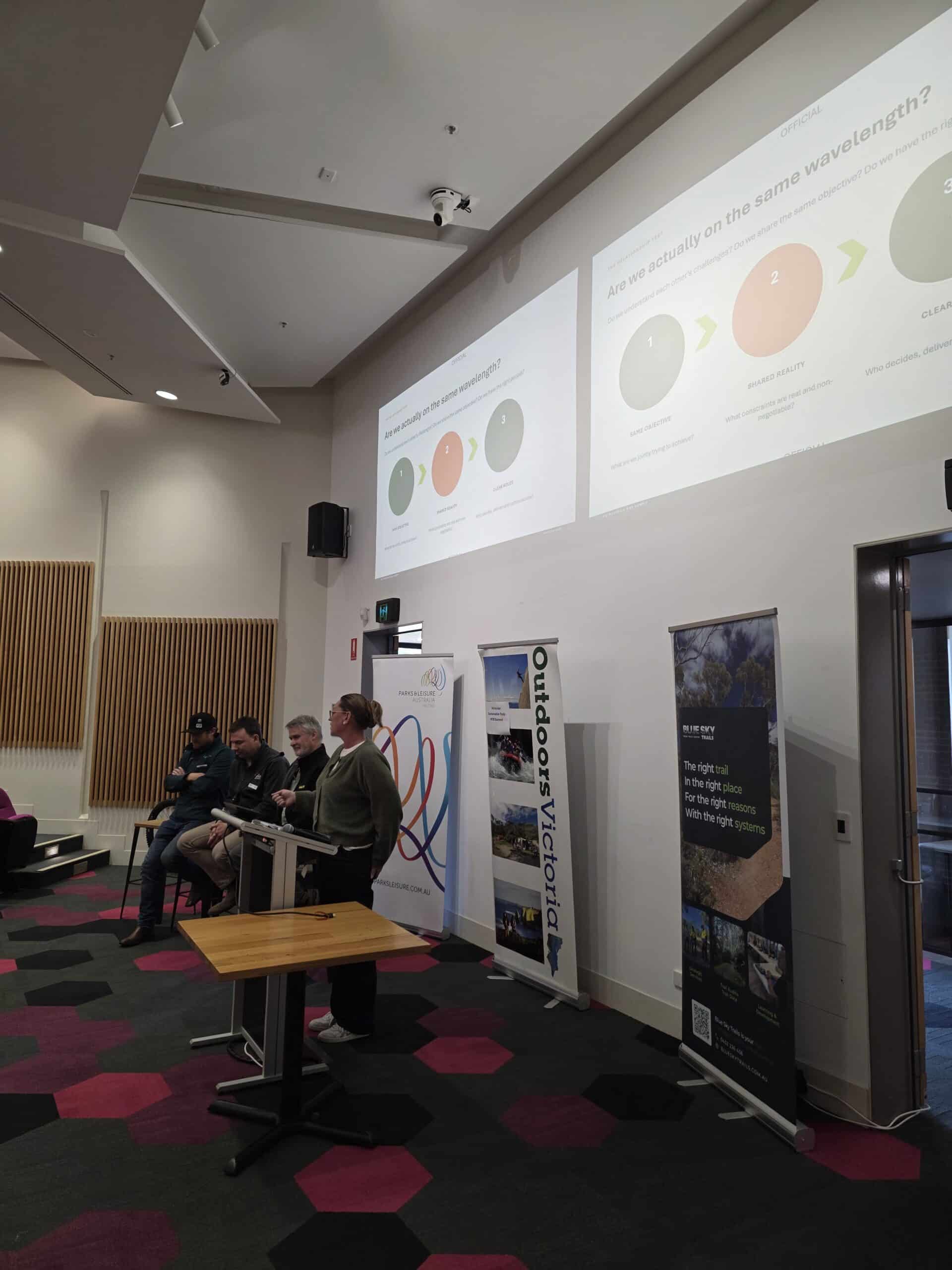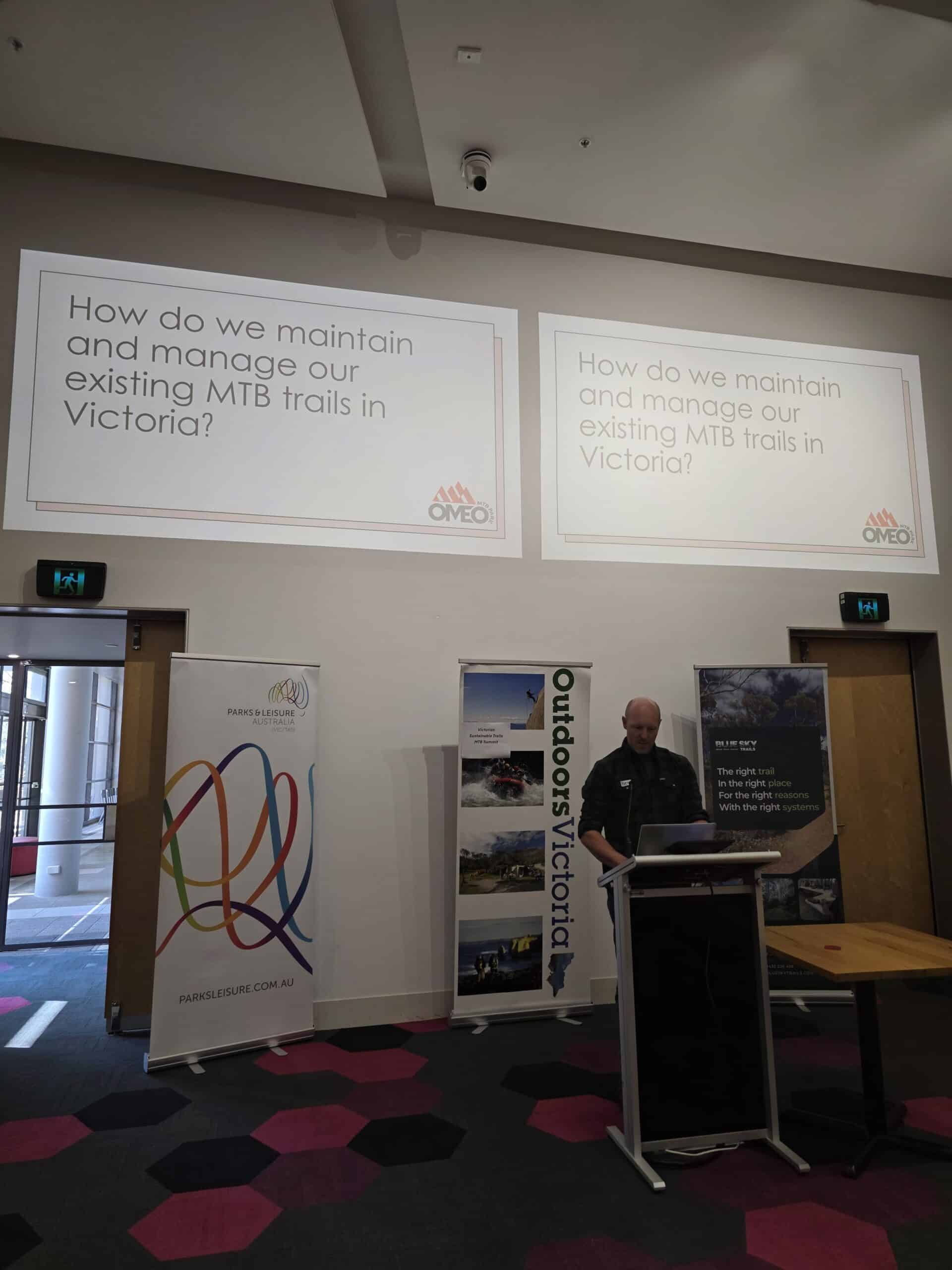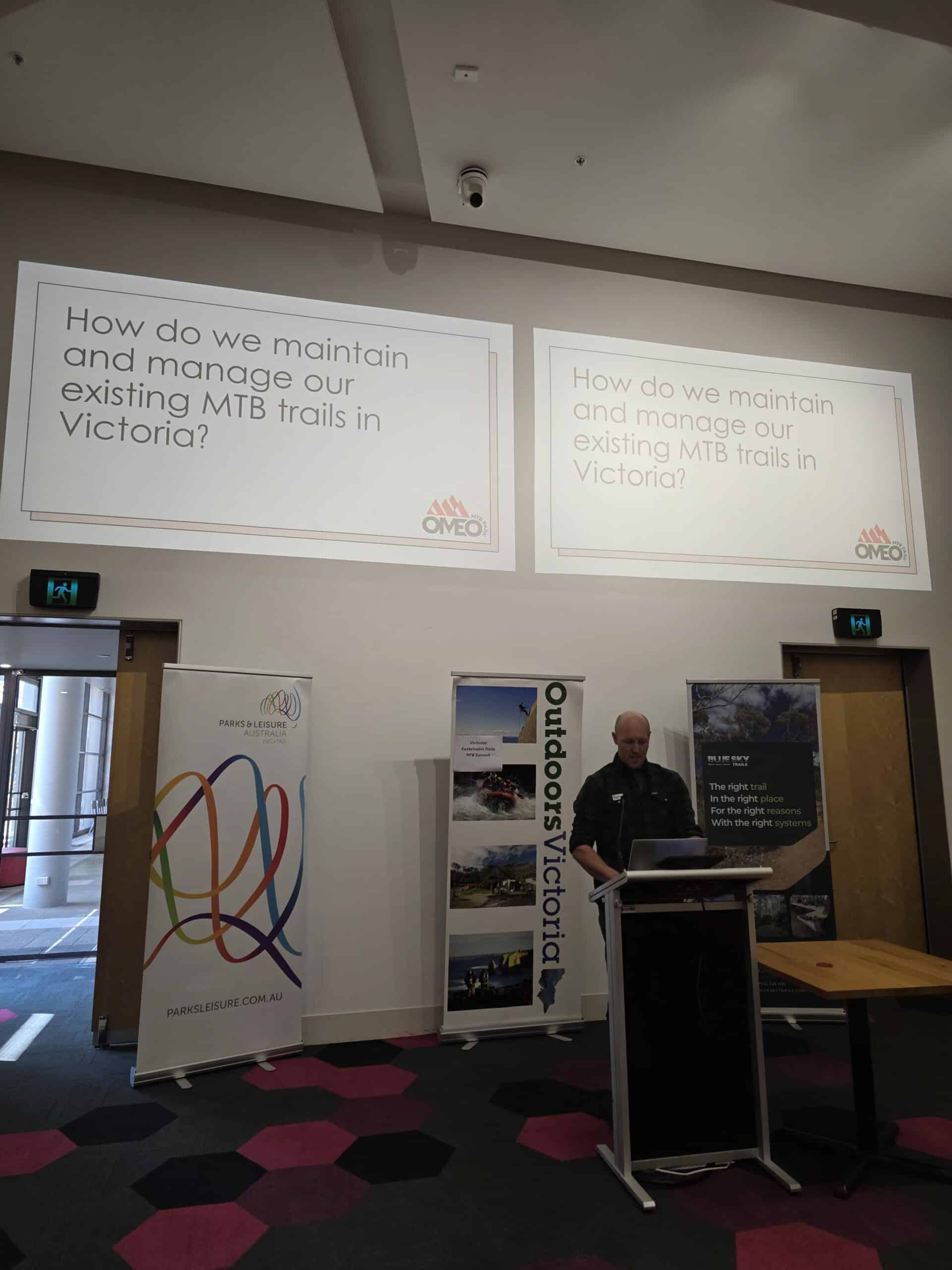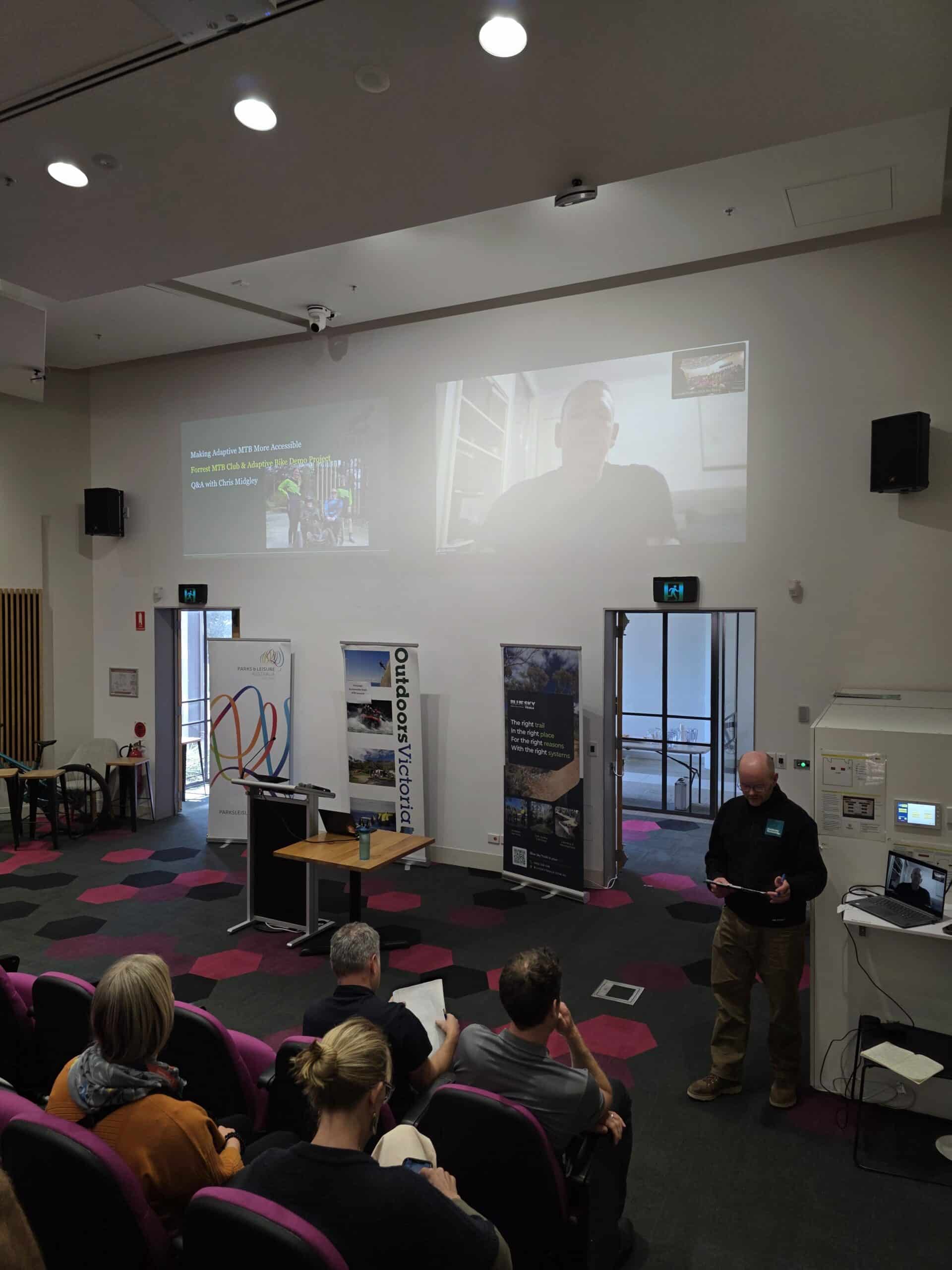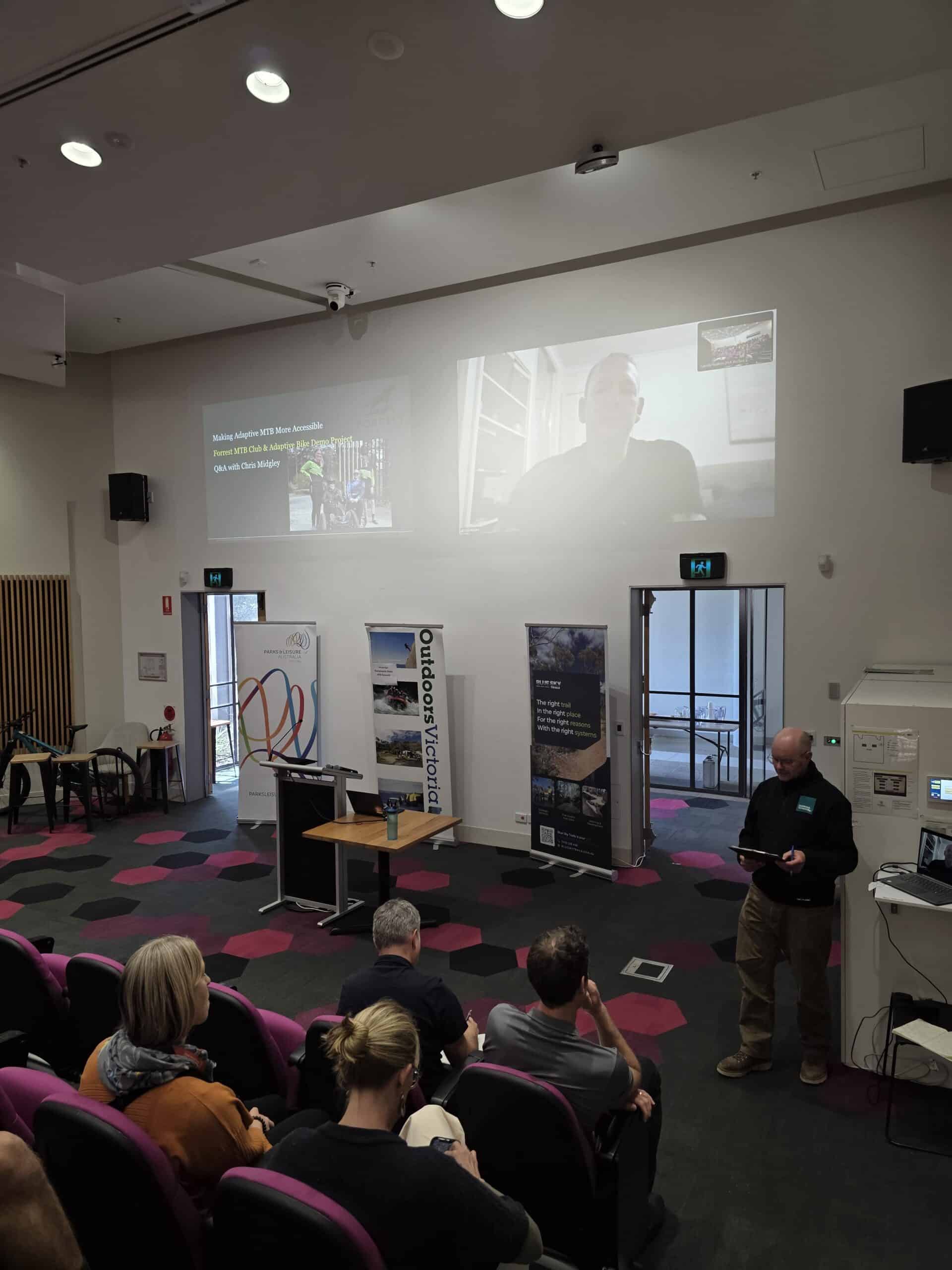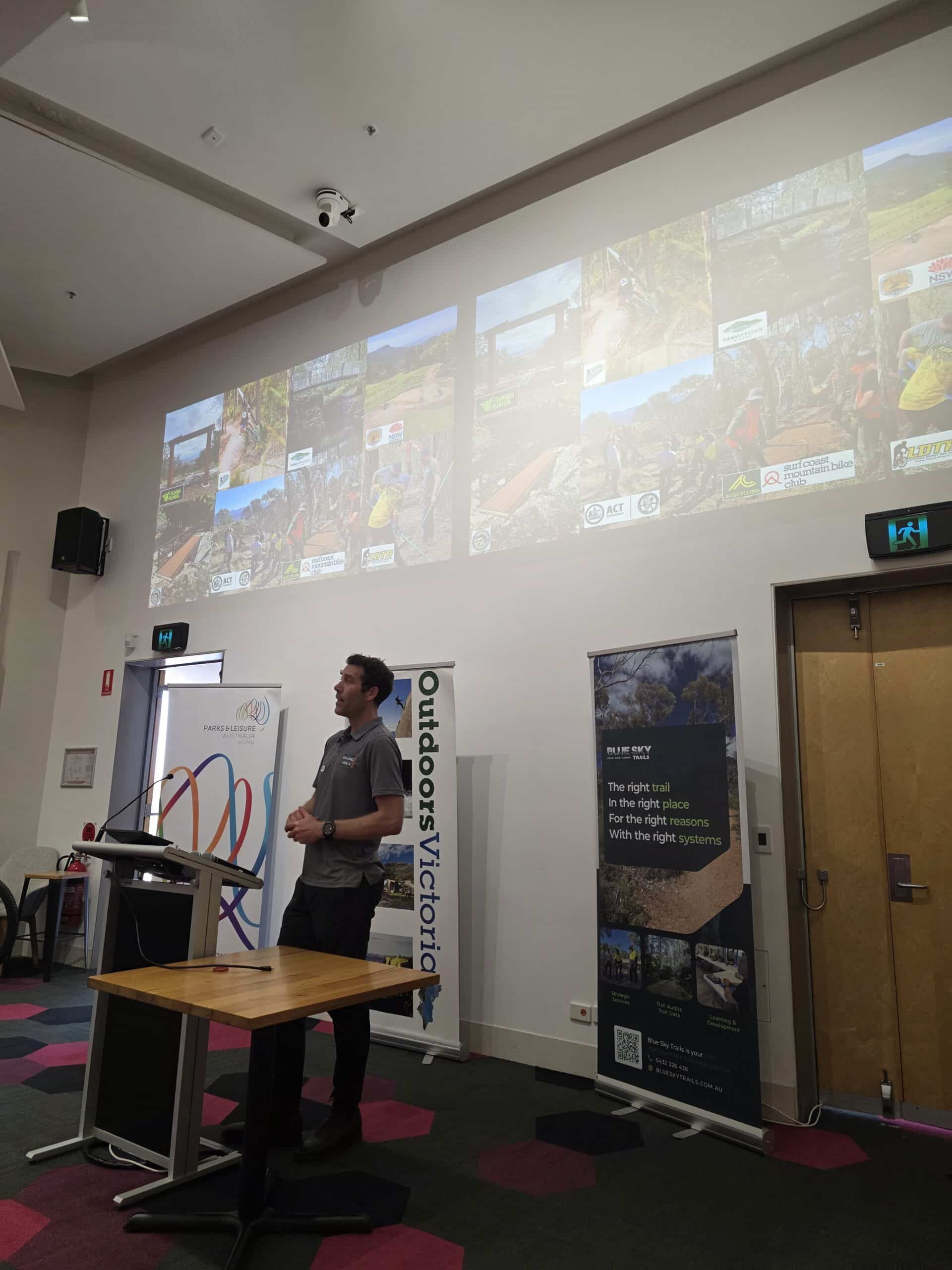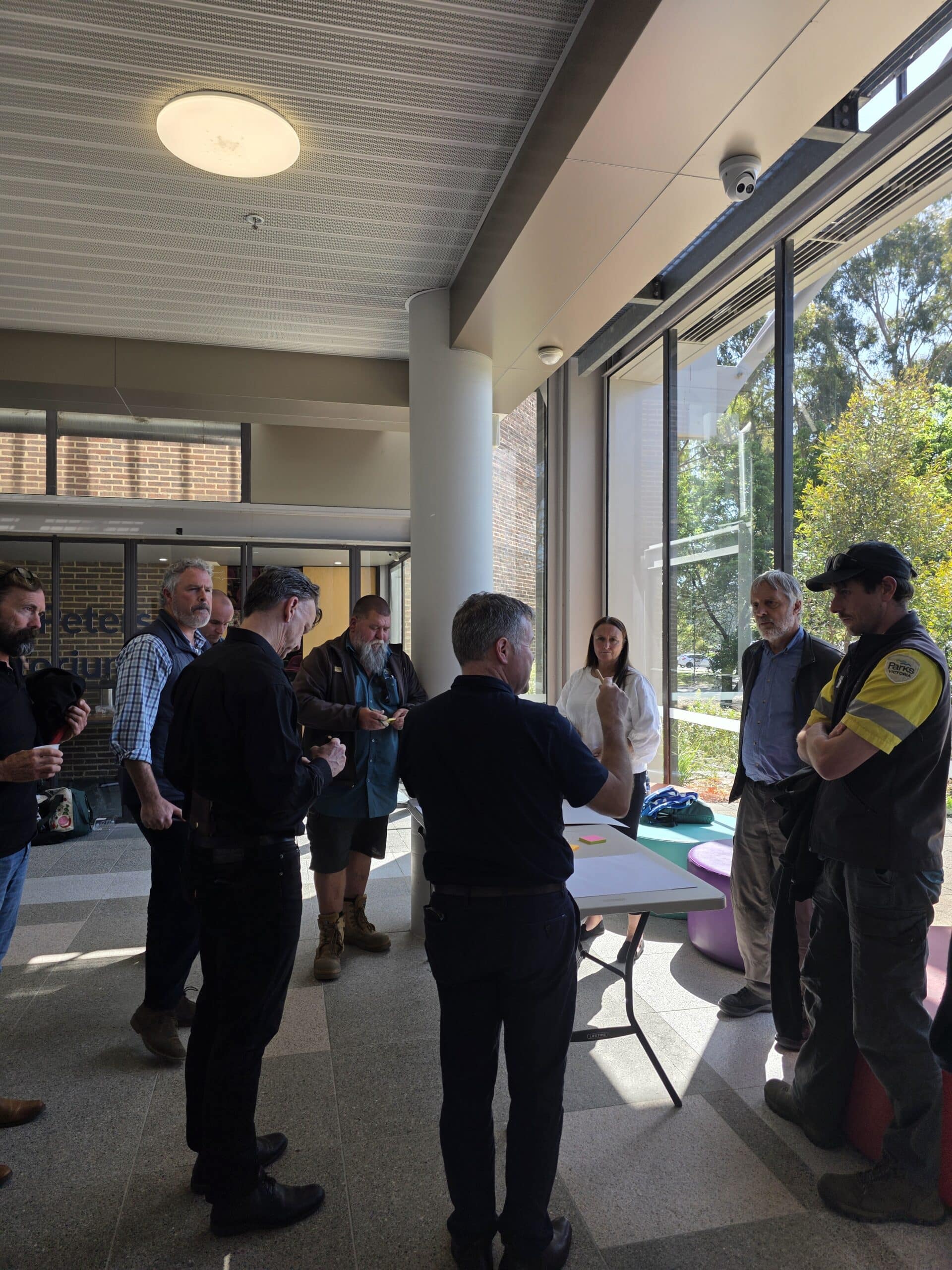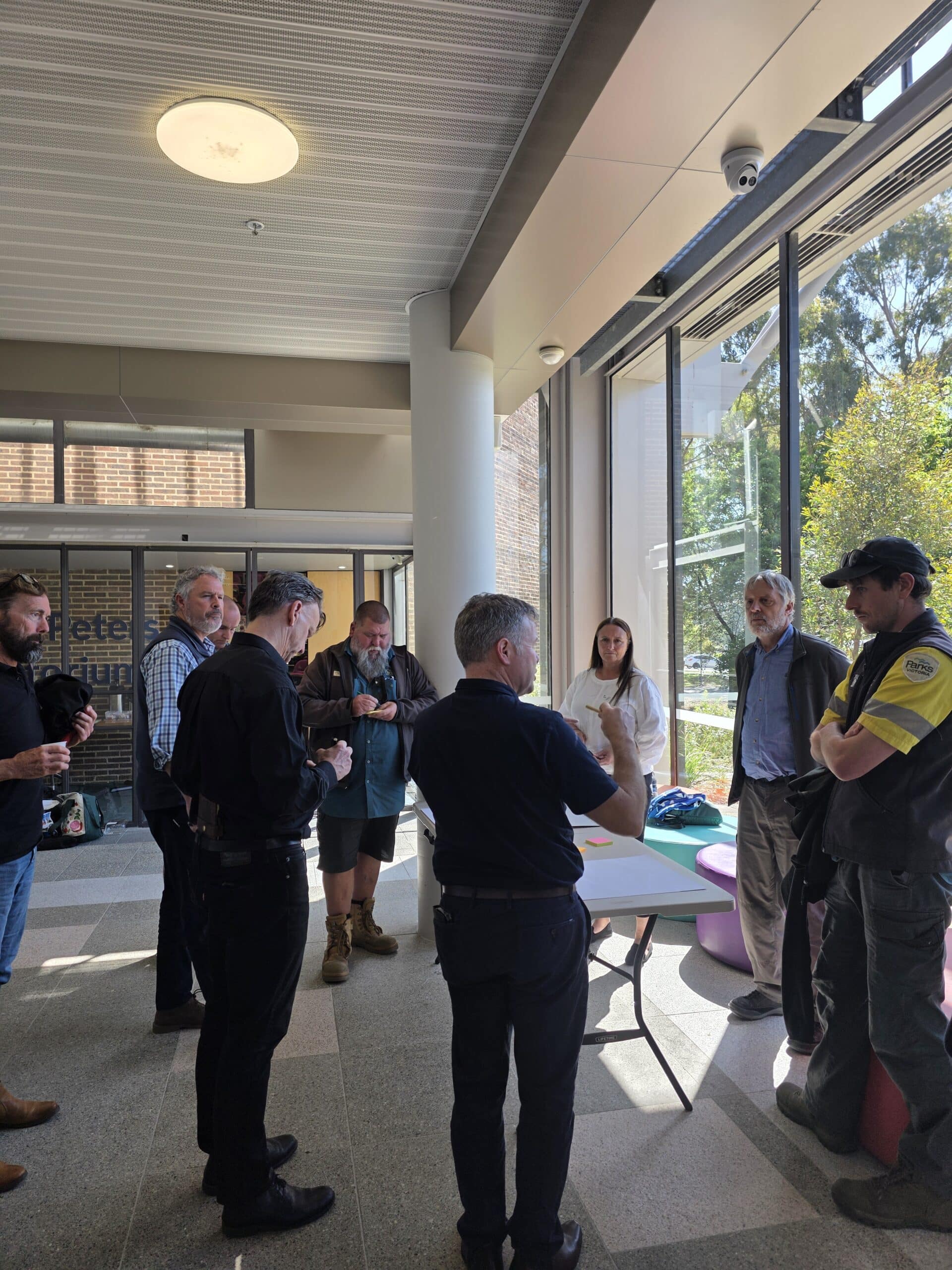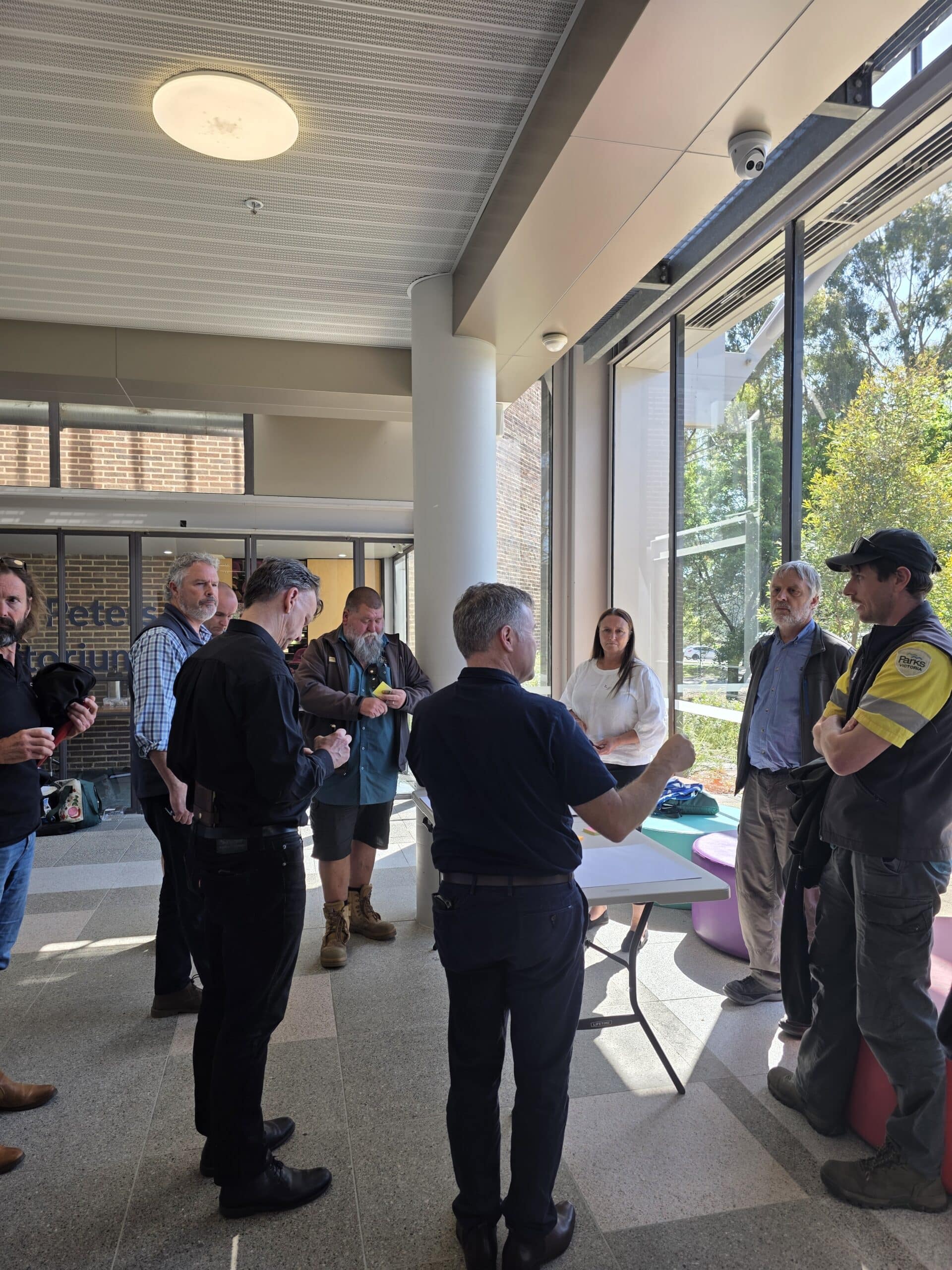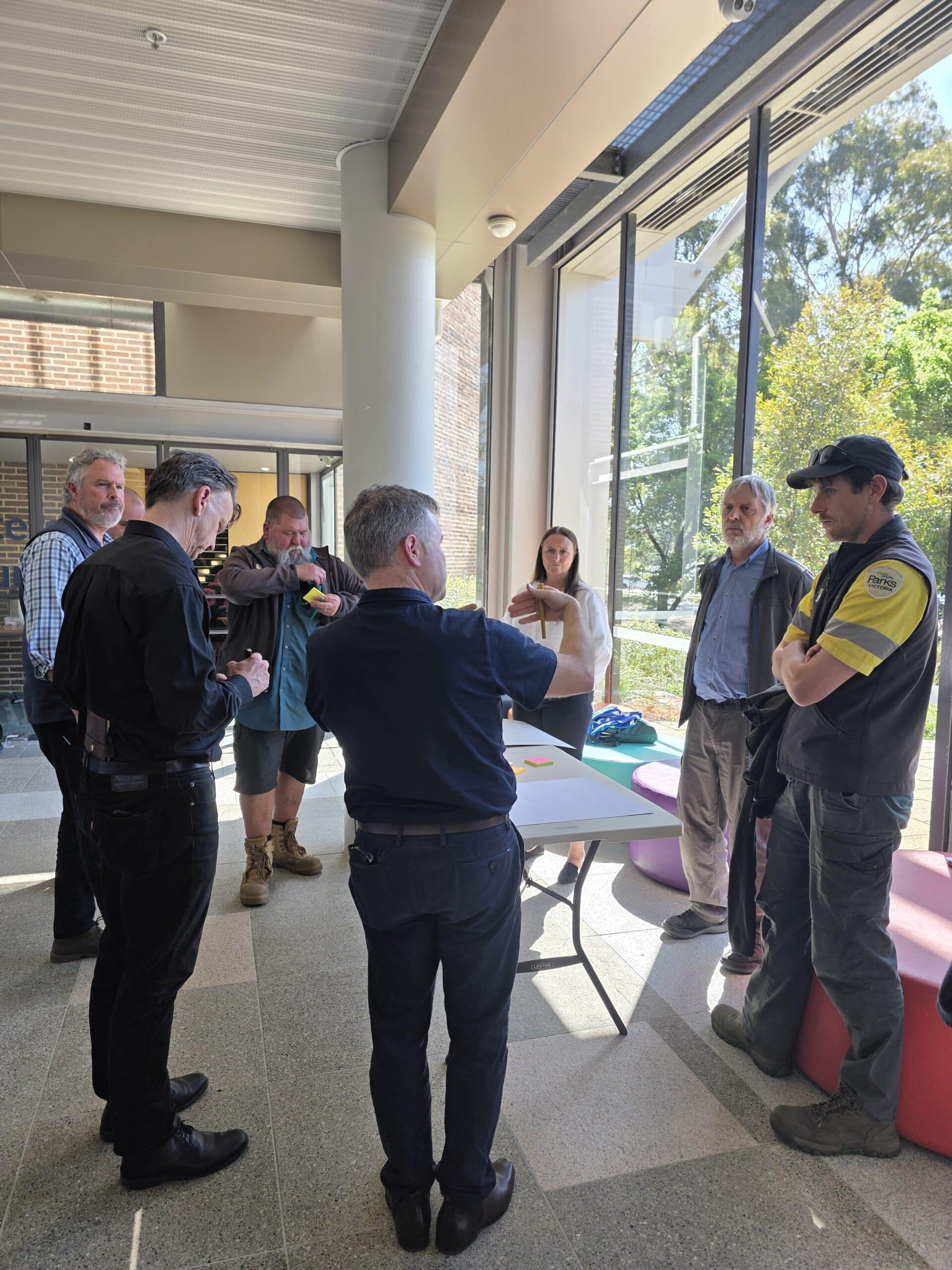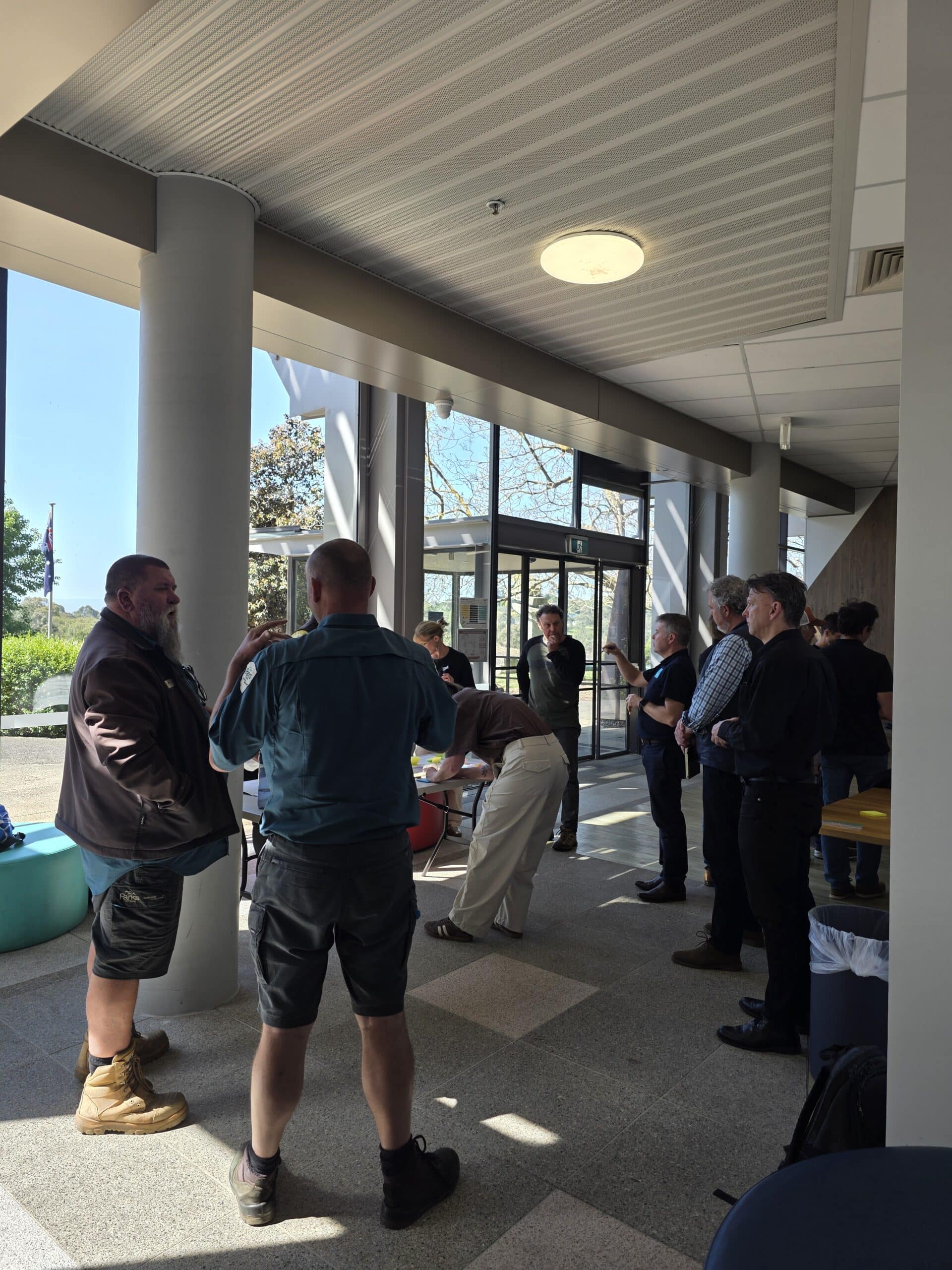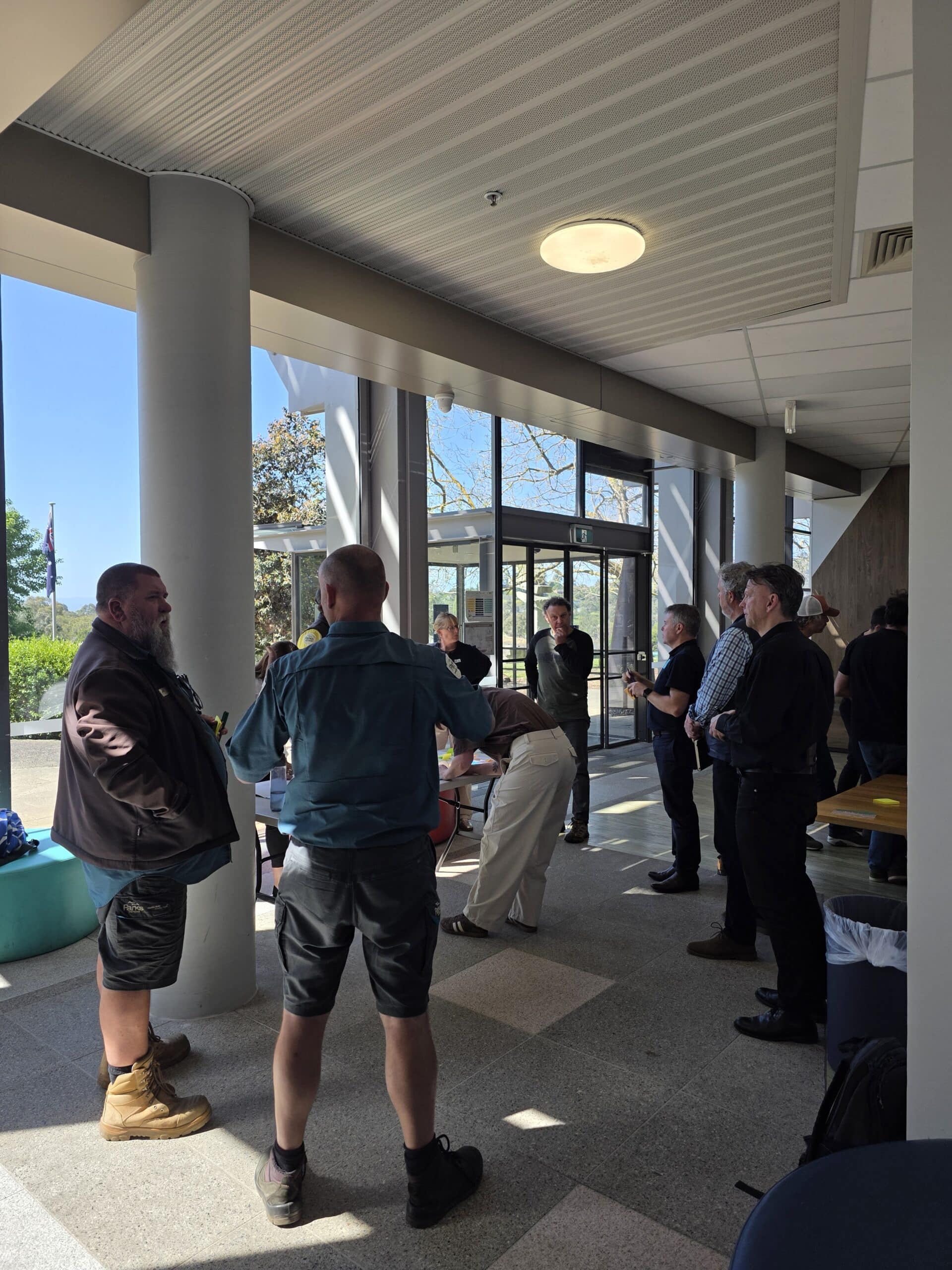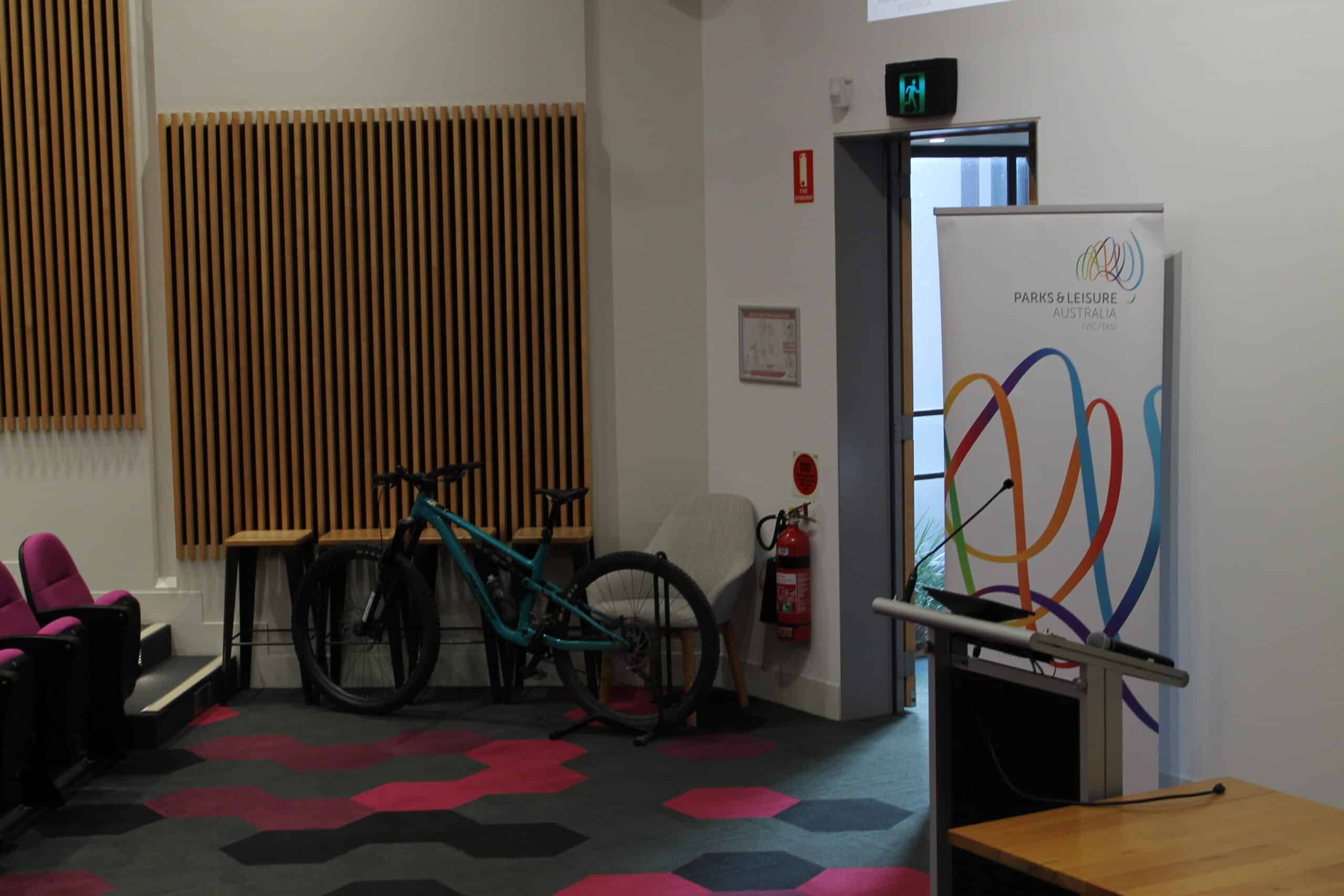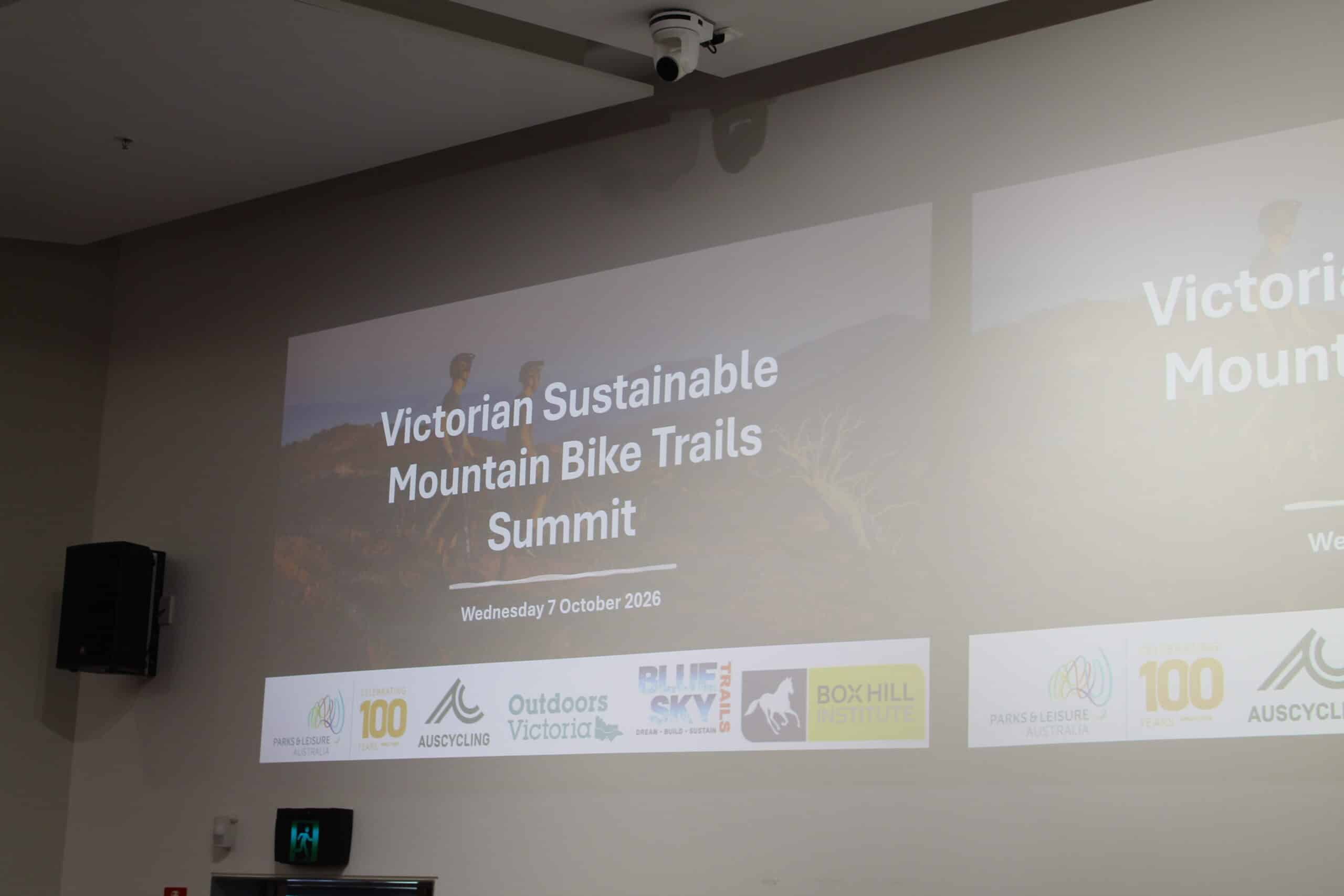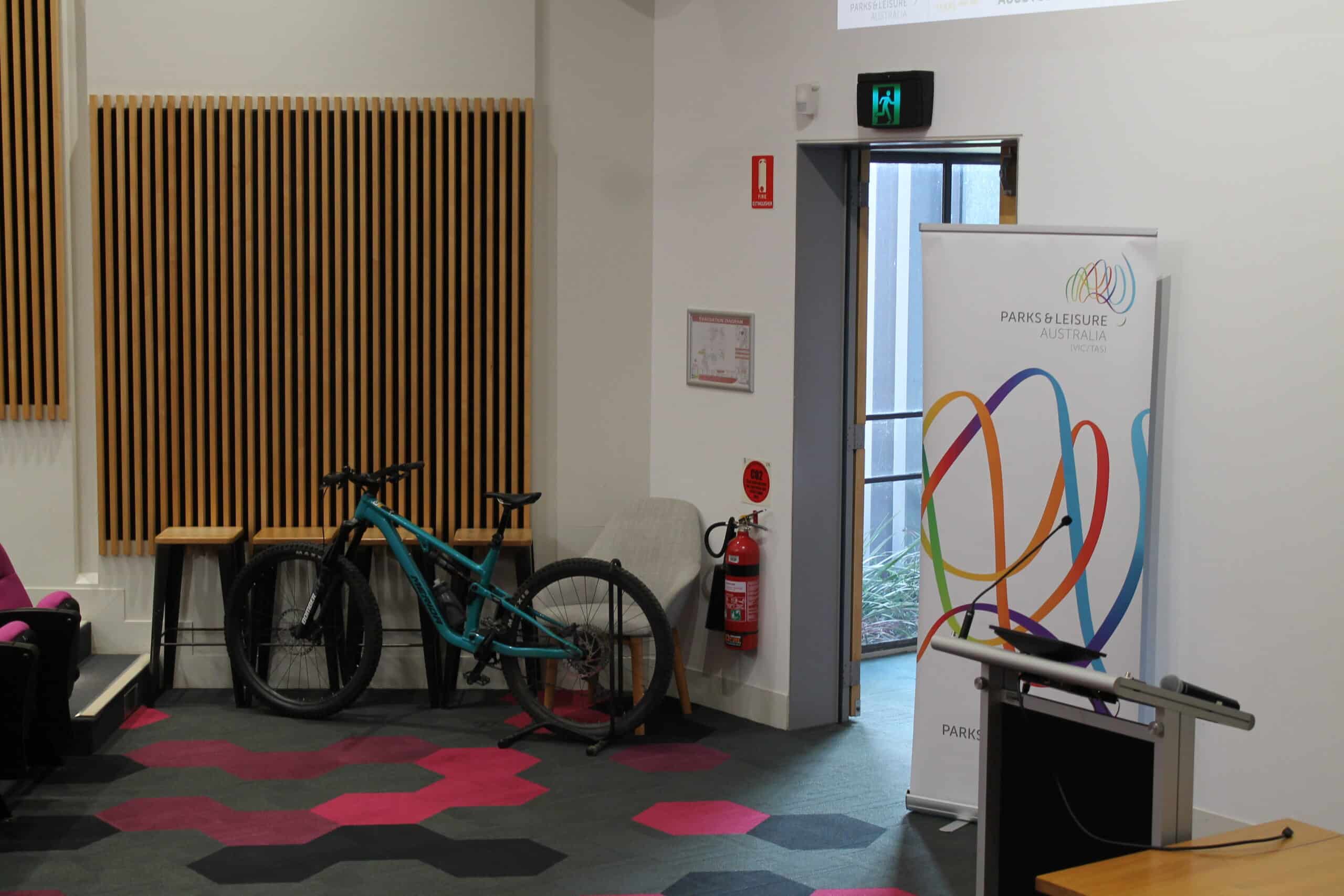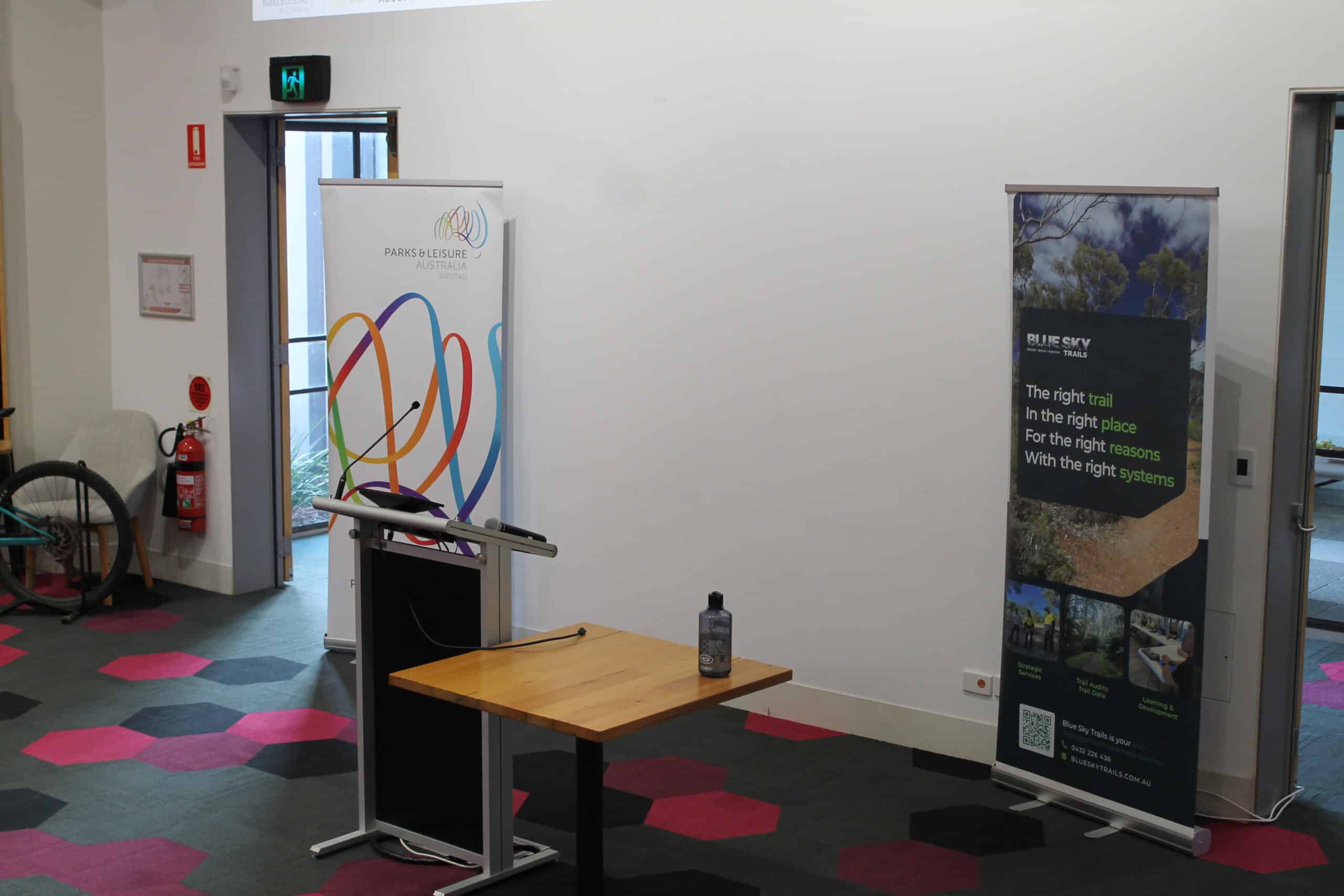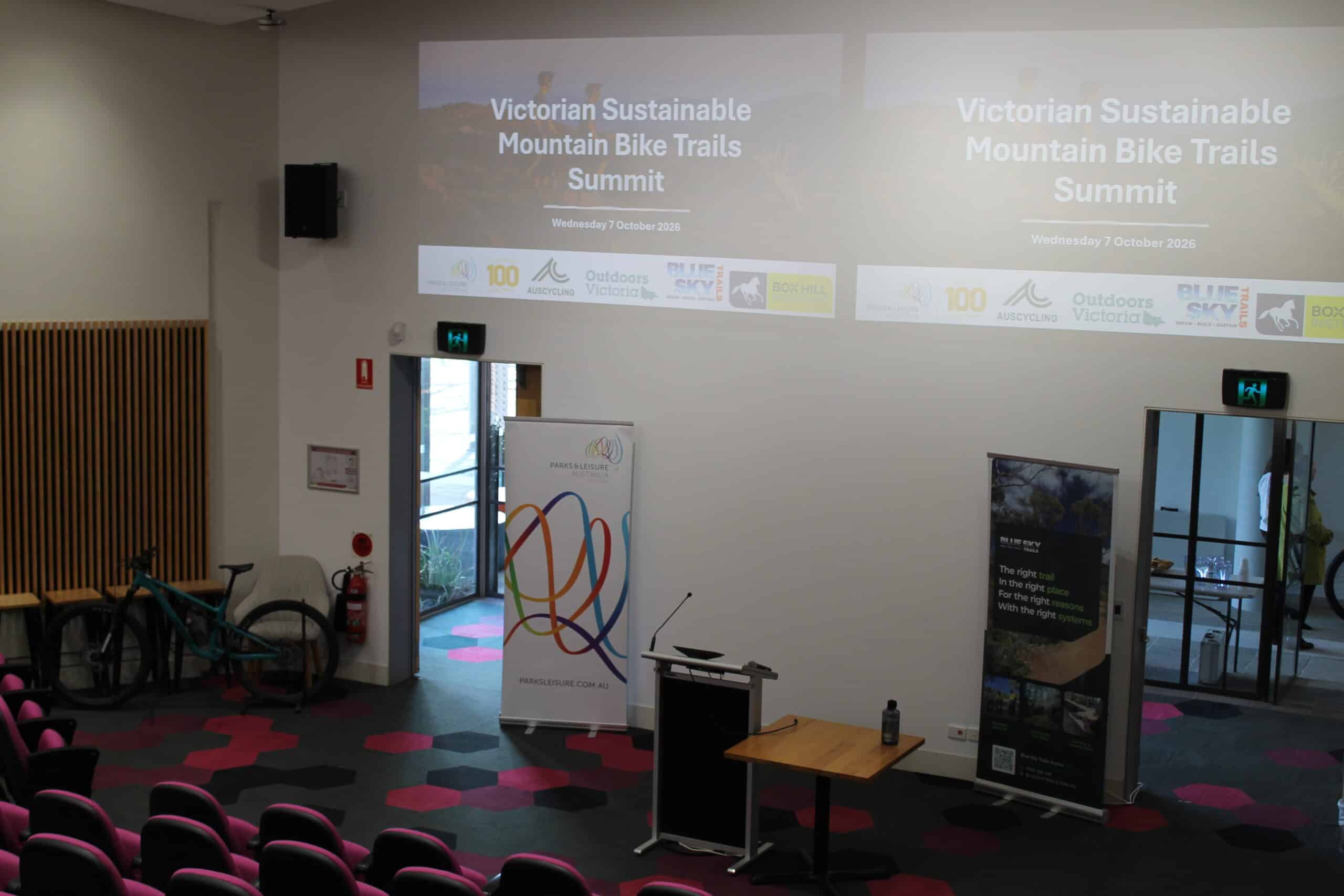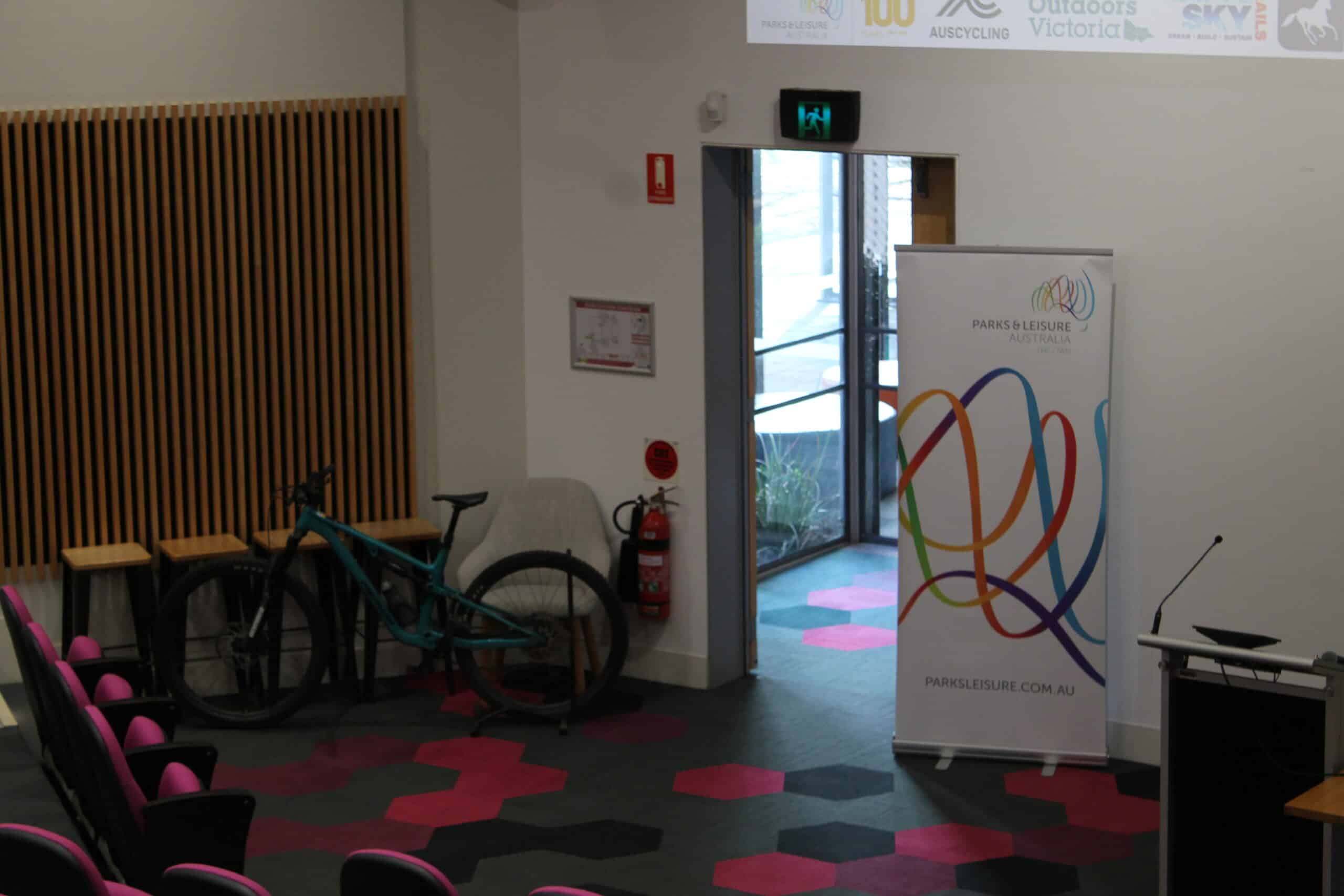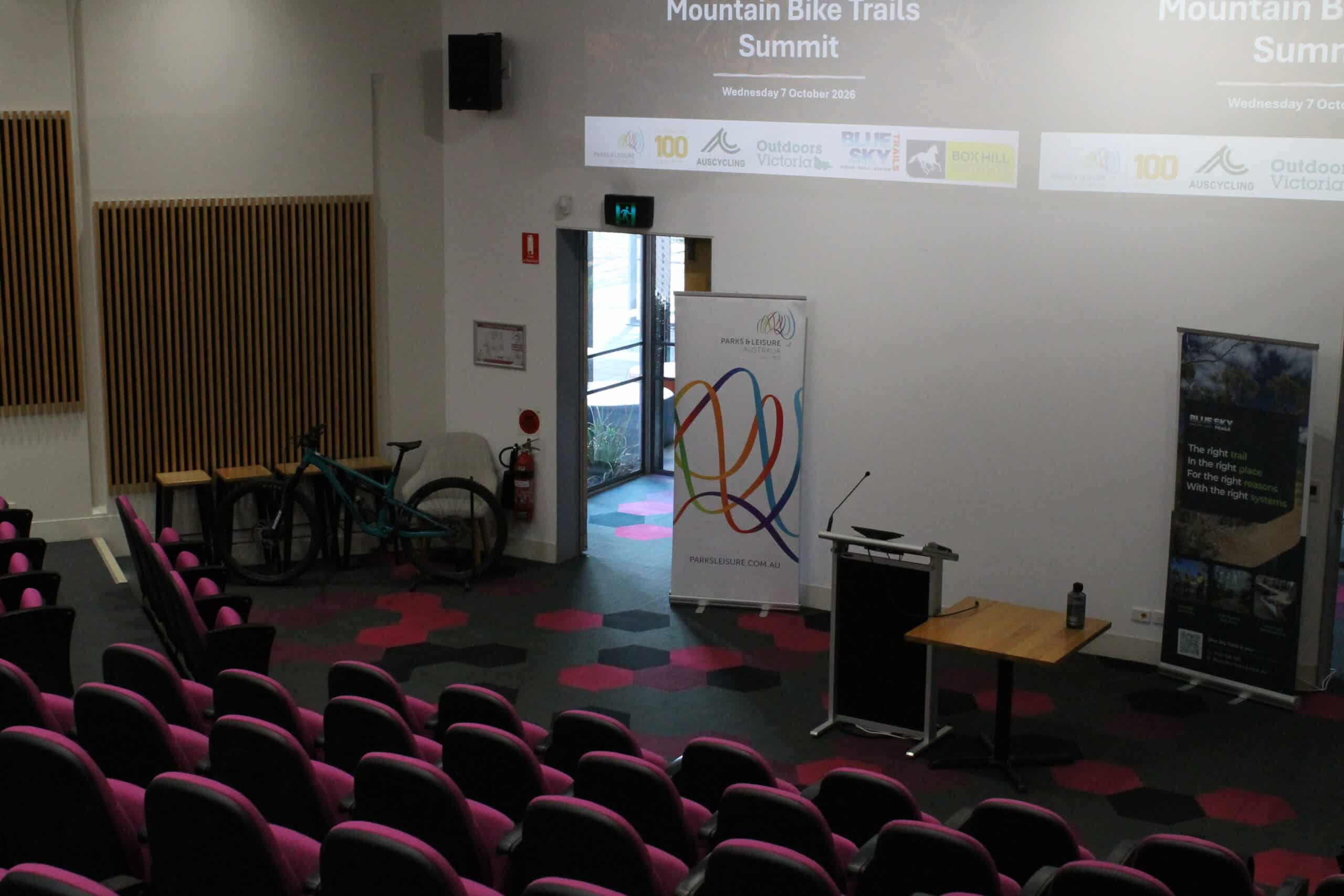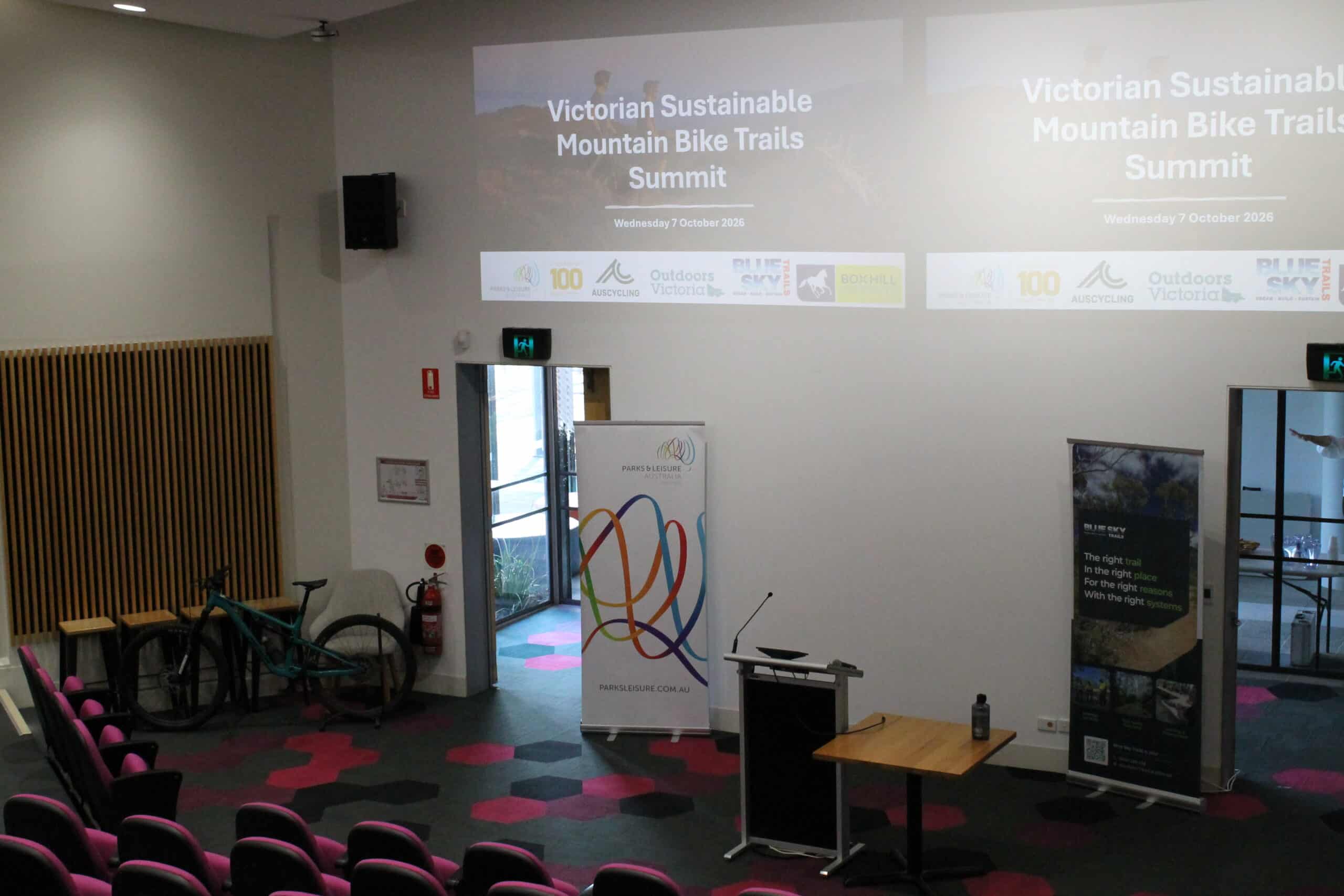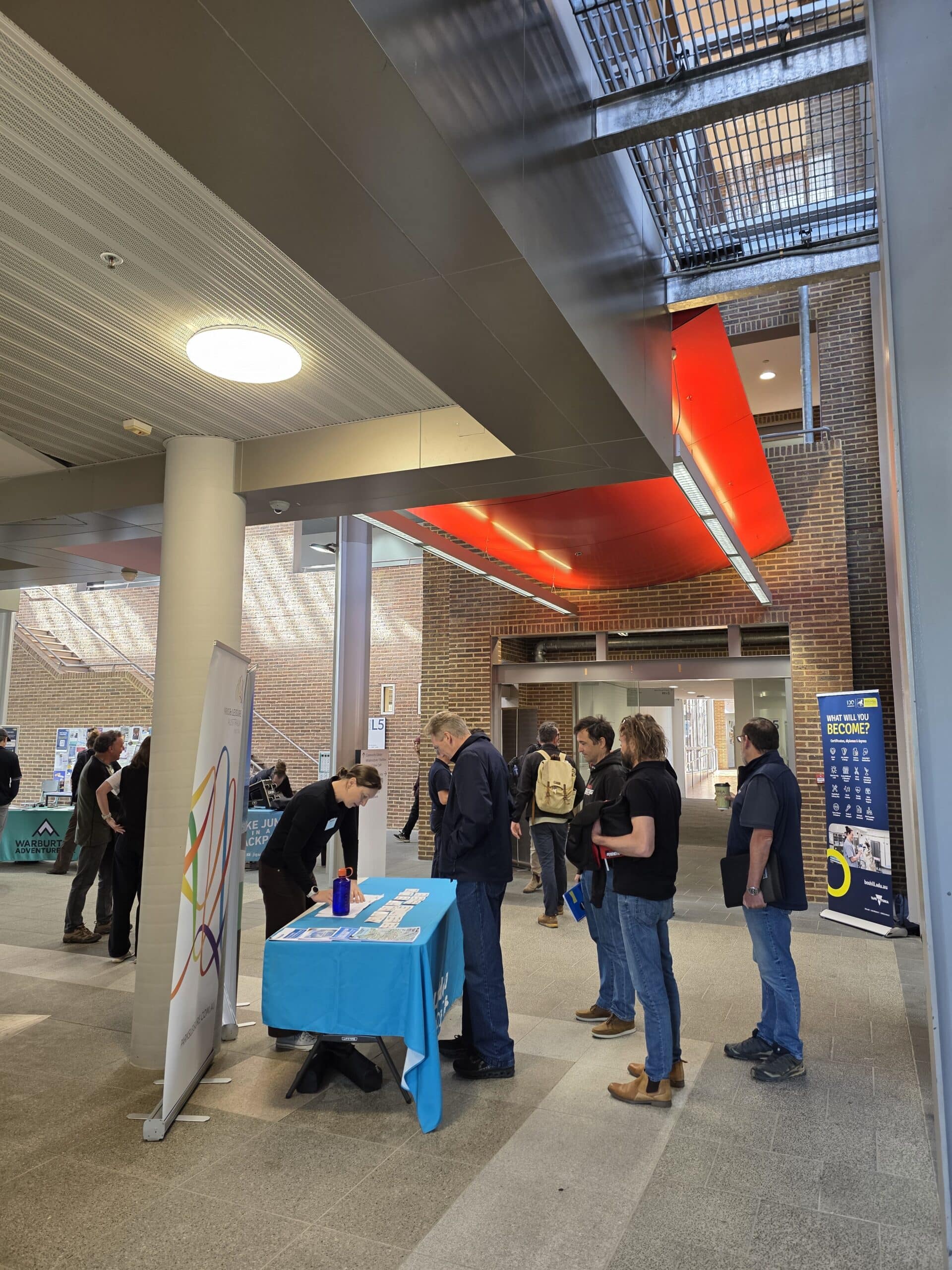
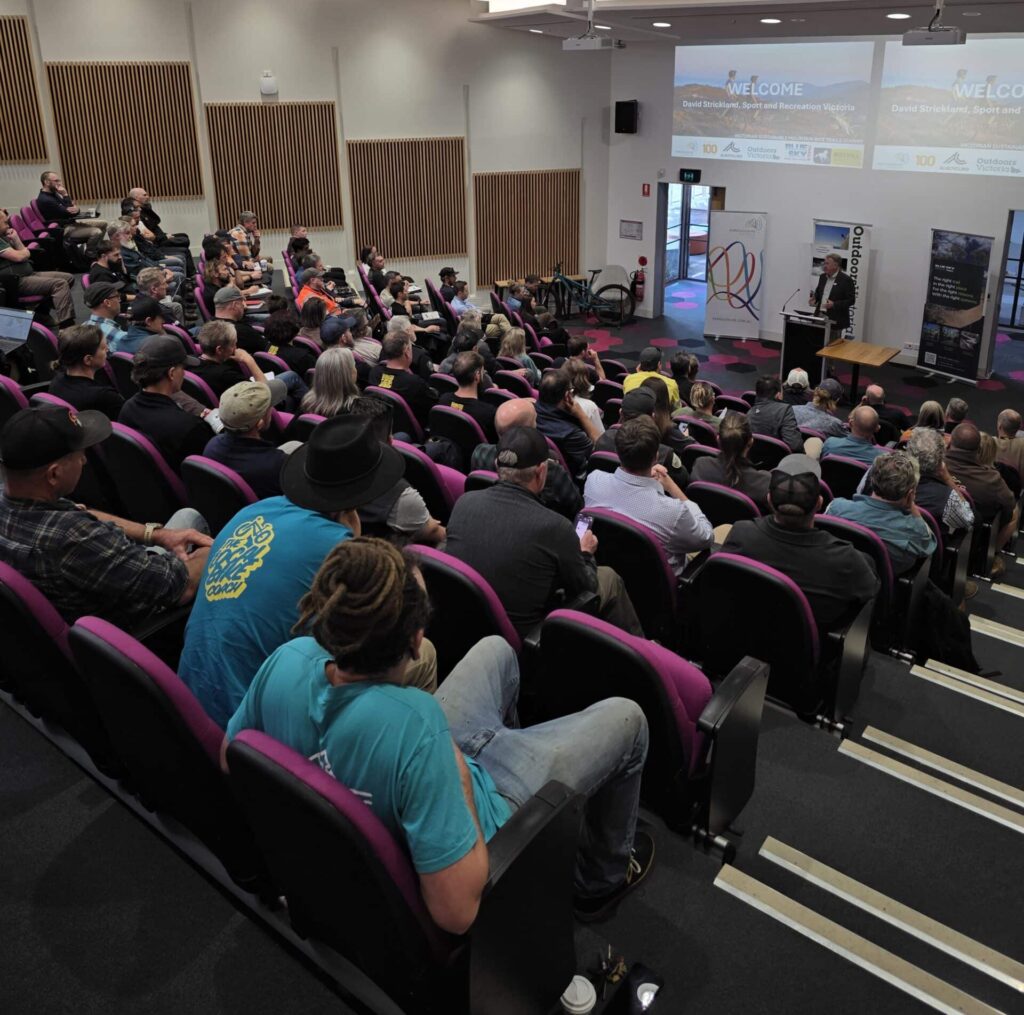
On Wednesday 7th October, organisers PLA (VicTas), Outdoors Victoria, and Blue Sky Trails hosted the second annual Victorian Sustainable Mountain Bike Trails Summit.
The second of its kind event, supported by AusCycling and Box Hill Institute, brought together land managers, councils, clubs, trail builders, emergency services and industry to move the conversation from the “why” of sustainable mountain bike trails to the “how”. Here’s what we heard, what we learned, and what happens next.
A big thankyou to the 90 passionate MTB industry representatives who attended on the day to help shape the summit for future events!
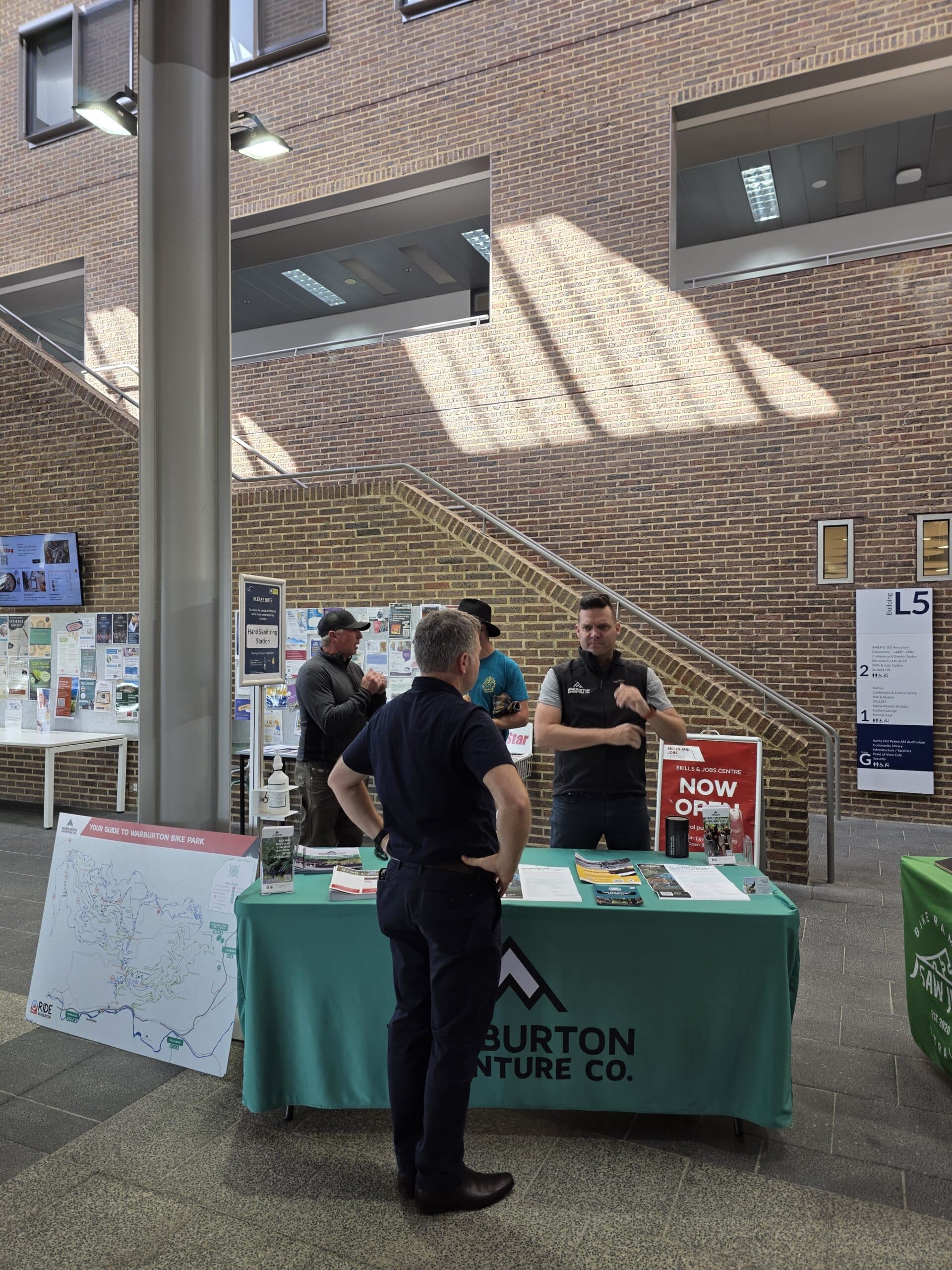
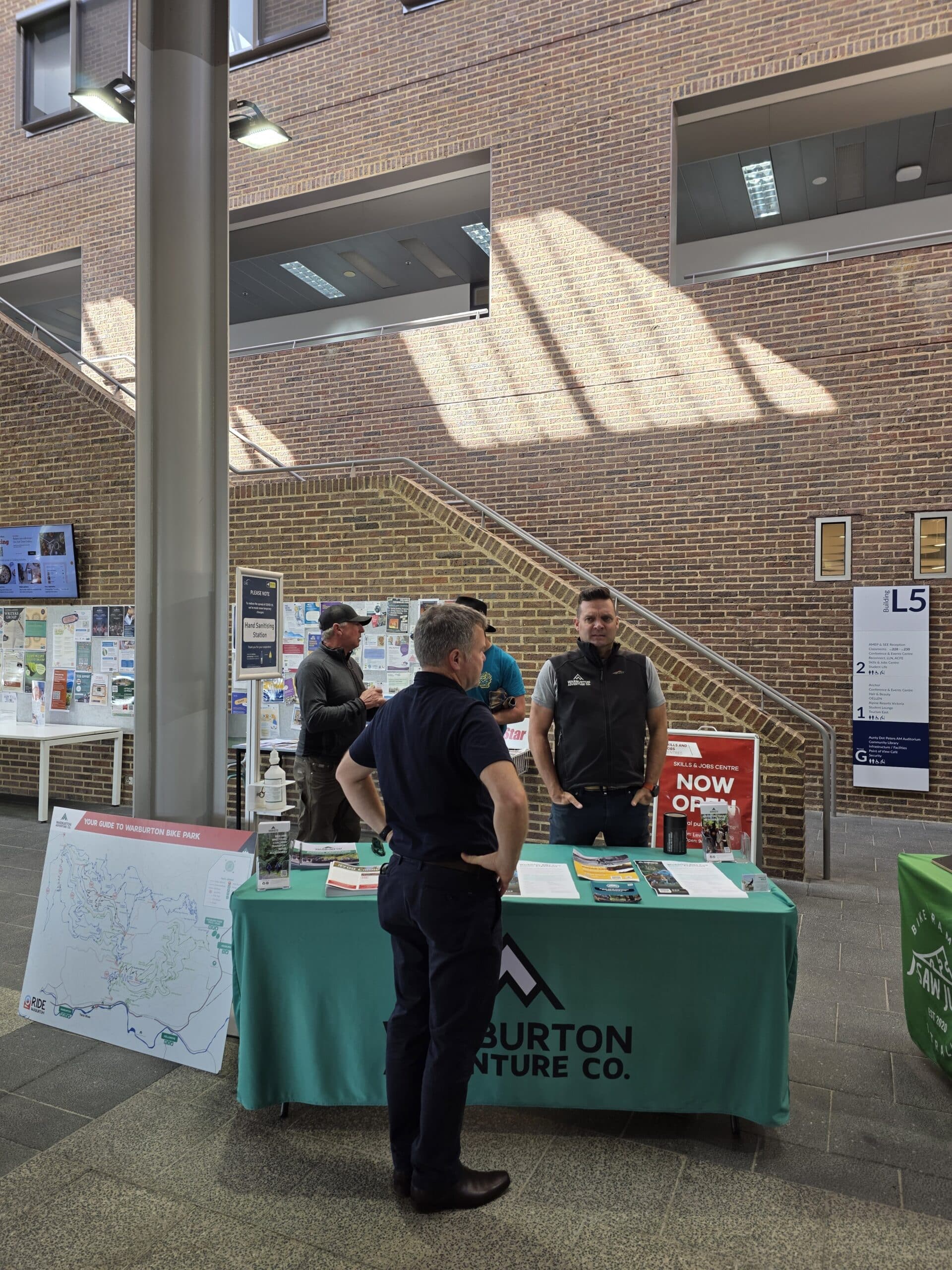
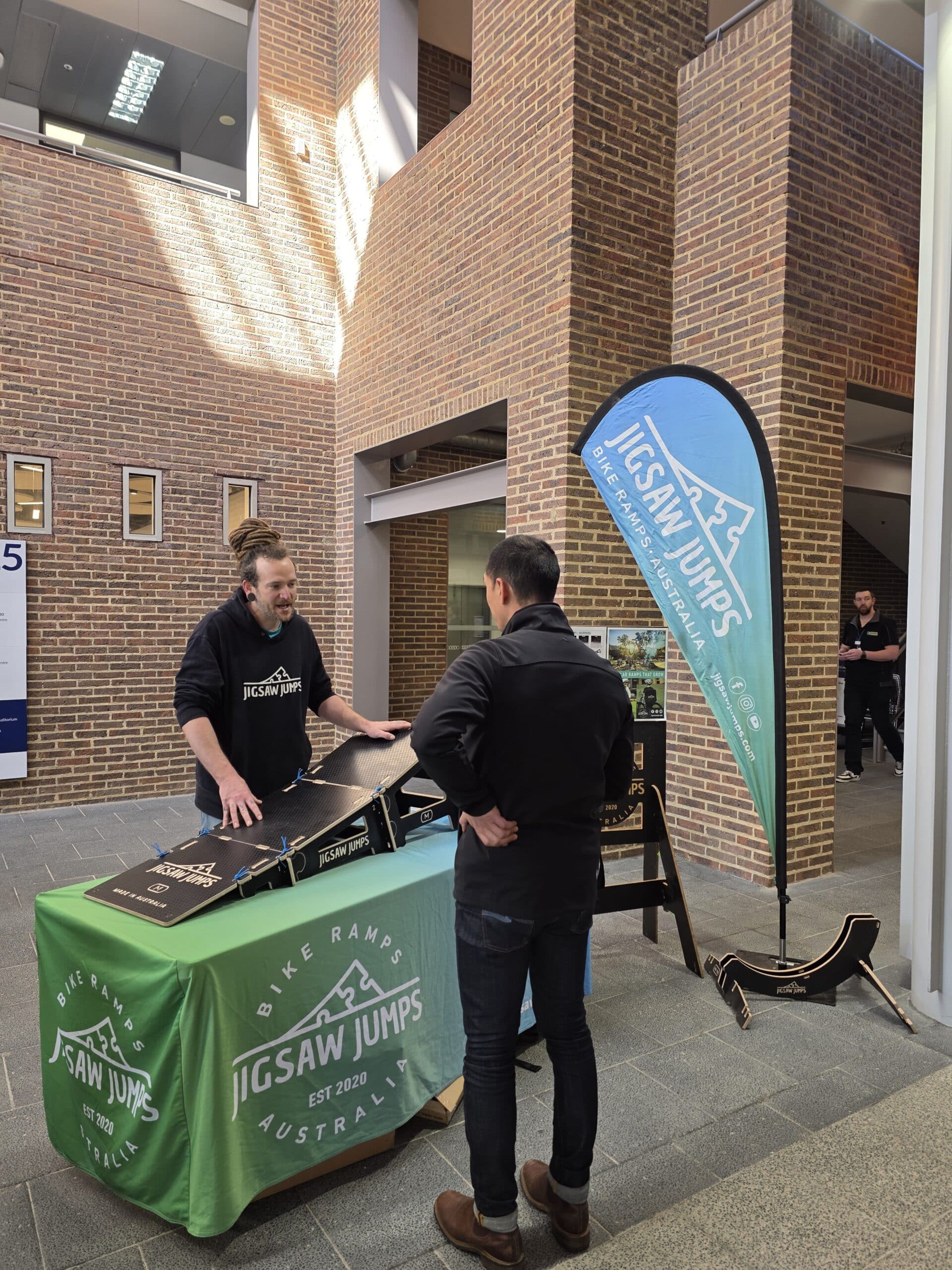
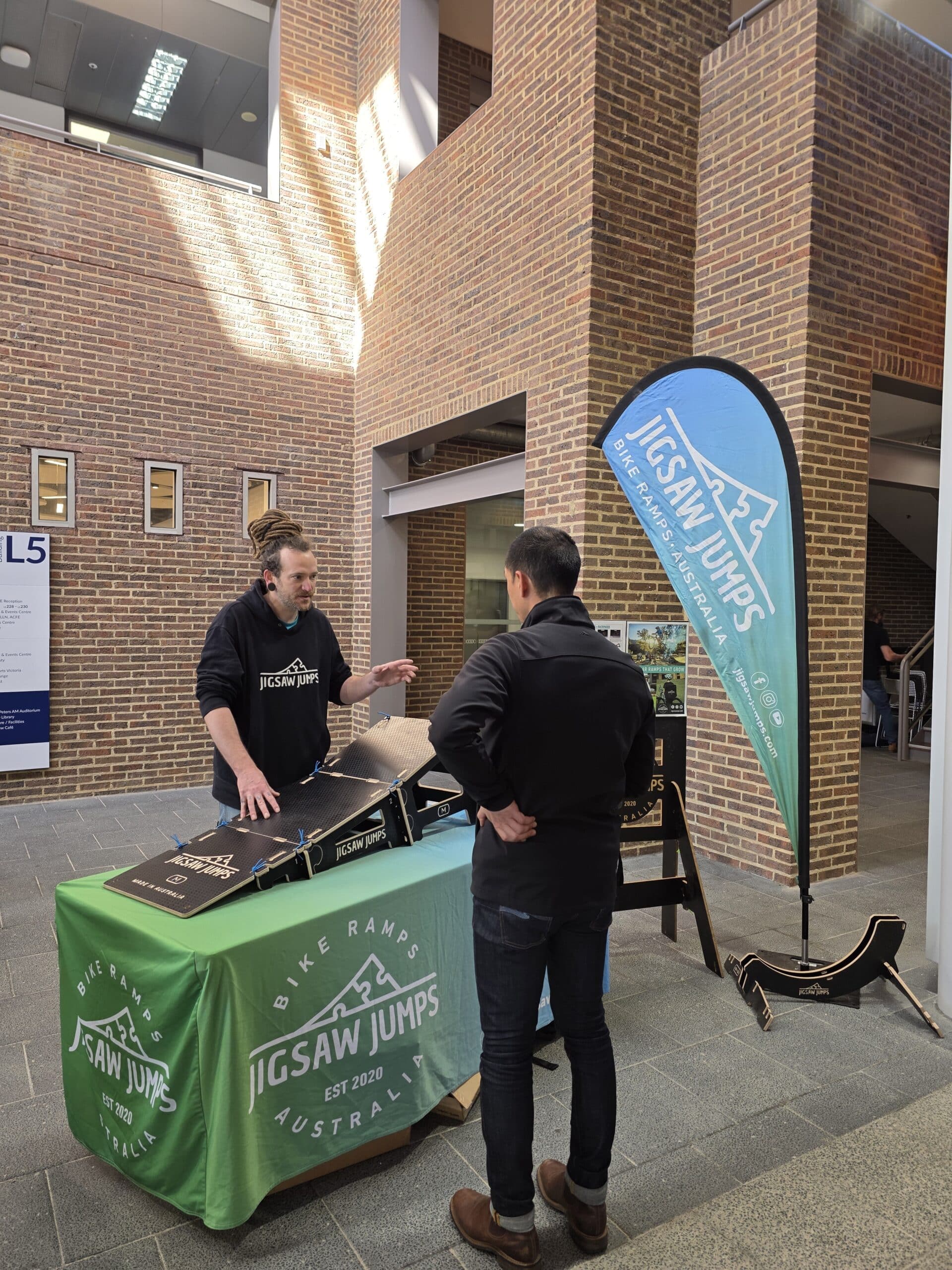
Thank you also to our trade partners, Warburton Adventure Company and Jigsaw Jumps, for having booths at the summit.
Why This Summit Mattered…
Mountain biking is a major part of Victoria’s outdoor culture, from volunteer-built local networks to destination trails. These places support recreation, health, community connection, tourism and regional economies.
As demand grows, so does the need for a collaborative, sustainable approach to planning, managing and funding trails. Last year’s summit started that conversation. This year was about turning it into action.
…Don’t forget to Save the Date!
Adaptive MTB Festival – Bright, Victoria
Thursday 29 April – Sunday 2 May 2027
What Happened?
The summit brought together land managers, councils, clubs, emergency services, trail builders and industry to:
- Hear how governance, funding and maintenance models are working in practice
- Learn from state, federal and local government, and from clubs and volunteers
- Explore how evidence and data can support sustainable trail assets and strengthen funding cases
- Work together to understand how we can act today to benefit tomorrow
Agenda (click + for post-summit recap)
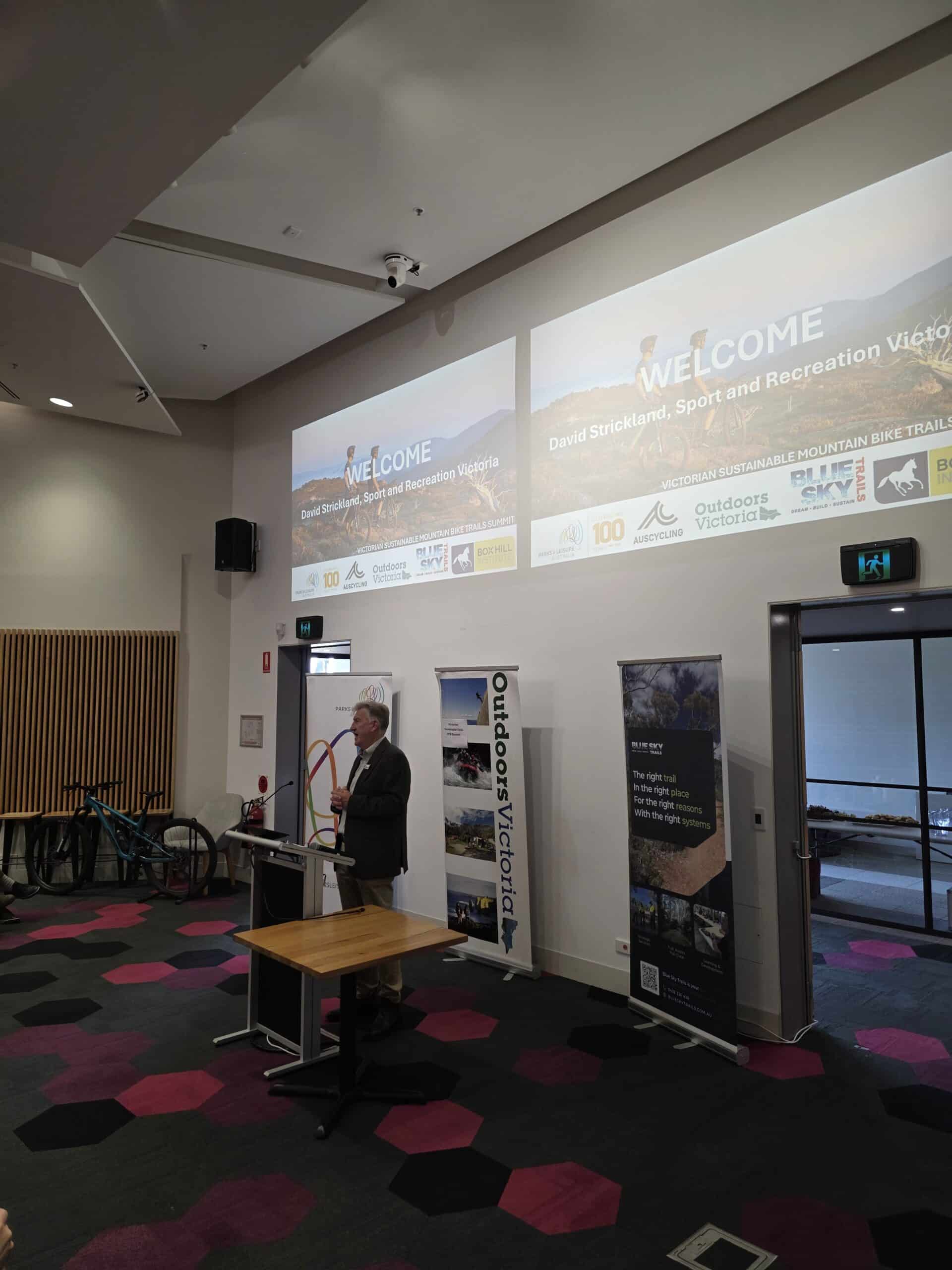
10:00am - Opening and welcome
Andrew Knight (Outdoors Victoria), David Strickland (Sport & Recreation Victoria) and Box Hill Institute
Andrew Knight (Outdoors Victoria), David Strickland (Sport & Recreation Victoria) and Box Hill Institute
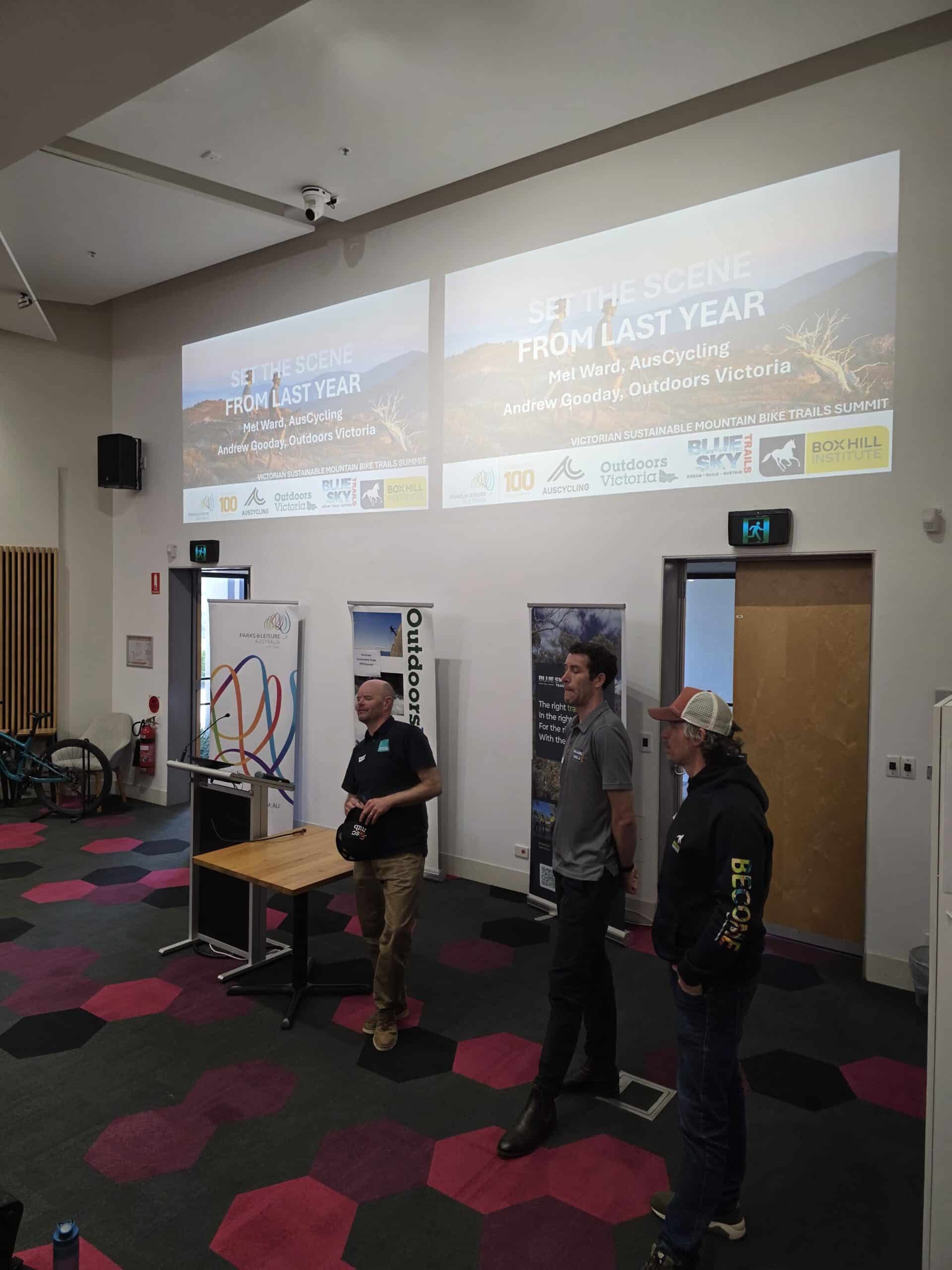
10:20am - Set the scene from last year
Mel Ward (AusCycling)
Mel Ward (AusCycling)
Expect to hear about the MTB Club Assembly and VMAC update.
10:30am - Rod Annear, Assistant Director Visitor Services, DBCA
A look at how Western Australia structures governance and funding. A key message echoed through the day: governance and funding need to be robust before longer, multi-land-manager trails are developed.
10:50am - State and Federal Agencies
DEECA, Parks Victoria, ARV
DEECA, Parks Victoria, ARV
- DEECA: The Public Land Act 1958 is being updated to create modern mechanisms for third parties to work on public land.
- Parks Victoria: Reported huge demand for MTB trails and sees partnerships with Traditional Owners, clubs and communities as the best way to manage them. Community votes on MTB projects “landslide it in”. They are interested in revenue models to fund maintenance and recommend designing features and trails that people want to sponsor. Club signage, especially for trail closures, gets a far better response than agency signage.
- ARV: The sector needs a more precise understanding of the value of MTB trails, and needs to promote it. Compact routes close to services and facilities will strengthen the sustainability of the network.
11:10am - Local Government Authorities
East Gippsland Shire Council, Manningham Council
East Gippsland Shire Council, Manningham Council
“Operations and management using data at Omeo” – Ben Reeves, previous MTB Trail Coordinator Omeo, East Gippsland Council
Operations and management using data at Omeo, and Fitzsimons Reserve: highs and lows.
- Regular maintenance is critical. As a rule of thumb, plan to invest around 7–10% of a trail’s build cost in maintenance every year. Derby’s success has the same lesson, with recurrent maintenance built into the model.
- Keep an emergency survival kit on hand, because rescue and retrieval can take time. Build emergency response routes into the trail design.
“Fitzsimons reserve, highs and lows” – Cormac McCarthy, Acting Coordinator City Design, Manningham Council
11:30am Club and Community
Victoria Police, Red Hill Riders
Victoria Police, Red Hill Riders
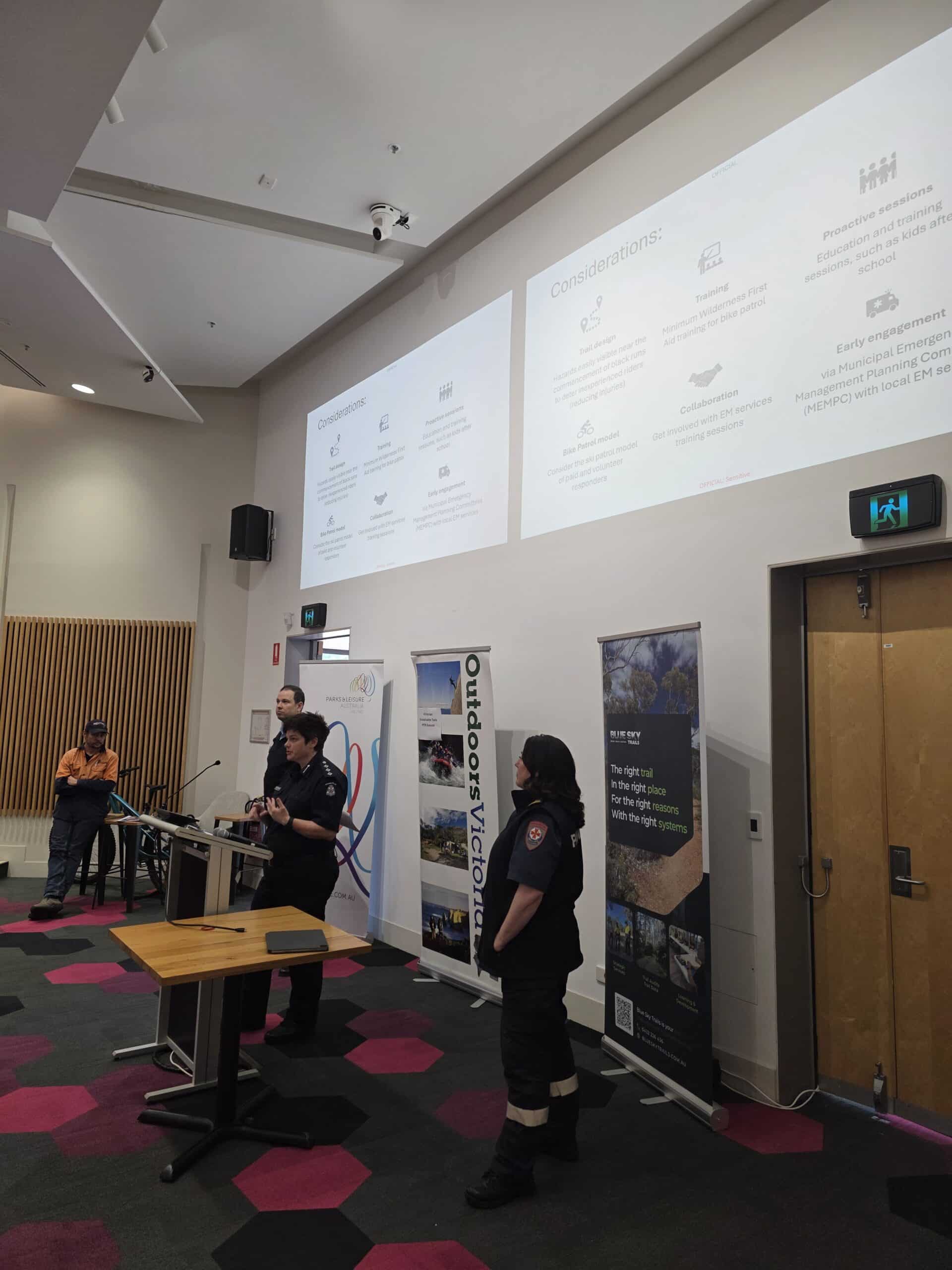
Summit highlight: could MTB learn from the ski patrol model?
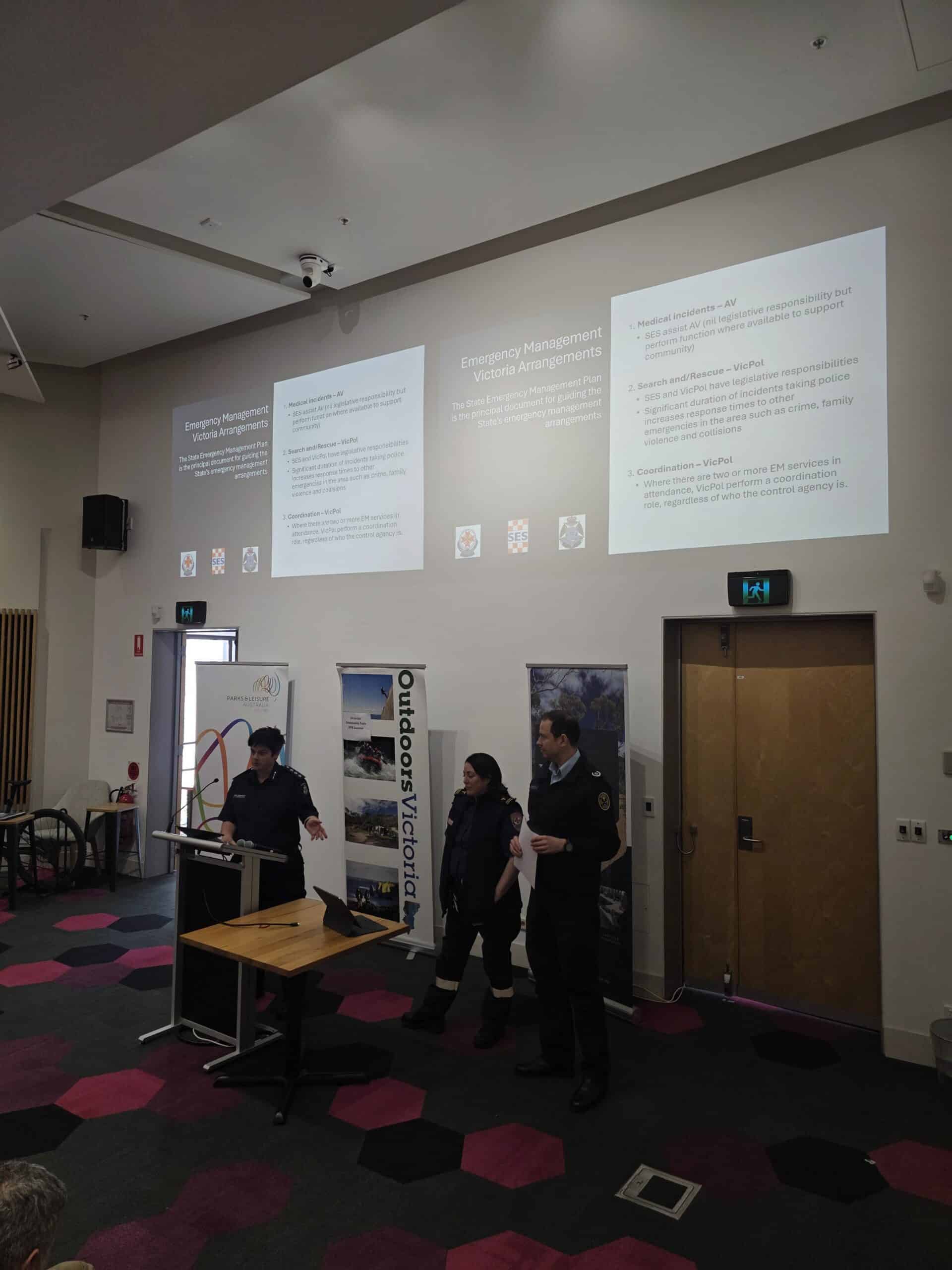
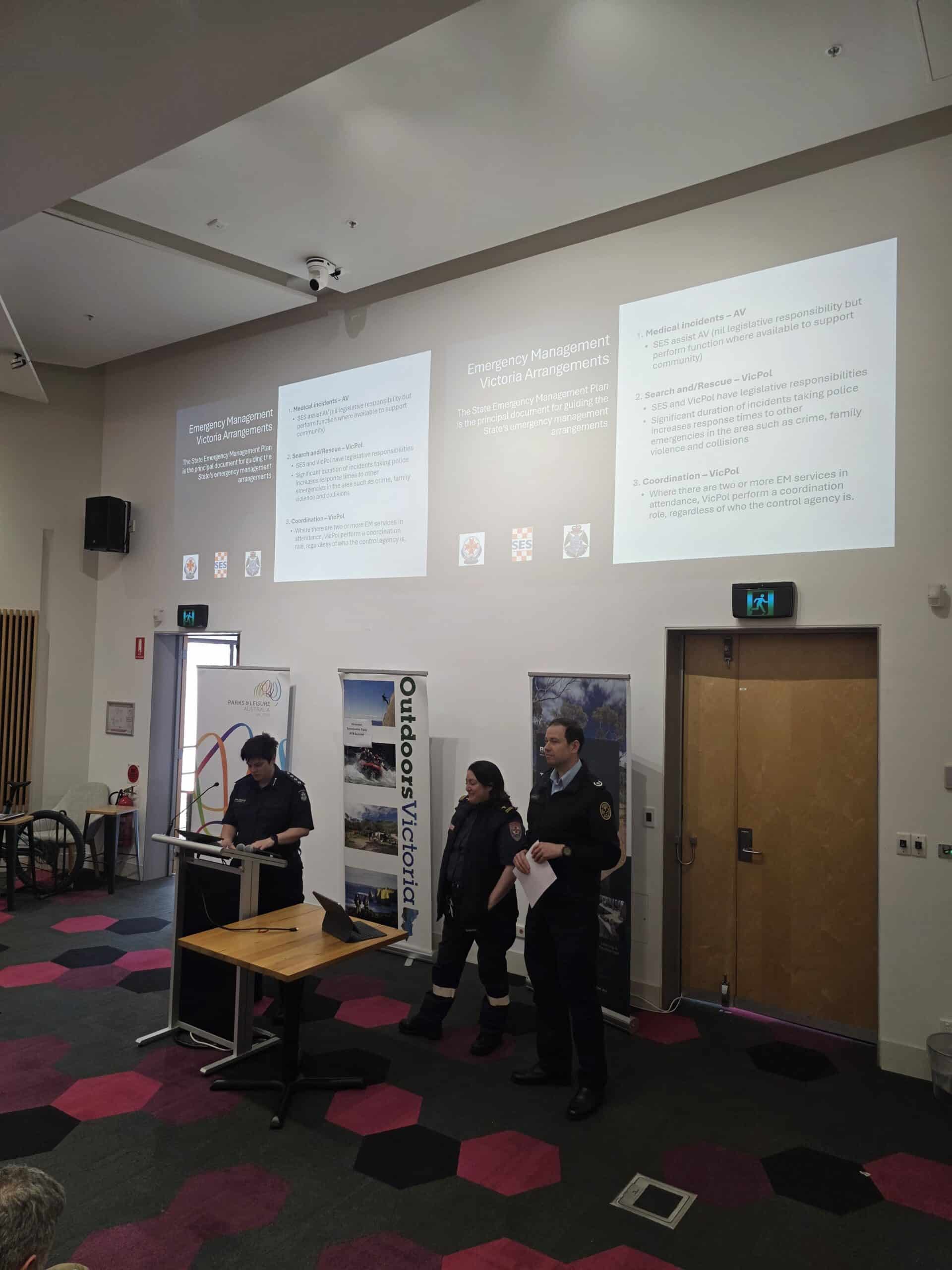
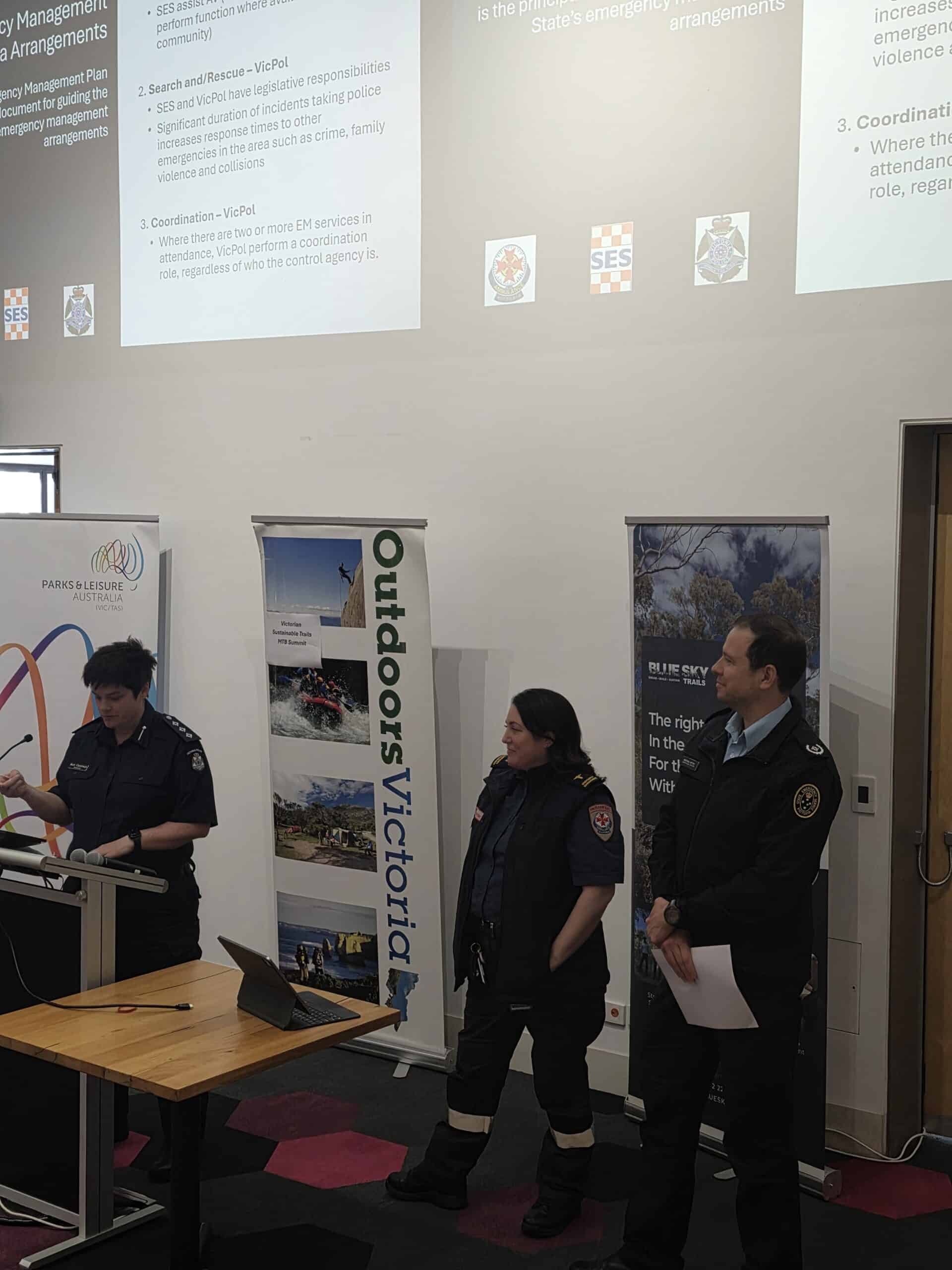
Victoria Police, SES and Ambulance Victoria are exploring whether a ski patrol-style approach could work for some trail networks. They’re currently monitoring around 30 Victorian MTB networks for emergency callouts. The average rescue takes about 3 hours, and can take 6–7. Emergency markers and emergency access pathways need to be part of every network from the design stage. They also suggested that funding applications focused on reducing youth crime and supporting mental health could resonate.
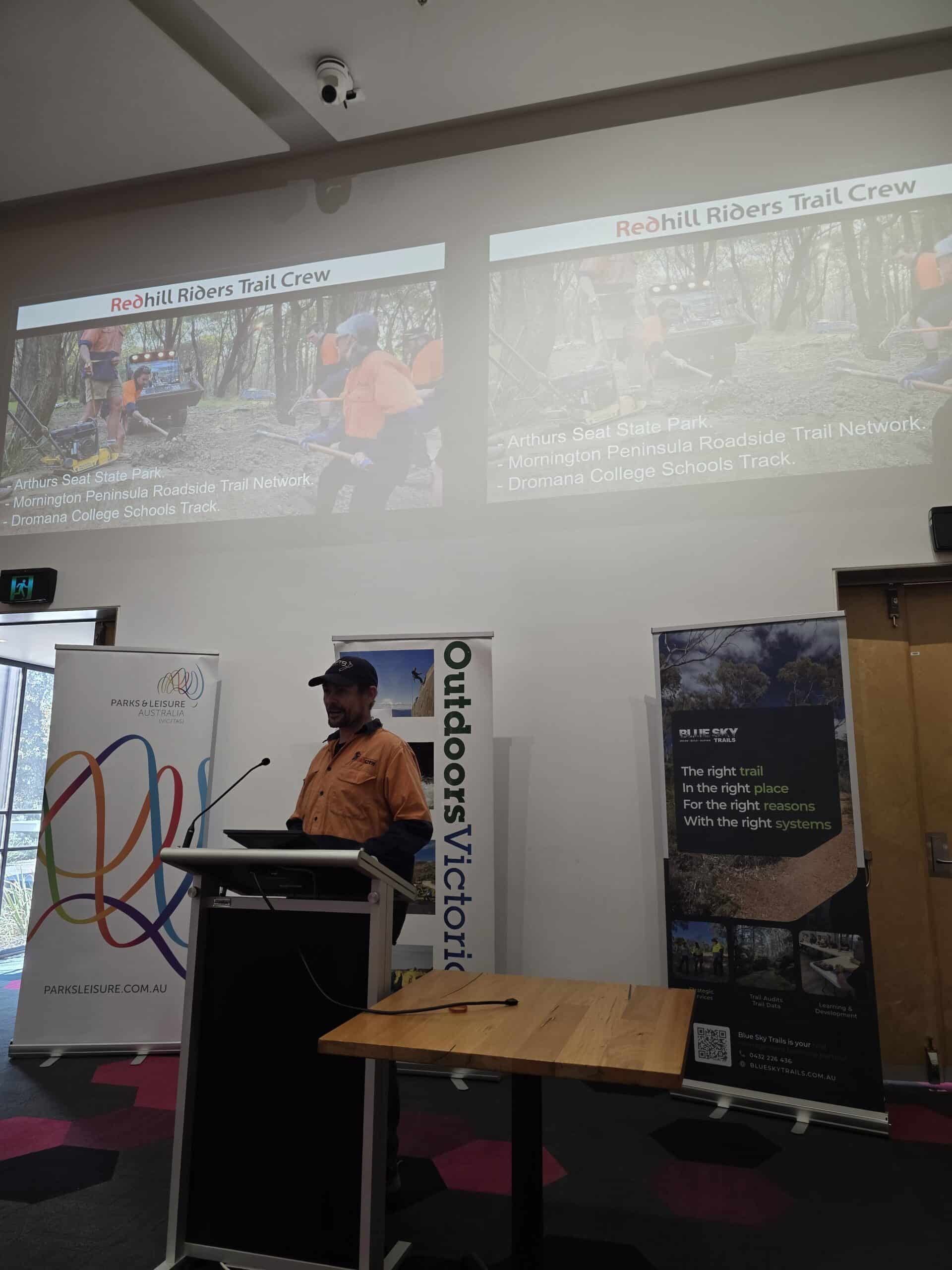
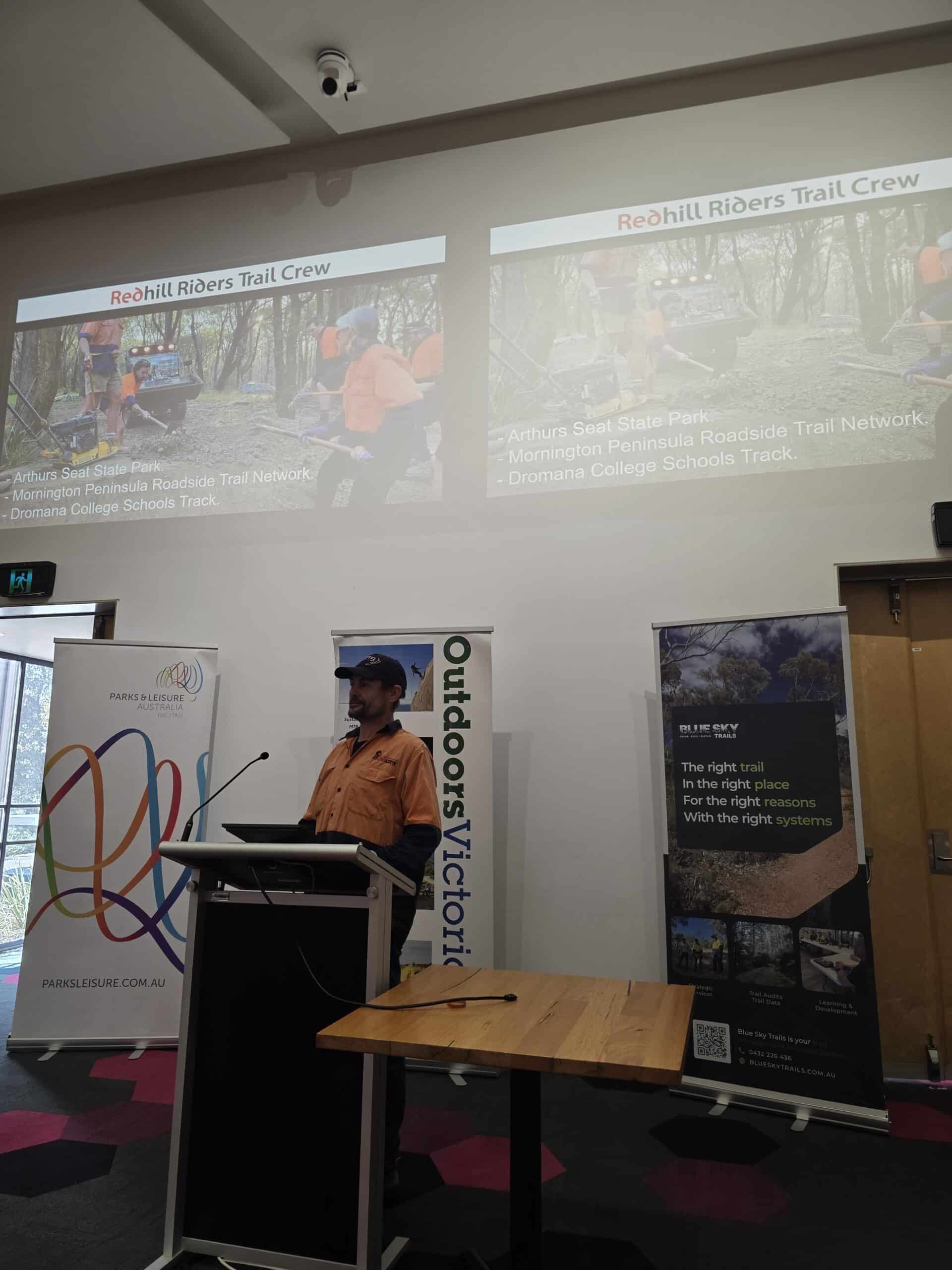
Red Hill Riders shared their approach to volunteer trail maintenance and care. Their volunteers recorded 1,660 hours, worth around $120,000.
12:00pm - Lunch and networking
1:00pm - INSPIRE
Forrest MTB, Blue Sky Trails and World Trail
Forrest MTB, Blue Sky Trails and World Trail
Leveraging evidence-based data for sustainable trail assets – Ash Gray (Blue Sky Trails)
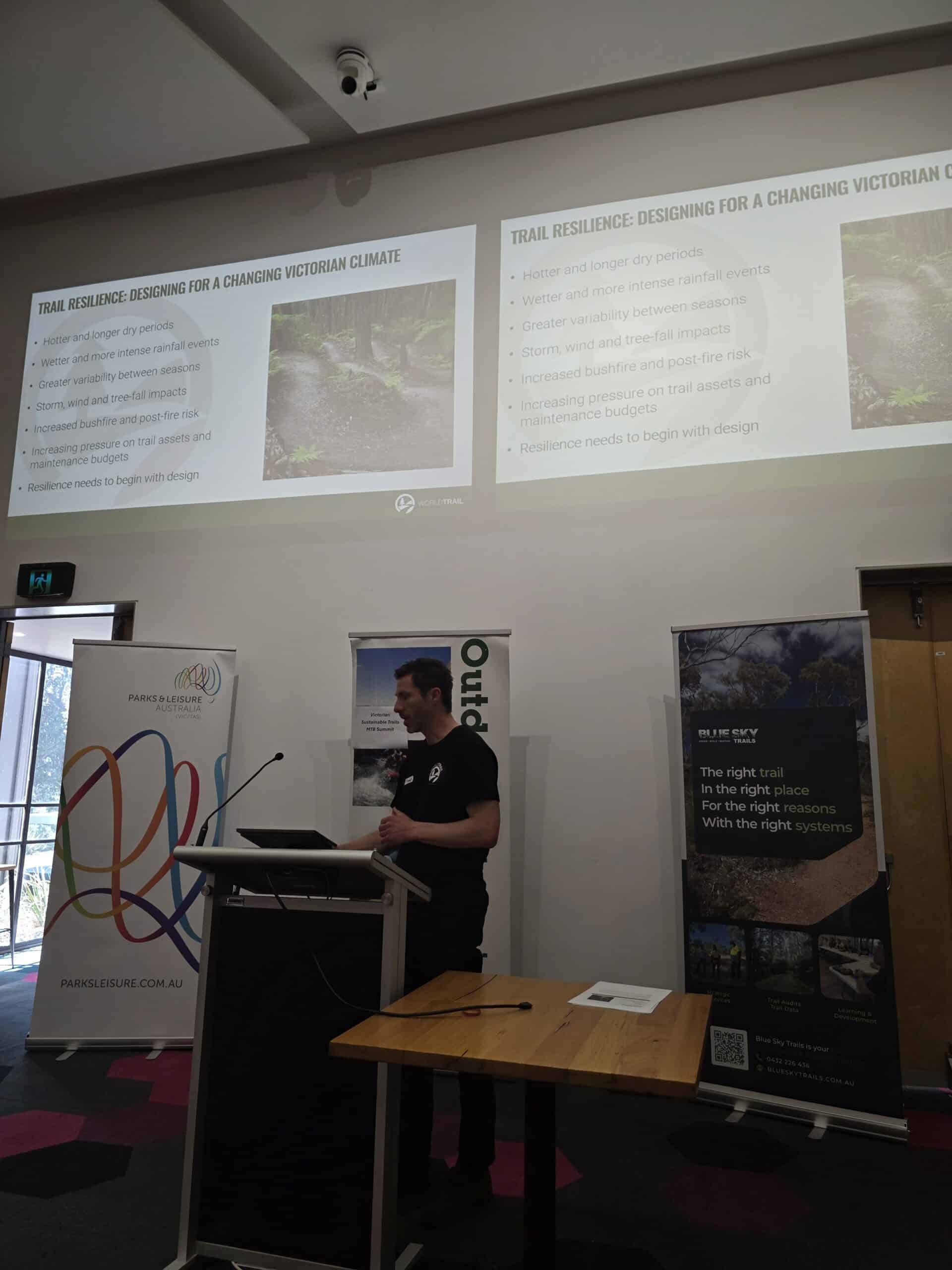
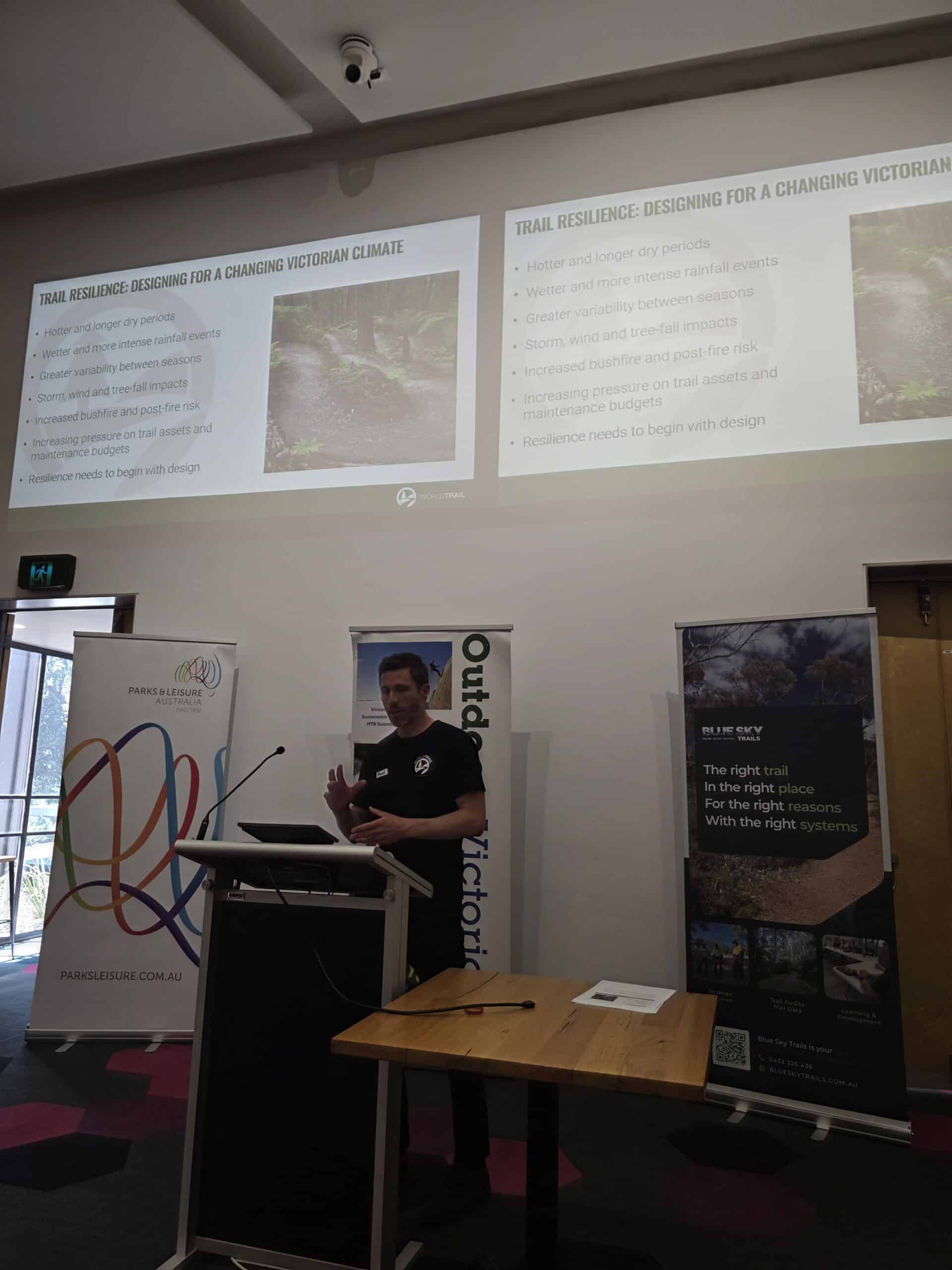
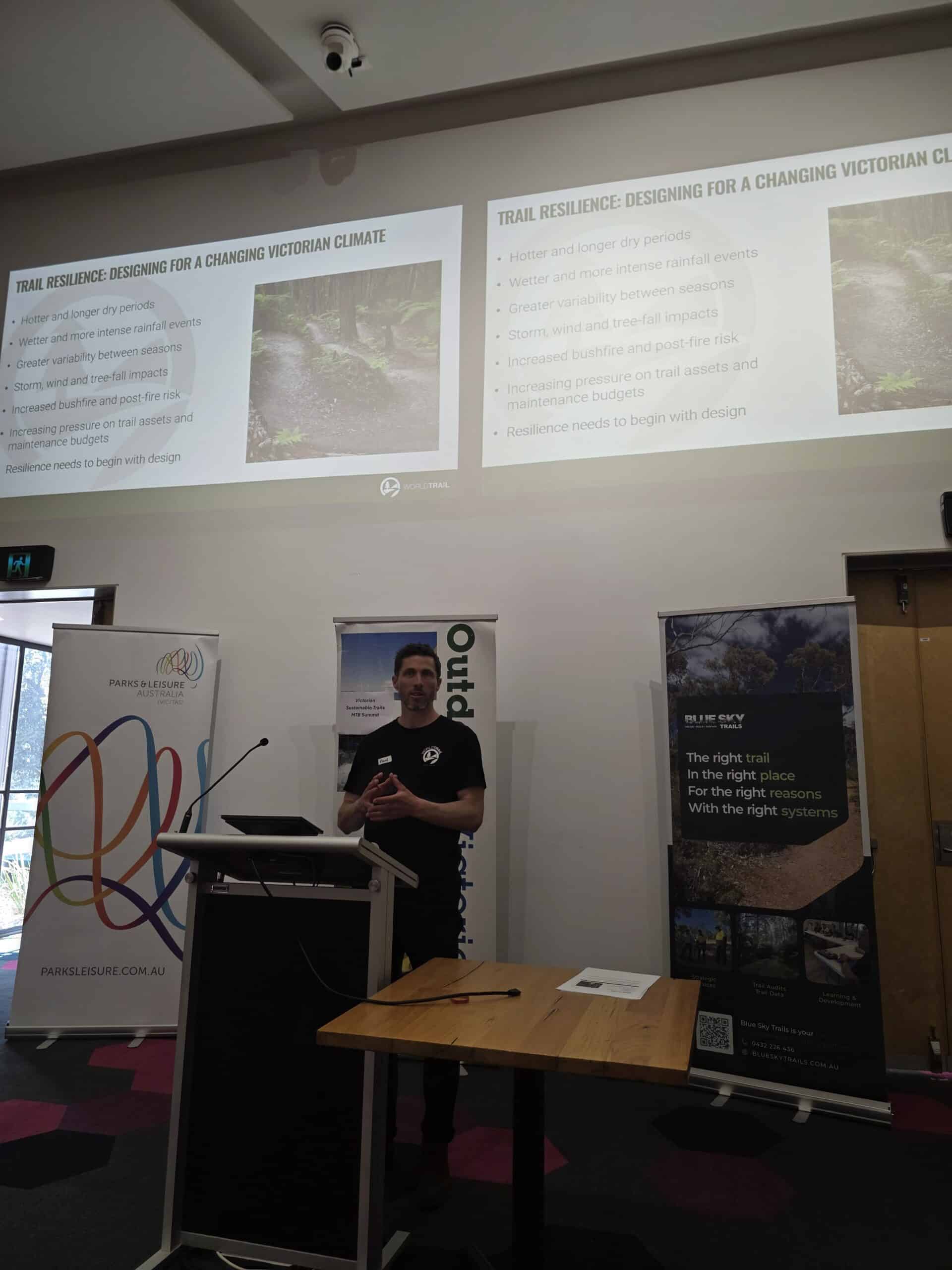
Trail resilience in the face of growing severe weather events – Paul Elshaug (World Trail)
Accessibility at Forrest MTB: Forrest’s flowing lines and B-lines, with good elevation, suit riders living with a disability. The must-haves are mobile coverage, a support crew and emergency services nearby, plus a concrete parking spot so gear stays clean and dry. Social rides matter for connection and learning.
Save the date: the Adaptive MTB Festival, Bright, 29 April – 2 May.
1:50pm - Workshop - Facilitated Key Topic Deep Dive
- Risk, insurance and practical resources
Practical tools and resources to help clubs, land managers and providers understand, visualise and manage risk, including insurance considerations and the gaps that still exist. - Data, monitoring and demonstrating value
Using data and monitoring to understand participation, user experience and outcomes, strengthen funding applications, and demonstrate the value and impact of trails and related infrastructure. - Building capability and career pathways
Strengthening skills, training and career pathways across clubs, land managers, trail operators and builders, while sharing experiences, lessons learned and opportunities for the sector.
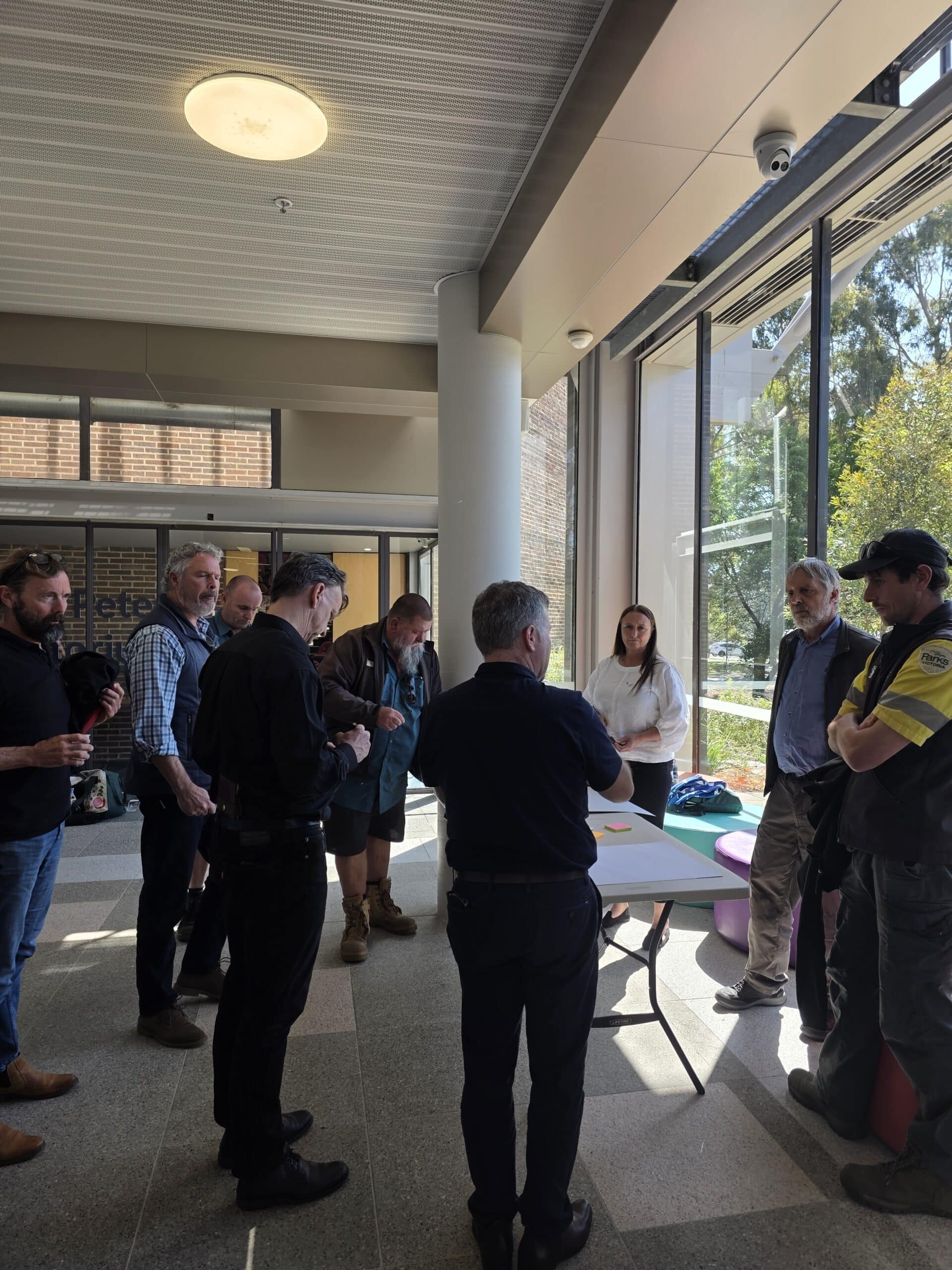
3:00pm - What can YOU do?
3 actions I will do; 3 people I will connect with; 3 ways I will share
3 actions I will do; 3 people I will connect with; 3 ways I will share
3:30pm - Wrap up and close
Victorian MTB Assembly Update
Update coming W/C 26 October
Summit Outcomes
As part of closing the loop with our summit delegates, we are pleased to share a draft of the Summit Outcomes below which reflect both ambition and action: a distilled set of priority themes, practical recommendations and structural proposals that set the course for a more resilient, inclusive and well-managed mountain-bike network across the State.
Workshop Themes
- Risk, insurance and practical resources: Practical tools to help clubs, land managers and providers understand, visualise and manage risk, including insurance and the gaps that remain.
- Data, monitoring and demonstrating value: Using data to understand participation and experience, strengthen funding applications and show the value of trails. Delegates identified benefits including local economic gain, health and wellbeing, social connection, mentorship, junior rider pathways and community assets. They suggested putting a dollar value on a trail “visit”, as AFL and aquatics have, and tracking volunteer hours.
- Building capability and career pathways: Strengthening skills, training and career pathways across clubs, land managers, operators and builders.
What delegates want from councils and land managers
- Work with local towns, constituents and Traditional Owners, not against them
- Consistent auditing, maintenance and accessibility standards across agencies
- Trail care and maintenance protocols developed with Parks Victoria and First Nations partners
- A clear hierarchy so clubs can communicate effectively with land managers
- Strategic advice on measuring MTB benefits and prioritising investment
- Strategic priorities for MTB across Victoria
Recommended action areas
- Fund maintenance alongside capital: Fund 10 years of maintenance at the same time as capital spend, and shift emphasis from new trails to maintaining existing ones.
- Explore new funding models: Pursue public and private funding, reinvest event revenue in the network, and look at a trail future fund or a licence-style model, similar to fishing licences, for trail maintenance and development.
- Build the evidence base: Commission research into the health, social and economic benefits of MTB (La Trobe and VicHealth research was flagged), and establish how many kilometres of trail Victoria has and the total annual maintenance spend. Seek funding for a study through the Victorian MTB Assembly.
- Share data: Provide access to usage and club data across Victoria, and involve universities in data research.
- Design safety in: Build emergency markers, access routes and nearby services into every network from the start.
- Advocate: Lobby for state funding for land management (weeds and ongoing care) and take a coordinated advocacy message to government.
- Promote participation: Support junior riders as future trail stewards, encourage adaptive and social riding, and promote MTB better through AusCycling and grassroots clubs.
What’s Next?
- VMAC updates: Expect a bi-monthly update from the Victorian MTB Advisory Council from now on, with the first coming soon.
- 6-month wrap-up: We’ll share a progress update on these actions in about six months.
- Councils, we want you: Local government was under-represented this year. We’d love more LGA attendance and presenters at next year’s summit.
- Your turn: Think about your three actions, three connections and three ways to share. Tell us what you’re doing at victas@parksleisure.com.au.
Feedback survey
We would love to have your feedback, big or small, please complete the the form here!