PLAWA Advocacy Position Paper
Introduction:
The Polyphagous Shot-Hole Borer (PSHB) was first detected in Perth, Western Australia in August 2021. It is an invasive ambrosia beetle species that infests a wide range of trees, causing damage by boring into the wood and spreading pathogenic fungi. It this pest spreads it could become a threat to our Urban Canopy and Agricultural Industries.
In June 2025, the National Management Group responsible for directing eradication programs for exotic pests and diseases determined that it is no longer technically feasible to eradicate Polyphagous shot-hole borer from Western Australia. A national Transition to Management (T2M) plan is now being developed to transition from the eradication response to a management phase. Department of Primary Industries and Regional Development (DPIRD) will lead the transition to management in WA over the next 18 months.
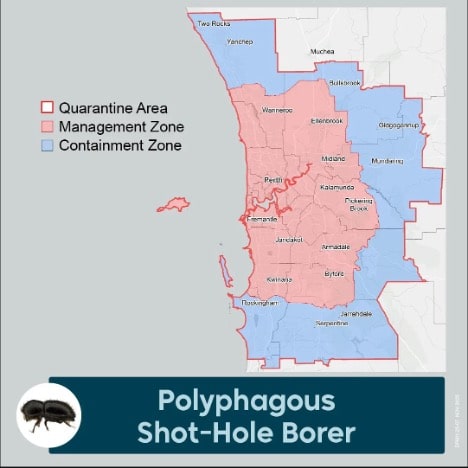
Quarantine Area
A Quarantine Area (QA) covering the entire Perth metropolitan area is in place, with restrictions on the movement of wood, green waste, mulch, live plants and plant material.
The QA is split into two zones:
- The Management Zone which covers the inner metropolitan area and is the area of known borer infestation; and
- The Containment Zone which is the area between the Management Zone and the outer boundary of the QA.
Impacts on Tree Health:
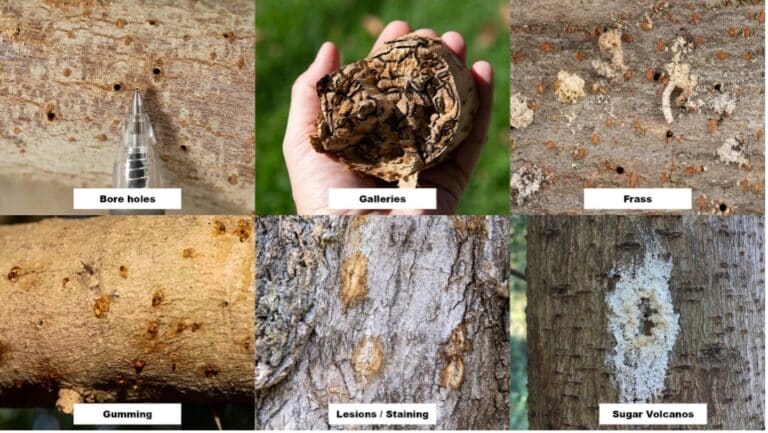
The PSHB infestation results in significant health repercussions for a growing list of Perth’s trees. The beetle bore tunnels into tree trunks, creating galleries for breeding and introducing a fungus (Fusarium Sp.) that further weakens the tree’s immune system. This process disrupts the tree’s vascular system, impeding nutrient flow and causing dieback, limb breakage, and eventual tree death. Notably affected species include.
Amplifier (main host) species:
- Box Elder Maple (Acer negundo)
Preferred (but not for breeding) species:
- Black Locust (Robinia pseudoacacia)
- Coral Trees (Erythrina x sykesii)
Reproductive (where the pest completes its life cycle) Species:
- Plane Tree (Platanus x acerifolia)
- Moreton Bay Fig (Ficus macrophylla)
- Eucalyptus Sp.
- Banksia Sp.
Nearly 2000 trees have already been removed due to the Polyphagous Shot Hole Borer.
Environmental and Economic Consequences:
The infestation’s environmental repercussions from imminent tree damage or destruction are profound. Trees provide a wide range of ecosystem services and are vital for urban biodiversity, carbon sequestration, air quality improvement and public realm amenity. The loss of trees not only diminishes green spaces, but also disrupts local ecosystems, impacting wildlife habitats and altering the city’s microclimate. Moreover, the costs of tree removal, replanting, and environmental rehabilitation pose a burden on Local Government budgets and community resources.
Community Wellbeing and Livelihoods:
Perth’s residents derive numerous benefits from its tree canopy, including improved mental health with connection to nature, reduced urban heat island effects, and enhanced aesthetic appeal. The decline in tree health due to PSHB infestation jeopardises these benefits, affecting community well-being and potentially impacting property values. Furthermore, those reliant on healthy trees, such as the horticulture and tourism industries face economic downturns due to the loss of iconic trees and reduced attractiveness of public spaces.
Call to Action:
Perth is located within the Southwest Australia Biodiversity Hotspot, one of 34 internationally recognised biodiversity hotspots. Urgent intervention is imperative to combat the spread of PSHB and safeguard Perth’s trees. Collaborative efforts across government agencies, arborists, researchers, and the community are vital. This entails increasing resources for State and Local Governments to complement the current Department of Primary Industries and Regional Development (DPIRD) monitoring programs, research initiatives to better understand PSHB behaviour, identify resistant tree species, and raise public awareness. Current practices must continue to report suspected infestations, apply quarantine measures, effect treatment protocols, and implement strategic tree management practices to avoid further spread and loss of canopy.
Parks and Leisure Australia (WA) play a pivotal role in raising local government green asset manager and practitioner awareness through industry connections and forums. Information updating opportunities through Parks and Leisure Australia (WA) could be arranged with quarterly webinar forums to disseminate latest information to both metro and regional managers and designers of open spaces.
Keep an eye out for the signs of PSHB at home, work or when visiting space across the Metropolitan area. If you see anything report it immediately to either the local Council if on public land or to the department through the MyPestGuide™ Reporter app, the Pest and Disease Information Service on 9368 3080.
Conclusion:
The Polyphagous Shot-Hole Borer presents an alarming threat to the greater city of Perth, it’s exotic and native trees, posing cascading detrimental impacts on our environmental, economic, and community well-being. Proactive and concerted action is crucial to preventing further loss by preserving our valuable tree canopies and urban greenery. Protecting and revitalising Perth’s trees will require sustained commitment, collaboration, and innovative strategies to mitigate the profound effects of the PSHB infestation.
This position paper aims to highlight the urgent need to address the impacts of PSHB on Perth’s trees and advocate for concerted efforts to combat its detrimental effects.
Matt Lewis
President Parks and Leisure Australia (WA)
PLAWA prepared a position paper on PSHB and we continue to advocate with WALGA for on-going support to manage this pest.
Refer for further information on PSHB can be found on the departments website at https://www.agric.wa.gov.au/borer